Share

Giant Spiny Stick Insect
🔤 Taxonomy
Eurycantha calcarata is the accepted scientific name for the giant spiny stick insect. It is not the same animal as every large spiny Eurycantha sold in trade, so colony labels should include the Latin name and source line where known.
Common names used in the hobby:
- Giant spiny stick insect
- New Guinea spiny stick insect
- Thorny devil stick insect
Names and groups that can be confused with it in trade:
- Other Eurycantha species, especially Eurycantha horrida
- Mixed or locality-uncertain New Guinea spiny stick insect cultures
📌 Description
This is a heavy, wingless, mostly ground-active phasmid. Adult females can reach about 12-15 cm; males are often a little smaller but carry strong hind-leg spurs. Those spurs are used defensively and can pinch skin, so this species should be viewed as a display animal rather than a handling insect.
🌍 Distribution
Eurycantha calcarata is associated with New Guinea and nearby Melanesian island forest habitats, where it shelters in bark, crevices, roots, and leaf litter and feeds on low vegetation at night. In the enclosure, that translates to humid but ventilated ground cover, solid hides, and fresh leafy food, not a wet sealed box.
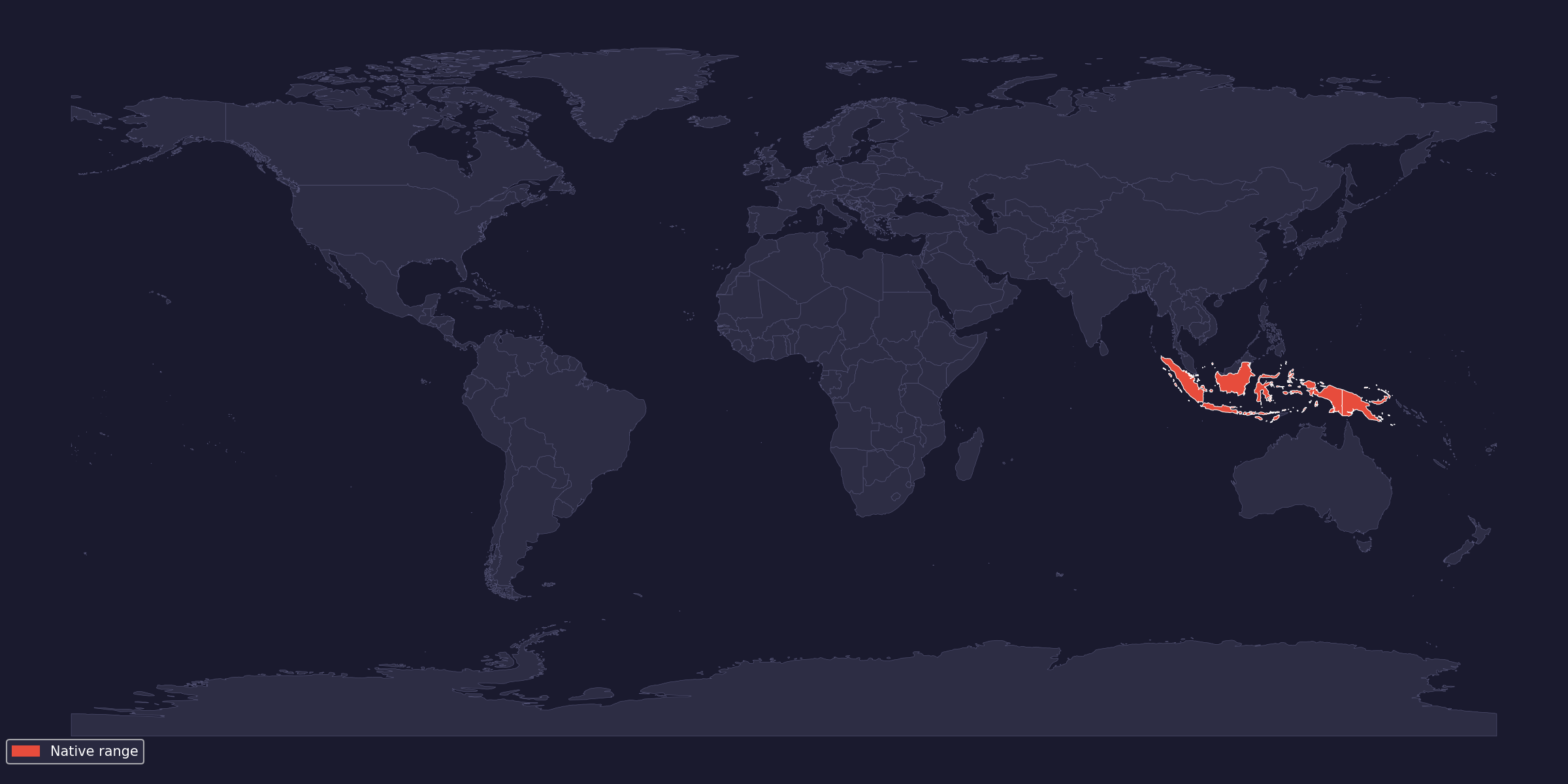
🌡 Climate across the native range
Monthly climate normals from reviewed GBIF occurrence locations:
Gulf — Papua New Guinea
| Month | Min °C | Mean °C | Max °C | RH % |
|---|---|---|---|---|
| January | 18.1 | 23.6 | 29.1 | 80 |
| February | 18.1 | 23.5 | 28.9 | 80 |
| March | 18.1 | 23.3 | 28.5 | 81 |
| April | 17.7 | 23.1 | 28.5 | 81 |
| May | 17.7 | 22.9 | 28.1 | 81 |
| June | 17.1 | 22.2 | 27.3 | 83 |
| July | 16.7 | 21.4 | 26.1 | 82 |
| August | 16.8 | 21.8 | 26.8 | 79 |
| September | 17.1 | 22.1 | 27.1 | 79 |
| October | 17.3 | 22.5 | 27.7 | 80 |
| November | 17.3 | 23.1 | 28.8 | 79 |
| December | 18.1 | 23.5 | 28.9 | 80 |
Weather data by WorldClim v2.1 · Monthly normals queried by Herpeton Academy from raster values; relative humidity is derived from vapor pressure and mean temperature.
Location references use GBIF.org occurrence data where available; original occurrence records retain their source dataset licenses.
⚖️ Legal status
Checked on 2026-06-22: this species is not listed in the CITES Appendices, is not separately listed in the EU wildlife-trade annexes, and the Bern Convention is not relevant. That does not make live trade automatically unrestricted. Plant-feeding insects can fall under national or local rules for import, interstate movement, agricultural pest, school-display, public-display, or biosecurity.
Keep invoices, breeder details, species identification, and any permit or transfer paperwork. In the United States, USDA APHIS notes that most insects and mites feeding on plants or plant products require PPQ 526 permitting for importation, interstate movement, and environmental release. Never release surplus insects, eggs, food plants from the enclosure, or used substrate outdoors.
🤌 Husbandry
Use a secure ventilated terrarium with more usable floor than a twig-only display. The practical adult minimum is 45 x 45 x 45 cm for a small group. Provide a clipped lid, fine mesh, and stable access for cleaning because adults are strong and will push against loose decor.
🌿 Enclosure and layout
Give cork bark tubes, bark slabs, thick branches, leaf litter, and 8-10 cm of slightly moist substrate or a dedicated egg-laying area. Heavy hides must sit on the base, not on loose substrate that can collapse. Group housing can work, but watch male competition and separate injured or repeatedly disturbed animals.
💡 Lighting
UVB is not required. Use bright indirect room light and a steady day-night cycle. Avoid lamps that dry food plants, overheat the upper branches, or leave the lower enclosure stagnant.
🌡 Heating and temperature
Use stable room-scale heat rather than a narrow basking hotspot:
- ambient air: 22-27°C
- upper warm area: 28-29°C
- cool retreat: 20-22°C
- night: 20-23°C
Avoid overheating closed enclosures. If extra heat is needed, warm one side gently and check the hide level as well as the upper branches.
💧 Humidity, ventilation, and water
Aim for 65-85% humidity, with a brief higher local level around 75-90% during molts. Keep the lower substrate slightly damp and the air moving. Condensation that never clears, mold on bark, or a sour substrate smell means the enclosure is too wet or under-ventilated.
🥗 Feeding plants
Offer fresh pesticide-free bramble, raspberry, rose, oak, hawthorn, ivy, or guava where accepted. Keep stems in covered water containers and replace food before leaves curl. Because these insects hide by day, check feeding damage at night and do not assume untouched leaves are safe if the plant is unfamiliar.
🥚 Breeding and eggs
This is a sexual, egg-laying species. Females deposit eggs into or onto the substrate over time. Collect eggs gently or maintain a clean egg zone, and incubate them at 22-26°C on barely moist medium with good ventilation. Incubation is slow, often about 120-240 days.
🧍 Handling and safety
Do not grip adults by hand. Males can clamp with the hind legs and the spurs can break skin. Move animals with a tub, bark piece, or soft brush, and keep fingers away from the rear legs when servicing hides.
🦗 Molting and hatchlings
Even a ground-active species needs clear hanging room for molts. Keep sturdy vertical bark or branches and avoid packing the enclosure so tightly that a newly molted insect touches leaves, mesh, or another insect before hardening.
🩺 Common problems
Common problems include male injuries, missing tarsi, failed molts, moldy eggs, mites, wet substrate, dehydration, pesticide exposure, and nymphs lost in over-complicated setups. The usual failure point is trying to keep the enclosure very humid without giving it enough ventilation and clean food turnover.
📌 Conclusion
Eurycantha calcarata is rewarding for keepers who want a robust display colony and can respect the defensive spines. It is not a child-handling insect; prepare secure ground hides, host plants, egg management, and legal/biosecurity paperwork before acquiring a colony.
📚 Sources and further reading
Key sources checked for this revision:
- GBIF Backbone Taxonomy: Eurycantha calcarata
- Phasmida Species File: Eurycantha calcarata
- Phasmid Study Group culture information
- CITES Appendices, valid from 5 March 2026
- European Commission wildlife trade overview
- USDA APHIS: Insects and Mites
- WorldClim v2.1