Share

Zonata Giant Flower Cockroach
🔤 Taxonomy
The defensible trade spelling is Eucorydia dasytoides “Zonata,” not the submitted “Eucordya dasytoides.” Qiu, Che & Wang’s 2017 revision recognizes E. dasytoides as a species and treats the Taiwanese zonata material as a geographic population, not a formal subspecies or cultivar. “Zonata” should therefore remain upright and in quotation marks on culture labels.
GBIF currently places E. dasytoides as Eucorydia aenea dasytoides, so the taxonomy widget follows GBIF to accepted species E. aenea. The text follows the newer specialist revision and states the database disagreement openly.
📌 Description
Adults of this flower-cockroach group are small—commonly about 1.5-2 cm in cultured measurements—but their metallic blue-green wing covers and orange transverse band make them conspicuous. Brown nymphs live buried for many months; the brilliant colour appears only at the final molt. Adults climb smooth surfaces, and males may fly readily.
The short adult phase and long hidden nymphal stage make this an advanced display culture. Buy a mixed group, not a pair: asynchronous maturation can leave one sex dead before the other becomes adult.
🌍 Distribution
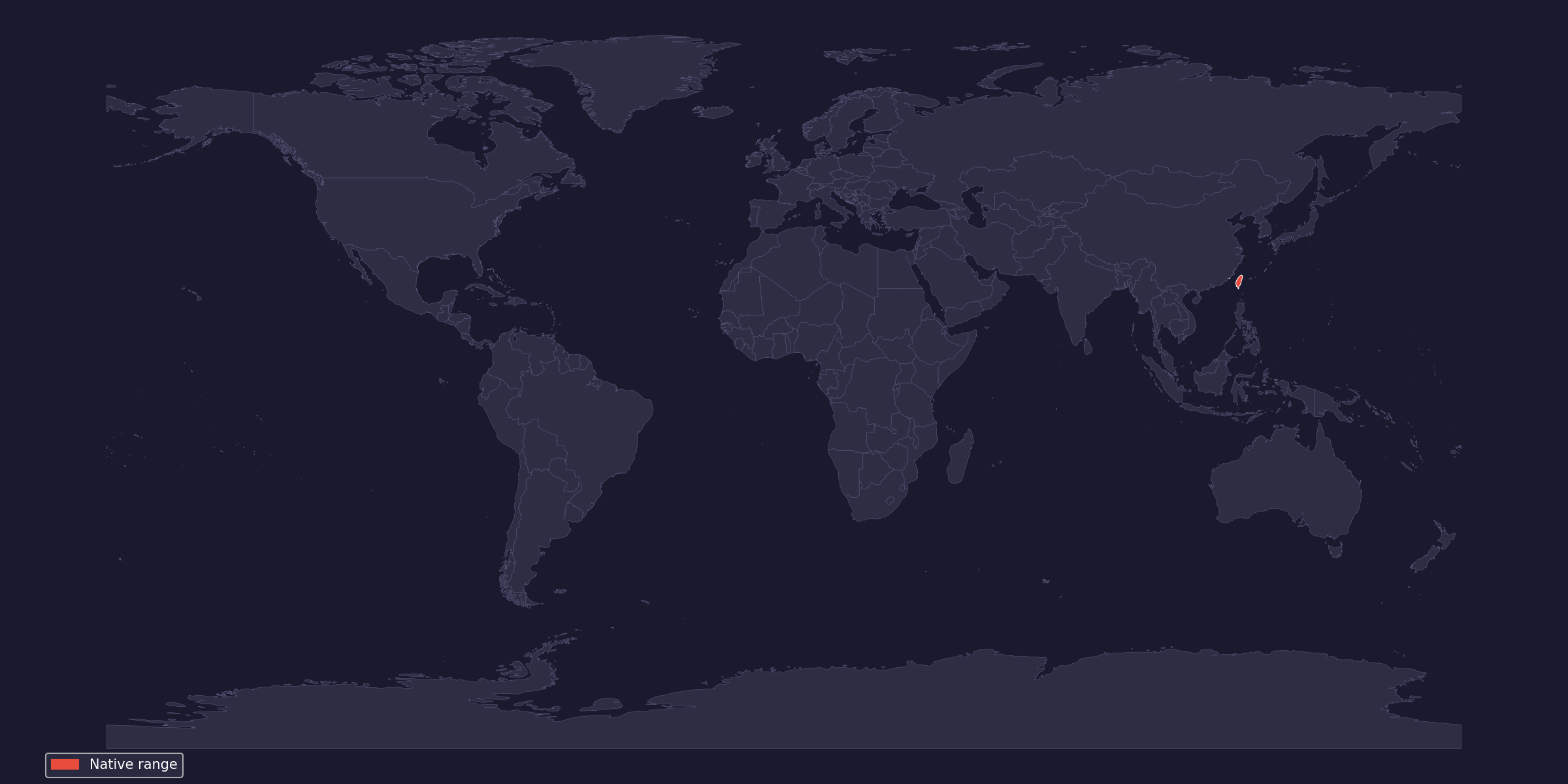
The 2017 revision records E. dasytoides across southern China and recognizes material from Hainan and Taiwan. It specifically illustrates the “zonata population” from Taoyuan, Taiwan. Because this guide is line-specific, the map highlights Taiwan rather than the entire species complex.
⚖️ Legal status
Checked on 2026-08-22: neither Eucorydia dasytoides nor the “Zonata” population was found in the CITES Appendices, EU wildlife-trade Annexes A-D, or Bern Convention appendices. Live-insect import, transport, plant-health, and local ownership rules still apply.
Preserve invoices and the complete Taiwanese population label. Do not merge it with other Eucorydia dasytoides forms or with E. yasumatsui. Adults can escape outdoors rapidly; never release animals, oothecae, or substrate.
🤌 Husbandry
Use at least 30 × 25 × 30 cm for 8-12 mixed nymphs. Fit fine metal or insect mesh over every vent, gasket the lid, and open only inside a catch tub. Provide 8-10 cm of loose forest litter for nymphs and upright bark and twigs for adults.
| Parameter | Practical target |
|---|---|
| Adult size | about 1.5-2 cm in cultured stock |
| Day air | 20-27 °C; brief warm area 27-29 °C |
| Night | 18-22 °C |
| Moisture | damp corner and lower layer, dry aerated surface |
| Development | roughly 7-10 months as nymphs; adults often 2-3 months |
| Main risk | stale humidity and flying adult males |
Quarantine new stock for 60 days and keep generations overlapping. Do not dig to count brown nymphs; food use, molts, and emerging adults are better evidence of colony condition.
💡 Lighting
UVB is not required, but a clear 11-13-hour daylight cycle suits these day-active adults and helps live plants. Use bright diffuse light outside the container, with shaded bark. Light must not add unmeasured heat.
🌡 Heating and temperature
Keep the culture mostly at 20-27 °C with a limited 27-29 °C warm point and an 18-22 °C refuge. Nights of 18-22 °C are suitable. Some keepers use a modest cool, drier winter period to synchronize maturation, but it is optional and should not be imposed on tiny, weak, or newly imported stock.
If seasonal cycling is used, reduce temperature and watering gradually and retain a moist refuge. Warm from the side or the room; never from beneath the buried nymphs.
💧 Humidity and water
Ventilation is the decisive parameter. Keep one corner and the lower litter damp while the exposed surface and bark dry between watering. General humidity of 55-75% with a 70-85% molting refuge is safer than holding the entire box at 90%.
Use droplets on leaves, tiny pieces of water-rich produce, or a protected hydration source; open dishes endanger nymphs. Condensation across the walls, mold below intact leaves, or a stale smell requires immediate airflow and portion correction.
🌿 Enclosure and decoration
Provide 8-10 cm of pesticide-free soil, decayed hardwood, and crumbled leaf litter under a thick dry leaf cap. Add vertical cork, thin branches, and broad leaves so new adults can expand wings. Seed springtails only if they cannot be confused with hatchlings and do not overwhelm ootheca sites.
Avoid compact peat, saturated sphagnum throughout, fertilizer, perlite, and fine ventilation fabric that traps condensation. The enclosure should look airy even though its lower layer retains moisture.
🪳 Feeding
Most nutrition comes from hardwood leaves and rotten wood. Once weekly, offer very small portions of apple, pear, banana, carrot, pollen, or soft flower-safe fruit, plus a few grains of fish food or balanced invertebrate diet. Adults may visit sweet foods more visibly than nymphs.
Remove fresh food the next day. Overfeeding a colony that appears empty is the usual route to mold. Do not use wild flowers exposed to pesticides or roadsides.
🥚 Breeding
Females produce small oothecae and deposit them in litter after carrying them briefly. Related Eucorydia research documents rotation and short-term carrying of the case; do not pull an ootheca from a female. Specialist culture data suggest about 6-9 eggs and roughly 50-75 days to hatch at 22-27 °C, but “Zonata”-specific trials are not published.
Nymphs may need 7-10 months to mature, while adults often live only 2-3 months. Start with mixed sizes and maintain seasonal or generational overlap. Incubate cases in situ on airy, barely moist litter; moving them risks changing their orientation and moisture exposure.
🩺 Common problems
- Silent nymph losses: usually follow stale, wet air; enlarge vents before adding more misting.
- No simultaneous adults: begin with more mixed-size nymphs or use a gentle seasonal rhythm, not extra heat.
- Molded oothecae: reduce surface wetness and food residue while preserving lower moisture.
- Escaped males: gasket lids and use fine mesh before the first adult molt.
- Wrong label: retain “Zonata” as a population tag and document the dasytoides versus aenea dasytoides taxonomy.
📌 Conclusion
This culture rewards patience with spectacular, day-active adults, but only after a long inconspicuous nymph stage. Build an airy escape-proof enclosure and obtain enough mixed-size animals before paying for a scarce line; poor ventilation and asynchronous sexes cause most failures.
📚 Sources and further reading
- Qiu, Che & Wang (2017), revision of Eucorydia
- GBIF synonym record: Eucorydia dasytoides
- GBIF accepted species used by the taxonomy tree: Eucorydia aenea
- Fujita & Machida: reproductive biology of related Eucorydia yasumatsui
- Specialist flower-cockroach husbandry overview
- ReptiFiles — checked; no species care guide was found
- CITES Appendices, valid from 5 March 2026
- EU wildlife-trade Annexes, Regulation (EU) 2026/1383
- Bern Convention appendices