Share

Black Beetle-mimic Cockroach
🔤 Taxonomy
Ergaula pilosa (Walker, 1868) is the accepted name. Important older names include Zetobora pilosa, Polyphaga sumatrensis, Dyscologamia cesticulata, D. chopardi and Parapolyphaga erectipilis. Black beetle-mimic and velvety beetle-mimic cockroach refer to the dense dark surface and rounded females.
Keep this species separate from E. capucina. E. pilosa is generally larger, darker and faster-producing; males have pale central spots rather than the frequent broad cream band seen in E. capucina, but provenance is safer than colour identification.
📌 Description
Adults measure roughly 3-4.2 cm. Females are broad, black-brown and spend much of their time underground. Males are slimmer and winged, with one or two pale spots; adults can climb and males may flutter. Nymphs are compact burrowers concealed below leaf litter.
The species is more productive and moisture-tolerant than E. capucina, but it remains a slow-developing display culture rather than a disposable feeder.
🌍 Distribution
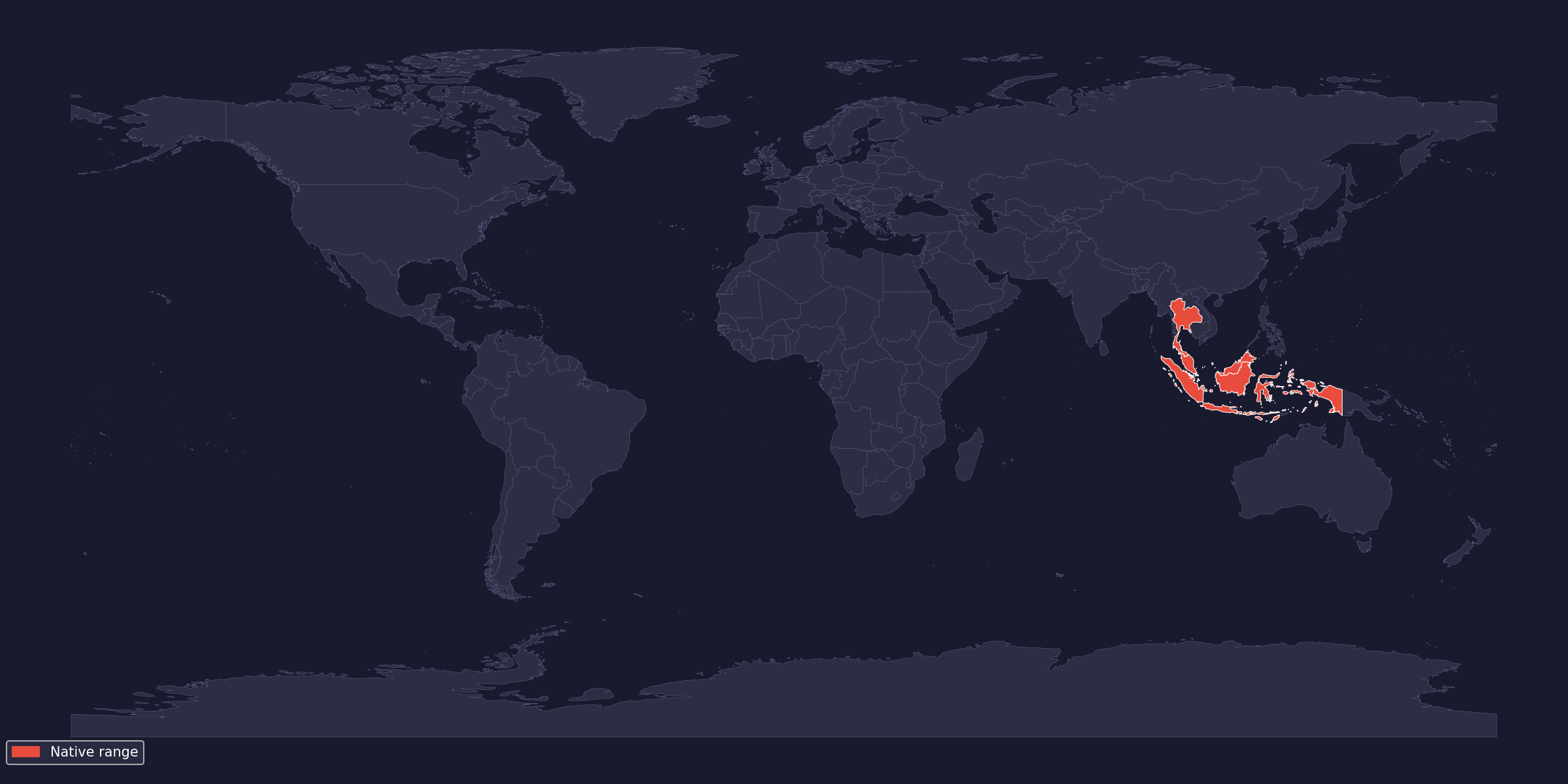
Verified GBIF material and recent records support Indonesia, Malaysia, Singapore and Thailand. A 2024 museum report documents the species in Singapore forest reserves. The map shows these countries conservatively; it does not imply continuous occupancy across the entire region.
⚖️ Legal status
The official CITES, EU wildlife-trade and Bern appendices checked on 2026-08-22 contain no listing for E. pilosa. Import, transport, breeding and sale of live cockroaches can still be regulated nationally or locally. Retain an invoice and breeder identity, verify both ends of any shipment and never release animals, oothecae or enclosure contents outdoors.
🤌 Husbandry
A starter culture needs at least 30 x 20 x 20 cm, with capacity determined by deep substrate rather than empty height. Quarantine additions for 60 days and do not share scoops with other burrowing species. Transfer substrate in a catch tub because adults climb and small nymphs are difficult to see.
| Parameter | Working range |
|---|---|
| Day temperature | 22-28°C |
| Cool retreat / night | 20-23°C / 19-23°C |
| Relative humidity | 50-75%; moist depth |
| Substrate | 8 cm plus 3-5 cm leaf litter |
| Ootheca development | 90-120 days at 24-27°C |
💡 Lighting
UVB is not needed. Provide 11-13 hours of diffuse light and a true dark period. Avoid hot display lamps, which dry the upper soil while temperature readings above the substrate still appear acceptable.
🌡 Heating and temperature
Use 22-28°C by day, ideally 24-27°C for growth, with a 20-23°C retreat and 19-23°C nights. Heat a side wall or upper air with thermostat control. Do not place unregulated heat below the box: females and nymphs burrow downward and must retain a cool, moist option.
💧 Humidity and water
Maintain the lower two-thirds of the substrate moist and let the surface dry between watering, producing roughly 50-75% relative humidity. E. pilosa tolerates variation, but saturated anaerobic soil still kills oothecae. Pour water into one corner and ventilate across the top. Offer water gel or a very shallow pebble dish as backup.
🌿 Enclosure and decoration
Use at least 8 cm of pesticide-free soil, coconut fibre or peat-like substrate mixed with rotten hardwood, topped with 3-5 cm of hardwood leaves. Avoid sand and fresh resinous wood. Add fine twigs for males, cover vents with fine mesh, secure the lid and maintain an escape-barrier band. Support dishes from firm platforms so buried animals are not crushed during service.
🪳 Feeding
Keep decayed leaves available continuously. Feed fish, chick or quality dog food twice weekly, plus small portions of carrot, squash, apple or mushroom. Warm, protein-fed nymphs mature faster, but uneaten protein rapidly attracts mites and molds. Use dishes and remove food after 24 hours.
🥚 Breeding
Females deposit oothecae into the substrate. Practical culture ranges are about 15-20 eggs, 90-120 days to hatch at 24-27°C and 6-8 months from nymph to adult; species-specific controlled studies are limited. Leave oothecae in place and rehydrate the lower layer gently. Males may live only a few months while females approach nine months as adults, so retain young males and overlapping cohorts rather than waiting for the old colony to decline.
🩺 Common problems
- Missing young: oothecae and first instars are buried; wait through the full incubation window before disturbing substrate.
- Slow maturation: check warmth and regular protein, not just fruit availability.
- Mold and sour soil: reduce water and food, increase airflow and replace only the affected upper layer.
- Mixed cultures: inspect every scoop and use separate tools; Ergaula nymphs transfer unnoticed.
- Escapes: renew the barrier and assume every winged male can flutter.
- Allergy: reduce airborne frass by damp cleaning and use gloves and suitable respiratory protection during substrate replacement.
📌 Conclusion
The black beetle-mimic is a resilient burrowing colony when the keeper protects the moist depth, dry surface and long incubation cycle. Its greatest management risk is invisible: oothecae, nymphs and mixed-species transfers all disappear into the substrate.
📚 Sources and further reading
- GBIF: Ergaula pilosa
- Cockroach Species File: Ergaula pilosa
- Lee Kong Chian Natural History Museum: Ergaula pilosa in Singapore
- Invertebrate Dude: Ergaula culture
- ReptiFiles — checked; no species-specific guide found
- CITES-listed species database
- EU wildlife-trade Regulation (EC) No 338/97, consolidated 29 June 2026
- Bern Convention appendices