Share

Kota Kinabalu Bornean Leaf Cockroach
🔤 Taxonomy
Epilamprinae sp. "Kota Kinabalu" is a hobby/locality label, not a described scientific name. It means that the culture has been placed provisionally with the leaf-cockroach group historically treated as subfamily Epilamprinae and is reported from the Kota Kinabalu area of Sabah, Malaysia. It was previously traded simply as Epilamprinae sp. "Borneo".
GBIF currently treats Epilamprinae as a synonym of the accepted family Epilampridae, so the taxonomy tree deliberately stops at that family. Suggestions that the line belongs to Rhabdoblatta or Pseudophoraspis remain unverified and are not used here. Preserve the exact label, breeder chain and photographs.
📌 Description
Adults are leaf-shaped cockroaches about 3.1-3.5 cm long; males tend to be brighter orange-brown and females broader and olive-brown. Nymphs vanish against damp leaf litter. Adults climb smooth surfaces, run quickly and may fly, while tiny nymphs can exploit condensation on container walls.
It is a lively display culture suited to observation after dark, not handling. Its hardiness does not reduce the need for flight containment and clean, moving humid air.
🌍 Distribution
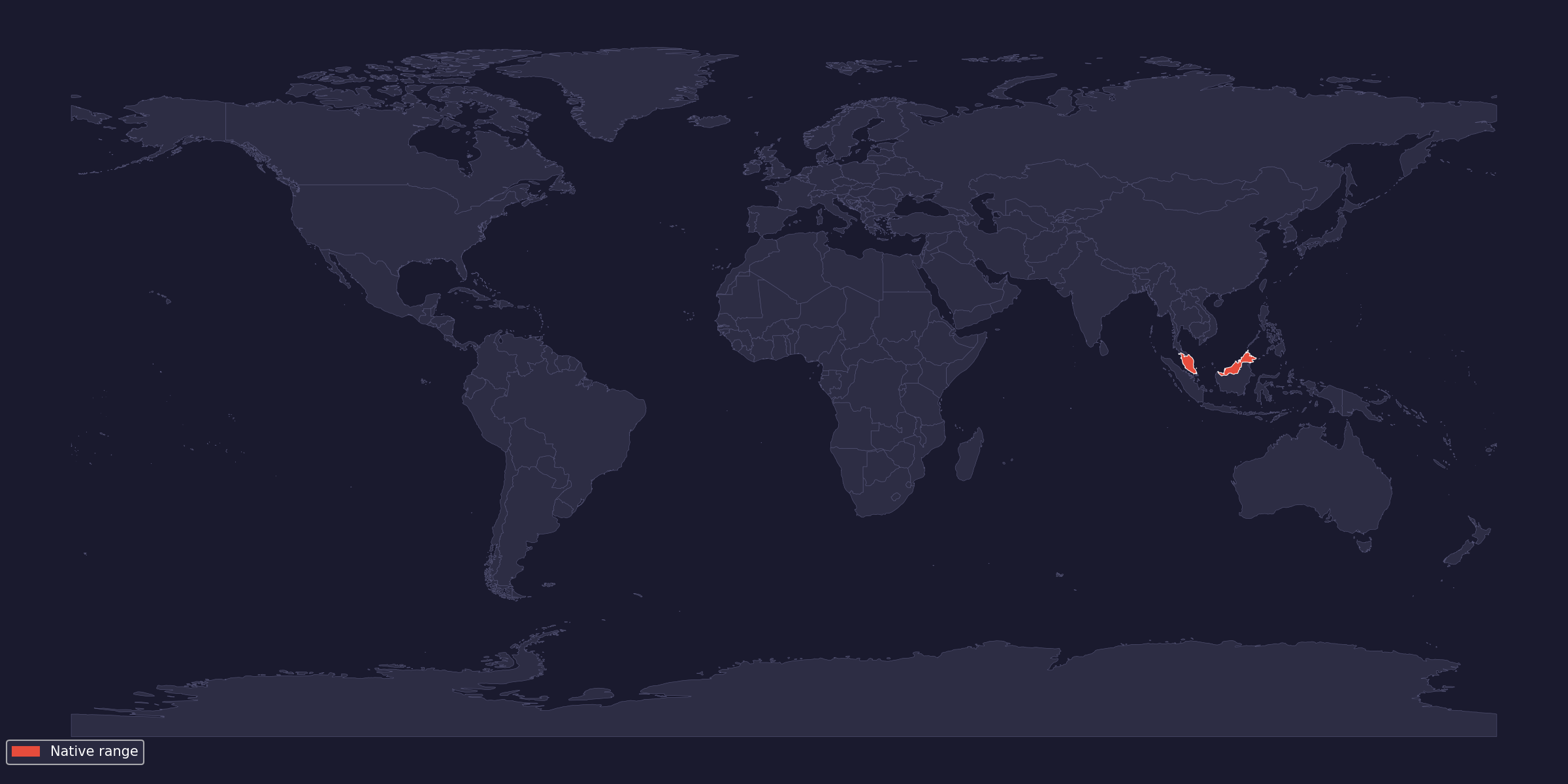
The only defensible range for this unidentified culture is its reported collection area around Kota Kinabalu, Sabah, on Malaysian Borneo. The map highlights Malaysia as a locality-country claim, not the range of a named species and not proof that the culture occurs throughout the country.
⚖️ Legal status
The official CITES, current EU wildlife-trade and Bern appendices checked on 2026-08-22 contain no listing for Epilampridae/Epilamprinae or this provisional culture. An unidentified live insect can nevertheless face stricter import, phytosanitary or biosecurity scrutiny than a named captive line. Check origin and destination authorities before transport, retain invoices and the complete locality label, and never release animals or substrate outdoors.
🤌 Husbandry
Use at least 30 x 25 x 25 cm for a starter colony, enlarging early because reproduction can be rapid. Quarantine incoming stock for 60 days and service it last with dedicated cups. Open the enclosure only inside a tall catch box; inspect the underside of the lid before every removal.
| Parameter | Working range |
|---|---|
| Day temperature | 24-29°C |
| Cool retreat / night | 21-24°C / 20-24°C |
| Relative humidity | 60-80% with active ventilation |
| Substrate | 3 cm, moist below and litter-covered |
| Food | Fruit/vegetables and protein 2-3 times weekly |
💡 Lighting
UVB is not required. Give 11-13 hours of subdued light with dense shade below bark and litter. Switch bright room lights off before servicing; startled adults are easier to contain when they are not flying toward a lamp.
🌡 Heating and temperature
Maintain 24-29°C for reliable growth, with a 21-24°C retreat and 20-24°C nights. Colonies can continue more slowly around 21-23°C. Heat one wall under thermostat control and avoid strong overhead lamps: hot, saturated air is a plausible route to sudden adult loss.
💧 Humidity and water
Keep the lower substrate moist and the surface leaf litter only lightly damp, producing roughly 60-80% relative humidity. Cross-ventilation is essential. Water one corner instead of fogging the whole box; droplets on smooth walls can give nymphs traction. Provide water gel or a tiny pebble-filled dish and correct persistent condensation immediately.
🌿 Enclosure and decoration
Use 3 cm of pesticide-free soil or coconut fibre topped with abundant hardwood leaves. Add bark slabs, cardboard tubes in drier zones and fine branches, maximizing usable surfaces without blocking airflow. Fit a gasketed lid, fine mesh on every vent and a renewed escape-barrier band. Seal cable holes; assume both sexes can fly until the individual is contained.
🪳 Feeding
This line is protein-responsive. Two or three times weekly offer fish, chick or quality dog food alongside banana, apple, carrot, squash or mushroom. Leaf litter remains available continuously. Feed small portions in dishes and remove them the next day; a protein-hungry culture can still be poisoned by mold or pesticide residues.
🥚 Breeding
Females retain the ootheca and give birth to live nymphs. Experienced culture reports describe 2-3 months of gestation, 25-35 or occasionally more young, and 4-6 months to maturity under warm feeding-rich conditions; these are line observations, not published species biology. Sex adults by the broader female body and colour tendency, not colour alone. Thin crowded colonies before births overwhelm ventilation and retain a backup colony under the same full label.
🩺 Common problems
- Sudden adult losses: check overheating, saturated substrate, poor airflow and contaminated food; isolate affected stock rather than adding moisture blindly.
- Escapes: dry wall droplets before opening, inspect beneath the lid and replace worn barriers.
- Failed molts: retain a moist lower layer and add textured surfaces, but keep air moving.
- Nymph losses: use finer mesh, remove deep water and avoid stripping all old leaf litter during cleaning.
- Identity loss: never shorten the label to a guessed genus and never merge stocks solely because they look similar.
- Allergy: minimize airborne frass with damp cleaning and use gloves and suitable respiratory protection for major maintenance.
📌 Conclusion
This Bornean leaf-cockroach culture is worthwhile for keepers who value locality records as much as appearance. Its decisive requirements are flight-ready containment, ventilated moisture and preservation of the provisional name until taxonomic work supports something better.
📚 Sources and further reading
- GBIF: Epilampridae
- Cockroach Species File
- Invertebrate Dude: Kota Kinabalu culture care and label history
- Roach Crossing: Bornean leaf cockroach culture profile
- ReptiFiles — checked; no culture-specific guide found
- CITES-listed species database
- EU wildlife-trade Regulation (EC) No 338/97, consolidated 29 June 2026
- Bern Convention appendices