Share

Papua New Guinea Ectobiid Cockroach
🔤 Taxonomy
“Ectobiidae sp. PNG” is an unidentified culture from Papua New Guinea, not a valid species name. Ectobiidae is a large, diverse family; family membership cannot establish adult size, flight, ootheca behavior, or ecological niche. The taxonomy tree intentionally stops at family.
Keep the “PNG” label, source, dates, photographs, and any locality detail. Never combine it with another unnamed PNG culture merely because both look small or patterned.
📌 Description
The cultured animals are treated here as small, agile tropical litter-and-bark cockroaches. The 1.5-3 cm planning size and reproduction ranges must be replaced by colony observations if the line differs. Tiny nymphs, rapid movement and possible adult flight make it an advanced containment project.
🌍 Distribution
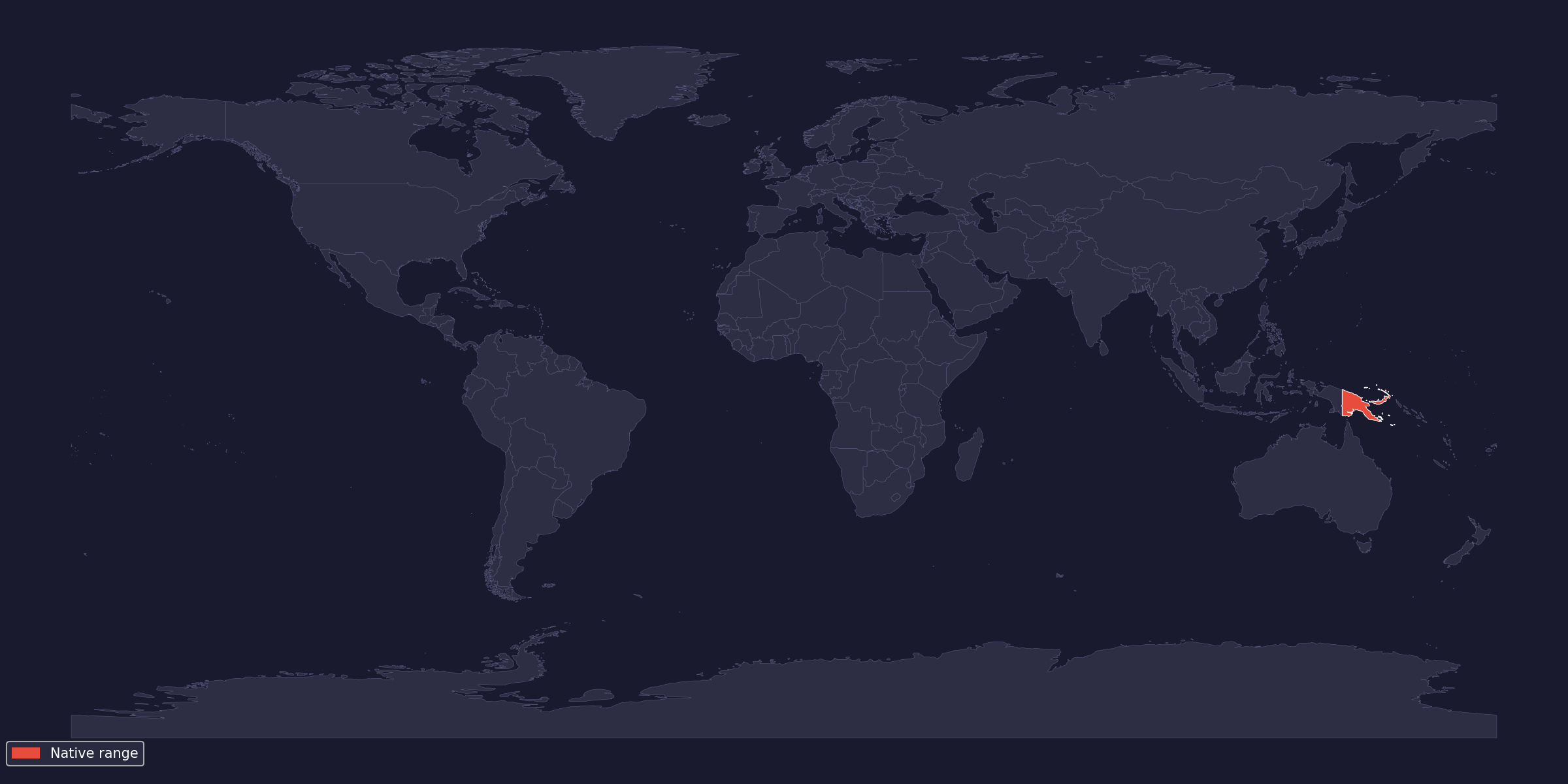
Only Papua New Guinea is supported by the trade label; no province, island or collection site is documented. Highlighting the country communicates provenance, not a species-wide native range.
⚖️ Legal status
Checked 2026-08-22: this unidentified family-level line has no entry in the official CITES Appendices, current EU wildlife-trade annexes, or Bern Convention appendices. National import, plant-health, invasive-species and transport rules can still regulate it. Preserve invoices and line records; contain and freeze waste before disposal where local rules allow.
🤌 Husbandry
Begin with 25 x 20 x 30 cm and use a second catch tub whenever opening it. Quarantine new stock for 60 days. Record whether adults fly, climb smooth walls, rest on bark, bury oothecae or carry them; these traits should drive later refinements.
💡 Lighting
UVB is not required. Use 11-13 hours of diffuse light with dark bark crevices. Bright illumination is useful for plants but must not heat or dry the top.
🌡 Heating and temperature
Use 23-28°C, a 21-24°C retreat and nights of 21-24°C. Apply thermostatic heat to one side. A sealed, humid enclosure can overheat quickly at 29°C.
💧 Humidity and water
Aim for 70-85% humidity but keep strong cross-ventilation. Moisten leaf litter and one substrate corner, then let exposed bark dry. Fine droplets on décor or water crystals are safer than an open dish for tiny nymphs.
🌿 Enclosure and decoration
Add 4 cm of soil, rotten hardwood and leaf litter, plus upright cork and thin twigs. Cover every vent with very fine mesh, gasket the lid and block cable holes. Keep springtails separate until you know how the oothecae are deposited and can distinguish newborn cockroaches from cleanup fauna.
🪳 Feeding
Provide leaf litter and soft decayed wood continuously. Offer tiny portions of carrot, squash, apple or mushroom every one to two days and a pinhead-sized protein ration weekly. Spread food thinly so all stages feed without creating wet mold pockets.
🥚 Breeding
Ectobiids are egg-case producers, but case retention and placement vary. Search bark, litter and container seams without destroying them. If detached oothecae are found, incubate some in situ and some separately at 23-28°C on ventilated, barely moist litter. The stated 10-30 eggs and 35-80 days are husbandry planning ranges, not verified facts for this line.
🩺 Common problems
- Micro-escapes: use gasketed lids, fine mesh and a catch tub.
- Failed molts: balance wet lower litter with dry textured climbing surfaces.
- Mold or mites: shrink food portions and increase cross-ventilation.
- No hatchlings: stop disturbing or drying ootheca sites and log dates before changing temperature.
- Label drift: photograph each generation and pass the complete provisional name onward.
📌 Conclusion
Choose this culture for careful observation, not for a confidently named collection. Its survival and future identification depend on containment and complete provenance records.
📚 Sources and further reading
- GBIF: Ectobiidae
- Cockroach Species File
- Evangelista et al.: Ectobiidae species delimitation
- ReptiFiles — checked; no line-specific guide found
- CITES Appendices
- EU wildlife trade legislation
- Bern Convention appendices