Share

White Shark Isopod
🔤 Taxonomy
“Cubaris sp. ‘White Shark’” is a captive trade name without a published species description or diagnostic voucher. It is provisionally placed in Cubaris in the hobby; this guide does not convert that working placement into a formal species identity, and the taxonomy tree stops at genus.
The name describes appearance, not aquatic habits. This is a terrestrial pill isopod and must never be housed in an aquarium or given a flooded substrate.
📌 Description
White Shark is reported as a compact armadillid around 1-1.5 cm, with pale bands, dark markings, and an orange to reddish head. Line appearance and advertised size are not consistent enough to diagnose a species. Individuals conglobate and hide below bark or within humid substrate.
The culture is best considered advanced. Small starter groups can take months to become visible or produce surplus animals, and excessive inspection, stale saturation, or a single drying event can erase that progress.
🌍 Distribution
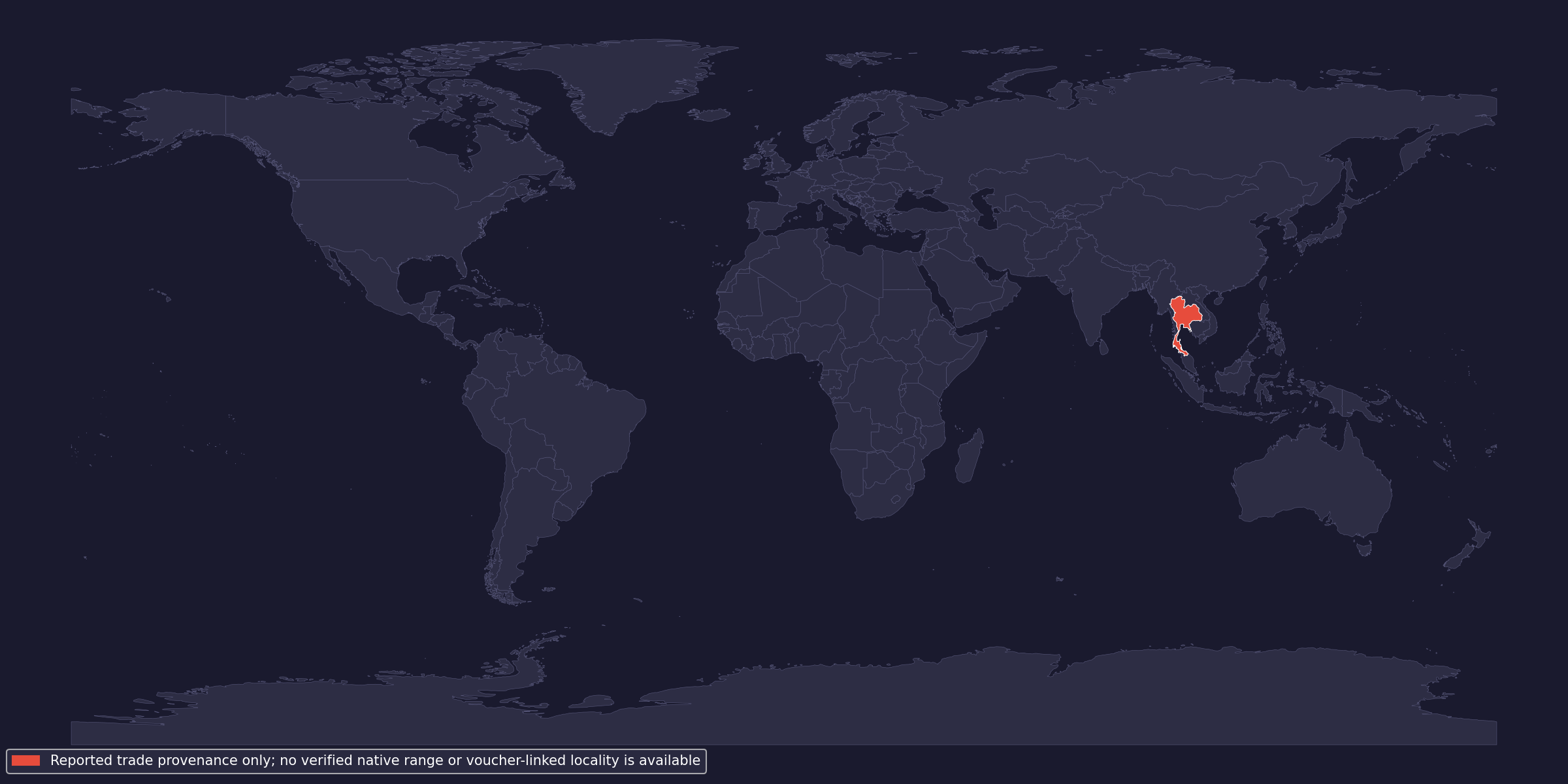
Thailand is the consistent country claim in specialist trade accounts, but no precise published locality, specimen voucher, or formal native range could be verified. The map shows Thailand only as reported trade provenance, not as a verified native distribution.
⚖️ Legal status
Checked on 2026-08-23: neither Cubaris nor “White Shark” was found in the current CITES Appendices or EU wildlife-trade Annexes A-D under Regulation (EU) 2026/1383. The Bern Convention is not relevant to the claimed Southeast Asian origin. National rules can still regulate imports, live-soil organisms, transport, keeping, and sales.
Buy captive-bred animals and retain the original label, invoice, seller identity, transfer dates, and provenance wording. Obtain official advice before international transport because sp. labels may not fit automated permit forms. Never release animals, substrate, or cleanup organisms.
🤌 Husbandry
Use a 30 × 20 × 20 cm fine-ventilated box for a starter group. Lay out several cork refuges so a keeper can inspect one without dismantling the colony. Keep a broad moist section and a smaller less-wet section, both with deep cover.
| Parameter | Conservative working target |
|---|---|
| Reported adult size | about 1-1.5 cm |
| Air temperature | 22-26 °C |
| Humidity | 75-90%, with cross-ventilation |
| Substrate | at least 8 cm of leaf- and wood-rich mix |
| Staple foods | hardwood leaves and decayed hardwood |
| Calcium | permanent plain source |
Quarantine new stock for 90 days with dedicated tools. Inspect shipping material carefully for mancae, then transfer it beside a prepared moist hide and leave the colony quiet. Do not mix with faster isopods in a display enclosure before a secure backup culture exists.
💡 Lighting
UVB is not needed. Maintain a 10-12-hour ambient light cycle and abundant shaded cover. The colony may become visible only after lights dim. Direct sun and close lamps create dangerous temperature and moisture swings.
🌡 Heating and temperature
Start at 22-26 °C and provide a 20-23 °C cooler refuge. There are no published thermal trials for White Shark, so these are cautious culture targets. Stability and oxygen exchange deserve more attention than maximum warmth.
Heat one wall only, through a thermostat, when room temperature requires it. Bottom heaters can desiccate the lower burrowing zone unnoticed. Correct sustained temperatures above 27-28 °C rather than trying to offset them with heavier misting.
💧 Humidity and water
Keep the lower layers of the moist side damp throughout, while the opposite surface becomes only lightly damp between watering. A reading of 75-90% can help detect trends, but it cannot reveal a dry core or anaerobic pocket.
Pour water into one corner or a moss bank. Do not provide standing water. Ventilation holes on opposing sides should exchange air above the litter; widespread condensation, sour substrate, or food covered by mold indicates that airflow and portions need correction.
🌿 Enclosure and decoration
Use at least 8 cm of edible leaf soil, decomposed hardwood, crushed hardwood leaves, and a moisture buffer. Coconut fibre alone is inadequate. Cover much of the surface with intact leaves, then place cork over both the moist and less-wet zones.
Supply limestone, cuttlebone, oyster shell, or pure calcium carbonate continuously. Support heavy stone from the floor so it cannot collapse a tunnel. Avoid fertilizer, pesticide residues, aromatic wood, and complete routine substrate changes that discard food, microorganisms, and young.
🪳 Feeding
Maintain leaf litter and soft rotten hardwood as permanent food. Add a tiny amount of mushroom, squash, carrot, dried greens, or prepared isopod diet once or twice weekly. Offer protein—such as dried shrimp or fish flakes—sparingly, generally once a week or less for a small colony.
Remove fresh leftovers after 24-48 hours. If food remains, reduce the next portion rather than adding variety on top. Place food close to refuges so shy animals and mancae need not cross an exposed box.
🥚 Breeding
Females retain eggs and embryos in the ventral marsupium and release mancae. Repository metadata describes that marsupial brooding as viviparous. White Shark-specific gestation, brood size, and age at maturity have not been established in primary literature, so no incubation or clutch values are presented.
Begin with a viable group, avoid isolating brooding females, and allow several months before assessing success. Once juveniles of several sizes are present, divide only a modest portion into a second identically labelled box. Selling founders before a backup exists can leave the culture one accident from loss.
🩺 Common problems
- Animals vanish after arrival: inspect minimally, keep the moist refuge stable, and allow acclimation.
- Manca mortality: check deep moisture, fine food access, calcium, and air exchange.
- Fungus and mites: remove uneaten supplements and increase cross-ventilation without drying the moss bank.
- No colony growth: confirm the group includes mature animals and review conditions over months, not days.
- Mislabeling: retain photographs and transfer history; do not identify by a seller image alone.
📌 Conclusion
White Shark is a small, slow project for a keeper already comfortable reading substrate moisture and feeding hidden colonies conservatively. Establish the enclosure and the record trail before buying; its unresolved identity makes preservation of a clean captive line especially important.
📚 Sources and further reading
- GBIF genus record: Cubaris
- World List of Isopoda: Cubaris
- Detailed specialist White Shark culture account
- Taxonomic caution for unidentified Oriental “Cubaris” cultures
- Warburg (2012), marsupium and gestation in terrestrial isopods
- CITES Appendices
- EU wildlife-trade Annexes: Regulation (EU) 2026/1383
- Bern Convention appendices