Share

Cuban Burrowing Cockroach
🔤 Taxonomy
Byrsotria fumigata (Guérin-Méneville, 1857) is an accepted Cuban species in Blaberidae. “Cuban burrowing cockroach” is also used loosely for other Byrsotria, so confirm the scientific label and never mix it with B. cabrerai or unverified dark lines.
📌 Description
Adults are heavy-bodied cockroaches around 4-5.5 cm. Males carry long wings and females are broader with short wing pads. They are nocturnal burrowers; most daytime observation is through tunnels against the container wall or at feeding time.
🌍 Distribution
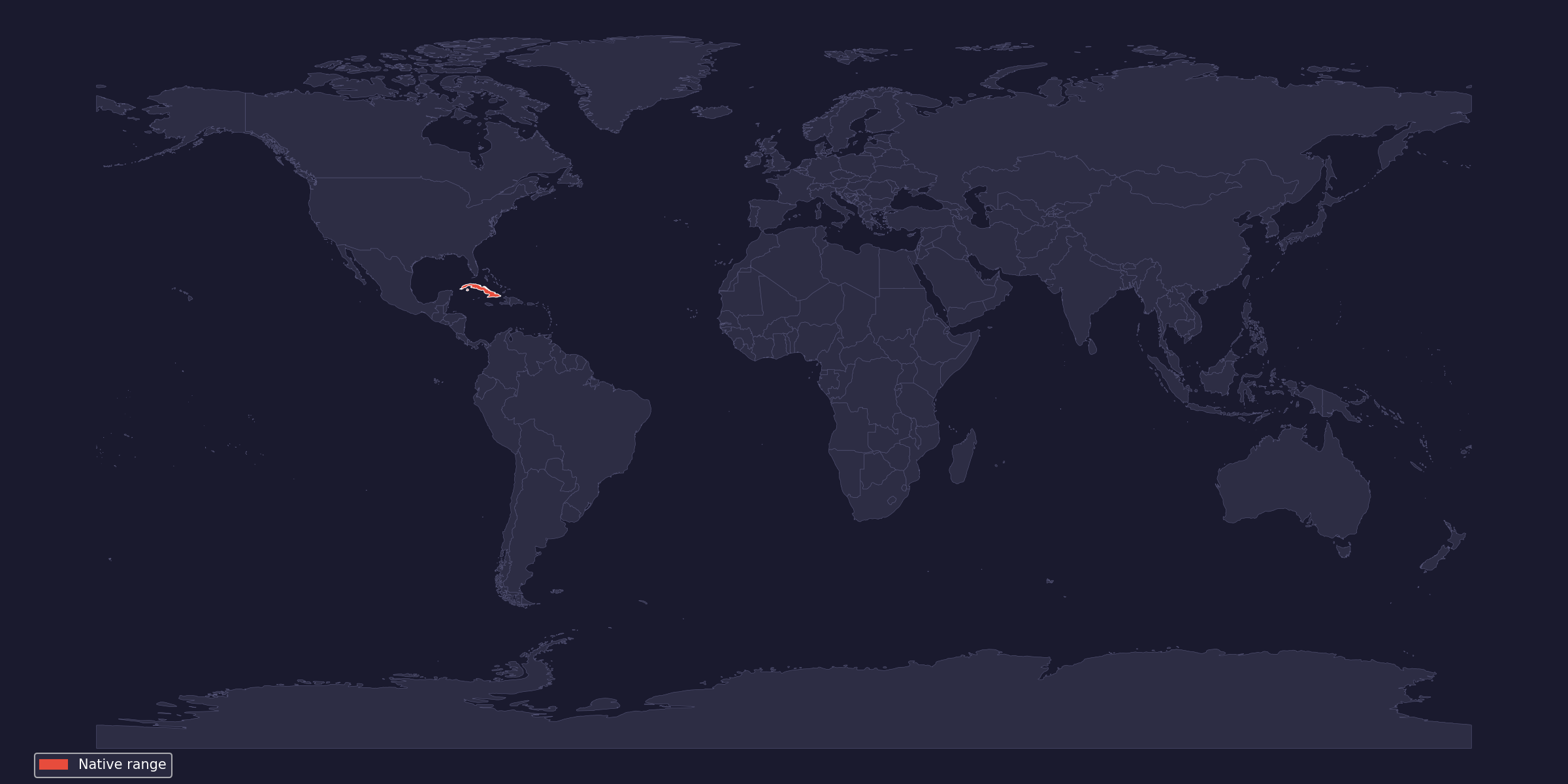
This species is endemic to Cuba. Field literature records it under stones and other ground shelter and in caves. These microhabitats explain the need for stable, humid lower layers paired with breathable surface air.
⚖️ Legal status
Official CITES, current EU wildlife-trade, and Bern lists checked 2026-08-22 contain no entry for B. fumigata. Cuba is outside the Bern Convention’s European species context. Local import, biosecurity, sale and transport controls can still apply; retain invoices, origin and culture-line details, and never release stock or waste.
🤌 Husbandry
A 30 x 20 x 20 cm box suits a starter colony. Quarantine for 60 days and watch for phoretic mites, mold and mismatched species. Work at the surface rather than digging through the colony at every feed.
💡 Lighting
UVB is unnecessary. Give 11-13 hours of subdued daylight and plentiful dark retreats.
🌡 Heating and temperature
Keep 24-29°C; breeding is usually strongest around 26-28°C. Provide a 22-25°C retreat and nights of 21-24°C. Side heating under thermostat control is safer than heating the entire base.
💧 Humidity and water
Maintain roughly 60-75% humidity with the lower half of the substrate lightly moist. Allow the surface and feeding corner to dry. Use water crystals or a shallow rough dish. Condensation, sour substrate and persistent surface clustering call for more ventilation.
🌿 Enclosure and decoration
Use at least 8 cm of topsoil, decayed hardwood and leaf litter, lightly compacted so tunnels hold. Add cork flats and a tight clipped lid. Replace substrate in sections; established material carries familiar chemical and microbial cues and gives newborns cover.
🪳 Feeding
Supply hardwood leaf litter at all times. Offer vegetables or fruit two or three times weekly and a small protein portion weekly. This species readily overeats rich dry diets; a litter-based colony with measured protein stays cleaner than a container filled with grain.
🥚 Breeding
Females retract the ootheca into a brood sac and later deliver live nymphs, commonly around 20-40 in a successful brood. Adults are sexually mature after the final molt; males are narrower and fully winged. Keep gravid females in the established group. Newborns aggregate near the mother and in familiar substrate, so avoid complete clean-outs, overcrowding and abrupt drying.
🩺 Common problems
- Aborted oothecae: review overheating, dehydration, disturbance and poor diet.
- Nymph loss: retain deep established litter and use escape-proof ventilation.
- Mold or mites: reduce wet food and improve airflow without drying the lower layer.
- Poor molts: correct the moisture gradient and crowding.
- Collapsed tunnels: add compactable soil and rotted wood rather than loose dry coir alone.
📌 Conclusion
B. fumigata is forgiving when its burrowing layer is left stable. It is a reasonable first display-roach colony for a keeper prepared to manage moisture, surplus young and strict containment.
📚 Sources and further reading
- GBIF species record
- Cockroach Species File
- Núñez-Bazán & Yong: male wing variation
- Roth & Willis: biotic associations of cockroaches
- ReptiFiles — checked; no species-specific guide found
- CITES Appendices
- EU wildlife trade legislation
- Bern Convention appendices