Share

Buthus parroti
🔤 Taxonomy
Buthus parroti is the accepted species name. It was described as Buthus atlantis parroti and elevated to species rank in the 2017 catalogue. It overlaps several yellow Moroccan Buthus. The presence of tergal macrosetae helps diagnose preserved material, but colour photographs alone are not enough for a trade animal.
📌 Description
The available adult male measurement is about 5.9 cm, so 5–6.5 cm is a practical adult range. It is smaller than B. atlantis and belongs to the forest-associated Sous Valley fauna rather than the coastal dune form. Species-specific venom severity has not been clinically established. Moroccan Buthus are involved in a region with important scorpionism, so captive safety must assume systemic risk rather than guessing that a small species is mild.
| Parameter | Conservative captive target |
|---|---|
| Adult enclosure | At least 30 × 20 × 20 cm |
| Burrowing substrate | 12–15 cm, firm soil-clay-sand mix |
| Day / warm side | 24–29 °C / 29–32 °C |
| Cool end / night | 21–24 °C / 17–21 °C |
| Humidity | 35–55%; 55–65% in one protected pocket |
| Feeding | One suitable insect every 7–14 days |
| Housing | Solitary, double-contained and locked |
☠️ Venom
This species is venomous. Venom exposure can cause pain, swelling or other systemic effects, and severity varies with species, locality, bite site and the amount delivered. A small wound or apparently dry bite is not proof of safety; every bite or sting requires urgent medical assessment.
If an incident occurs, move away, call emergency services or a poison centre, keep the patient still, remove rings and other constricting items, and follow dispatcher instructions. Do not use a tourniquet, cut or suck the wound, apply ice or electricity, give alcohol or medicines as a home treatment, or attempt to catch the animal. Antivenom choice and dosing are hospital decisions; verify the relevant product and local availability in advance. Sources: WHO snakebite guidance and appropriate species-specific toxinology or medical references listed below.
🌍 Distribution
B. parroti is known only from Morocco’s Sous River Valley, including Ademine Forest southwest of Agadir and Taroudant. It is associated with argan forest and groves, unlike the dune-dwelling B. atlantis. Recent field work found deep burrows in this habitat. The narrow range and sympatry with other Buthus make provenance essential.
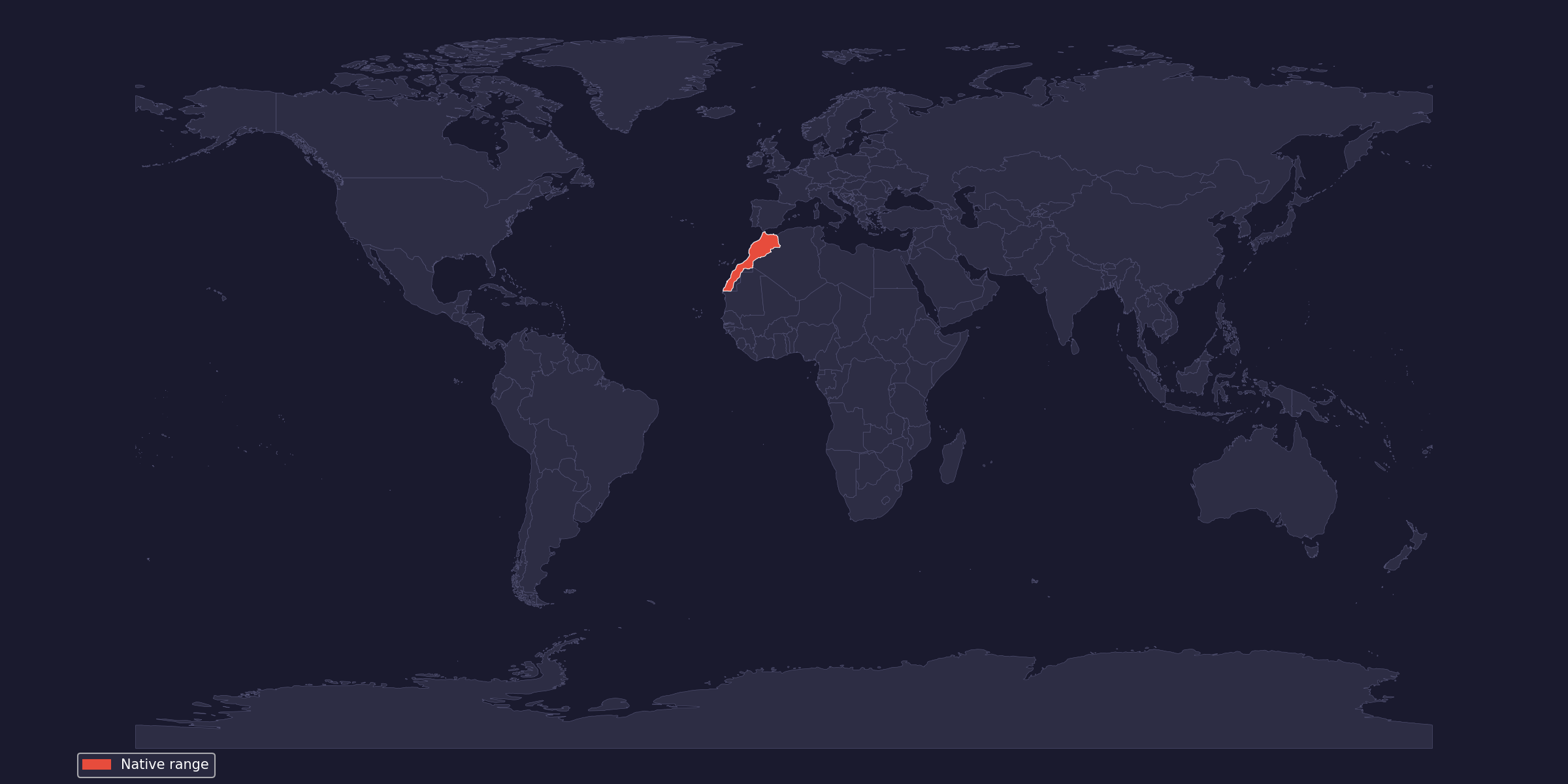
🌡 Climate across the native range
Monthly climate normals from reviewed GBIF occurrences across the documented Sous Valley range:
Western Souss-Massa — Morocco (reviewed occurrence)
| Month | Min °C | Mean °C | Max °C | RH % |
|---|---|---|---|---|
| January | 8.1 | 13.7 | 19.4 | 69 |
| February | 9.7 | 15 | 20.3 | 69 |
| March | 11.3 | 16.6 | 21.9 | 66 |
| April | 12.9 | 17.5 | 22.2 | 69 |
| May | 14.6 | 18.8 | 23.1 | 70 |
| June | 16.8 | 20.6 | 24.4 | 72 |
| July | 18.3 | 22.3 | 26.4 | 70 |
| August | 18.6 | 22.9 | 27.1 | 70 |
| September | 17.8 | 22.1 | 26.4 | 70 |
| October | 15.6 | 20.2 | 24.7 | 70 |
| November | 12.2 | 17.3 | 22.5 | 69 |
| December | 8.8 | 14.4 | 19.9 | 74 |
Taroudant area — Morocco (reviewed occurrence)
| Month | Min °C | Mean °C | Max °C | RH % |
|---|---|---|---|---|
| January | 7 | 13.5 | 19.9 | 60 |
| February | 9.1 | 15.3 | 21.6 | 56 |
| March | 11.6 | 17.8 | 24 | 52 |
| April | 13.5 | 19.3 | 25 | 52 |
| May | 15.1 | 20.7 | 26.2 | 54 |
| June | 17.8 | 23.1 | 28.5 | 53 |
| July | 20.2 | 25.8 | 31.5 | 48 |
| August | 20.7 | 26.3 | 31.9 | 48 |
| September | 18.6 | 24.3 | 29.9 | 53 |
| October | 15.7 | 21.4 | 27 | 55 |
| November | 12.8 | 18.8 | 24.7 | 53 |
| December | 8.4 | 14.7 | 21 | 60 |
Weather data by WorldClim v2.1 · Monthly normals queried by Herpeton Academy from raster values; relative humidity is derived from vapor pressure and mean temperature.
Location references use GBIF.org occurrence data where available; original occurrence records retain their source dataset licenses.
⚖️ Legal status
As checked on 17 August 2026, B. parroti was not listed in the CITES Appendices or EU wildlife-trade annexes; the Bern Convention is not relevant to this Moroccan endemic. Local and national export, import, collection and dangerously venomous-animal laws can still apply. A buyer should require a lawful captive-bred or documented-origin specimen, keep the invoice and breeder details, and reject vague “Moroccan Buthus” stock presented as this narrow endemic without provenance.
🤌 Husbandry
House one animal alone in a latched primary enclosure held within a locked cabinet or room. The enclosure should allow the keeper to inspect the burrow from the side and service a water dish without crossing the entrance. Prepare two clear catch cups and long forceps before any opening.
Quarantine for at least 90 days with dedicated tools. Many sale-list animals may be imported or incorrectly identified; record mass or clear body-condition photographs, feeding and moults, and do not combine lineages for breeding.
💡 Lighting
Use subdued light for 10–12 hours. UVB is unnecessary. A shaded forest-floor retreat is more appropriate than a bright desert display, but the enclosure still needs a clear viewing zone for safe counts. Lamps remain outside both barriers.
🌡 Heating and temperature
Provide 24–29 °C by day, a small 29–32 °C warm side and a 21–24 °C cool tunnel, with nights of 17–21 °C. Thermostat a side-mounted source and measure inside the burrow. The Sous Valley has cool winter nights; that does not justify chilling an unhealthy, new or premoult specimen.
💧 Humidity and water
Keep the general air at roughly 35–55% RH with cross-ventilation. Water one deep corner periodically and allow the surface to dry, producing a 55–65% protected premoult pocket without soaking the tunnel. Supply a shallow dish. Constant aridity ignores the argan-grove microhabitat, while sealed dampness encourages fungal growth and mites.
🌿 Enclosure and decoration
Pack 12–15 cm of pesticide-free soil, clay and sand so a tunnel remains open. Anchor a starter hide beneath cork or a flat stone seated on the base. Recent field observations of deep burrows mean a token layer of loose sand is inadequate. Keep the main chamber inspectable and avoid roots or stone stacks that cannot be moved remotely.
🪳 Feeding
Offer one small to medium captive-reared cricket, roach or locust every 7–14 days. Use prey no longer than the scorpion’s main body. Adjust for abdominal condition; an adult’s refusal before a moult is not a reason to leave insects roaming. Remove prey and remains within 24 hours.
🦂 Breeding and young
The species is viviparous, but reliable brood and gestation data are not available. Breeding requires confirmed B. parroti, not a yellow Buthus selected by appearance. Use a neutral introduction enclosure, supervise behind a clear shield and separate the pair after courtship. Prepare escape-proof individual tubs before birth and leave young on the female until their first moult.
🩺 Common problems
- Wrong species: several similar Buthus occur in the same Moroccan region.
- Collapsed tunnel: shallow loose sand cannot support the deep burrow used by this species.
- Moisture extremes: both saturated closed air and a permanently desiccated lower layer cause trouble.
- Untraceable origin: a narrow endemic should not be traded under a guessed label.
- Sting: obtain emergency medical care immediately and do not drive yourself.
📌 Conclusion
Buthus parroti is defined as much by its Sous Valley argan habitat and taxonomic context as by appearance. Only keep a documented specimen in a deep, inspectable burrow system with disciplined double containment.
📚 Sources and further reading
- GBIF species record: Buthus parroti
- Sousa, Arnedo & Harris (2017), updated Buthus catalogue
- Salhi et al. (2024), Souss-Massa distribution and habitat study
- Veterinary Care of Scorpions
- CITES Appendices
- European Commission: EU wildlife trade