Share

Philippine Blattid Cockroach
🔤 Taxonomy
“Blattidae sp. Philippines” is a provisional culture label, not a formally identified species. GBIF therefore supports classification only to Blattidae. Do not expand it into a binomial from photographs or reuse advice for a named Philippine blattid without diagnostic work.
Keep the original seller, acquisition date, photographs of both sexes and oothecae, and any island or locality data with every transfer. Different Philippine lines bearing similar labels must remain separate.
📌 Description
This guide treats the line as a medium, fast-moving tropical ground-and-bark cockroach. The working adult range of 3-5 cm and all reproductive figures are conservative culture-management values, not a species diagnosis. It suits keepers able to maintain a backup colony and record what the animals actually do.
🌍 Distribution
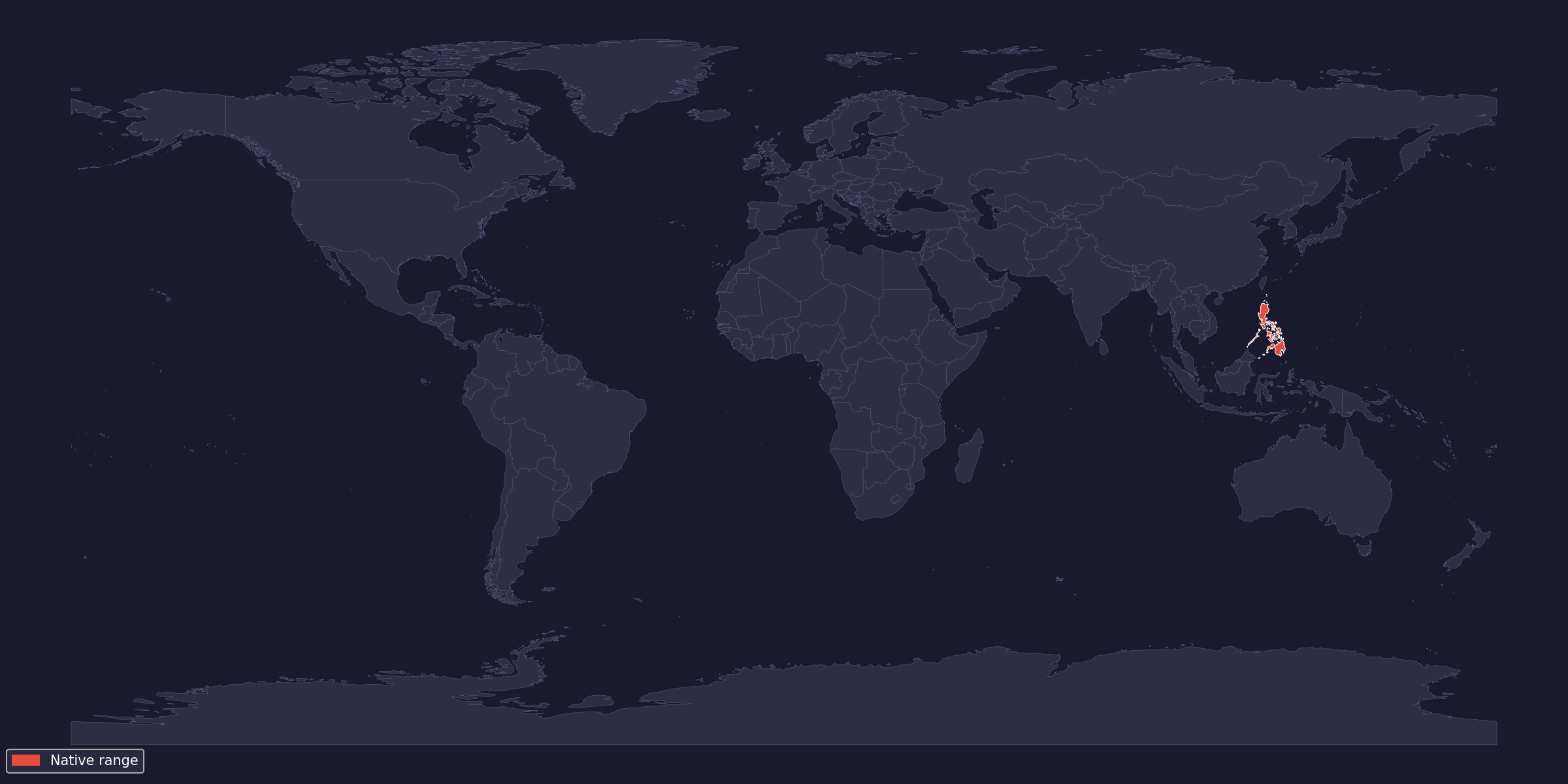
The only defensible origin is the Philippines; the trade label supplies no island or collection locality. The country map records that limited provenance and must not be read as a claim that the line occurs throughout the archipelago.
⚖️ Legal status
Checked 2026-08-22 against the official CITES Appendices, the current EU wildlife-trade annexes, and the Bern Convention appendices: no listing was found for this family-level trade line. Bern is not a range treaty signal for an unidentified Philippine insect.
Non-listing does not remove national import, plant-health, invasive-species, transport, or live-insect rules. Keep the invoice, the complete culture label, breeder details, and import or transfer documents. Never release animals, oothecae, frass, or substrate outdoors.
🤌 Husbandry
Quarantine the line for at least 60 days in a simple escape-proof box with dedicated tools. A small colony can start in 30 x 20 x 25 cm. Count animals and note climbing, flight, burrowing, maturation time, ootheca placement, and brood size; those observations are more useful than false species-level certainty.
💡 Lighting
UVB is unnecessary. Provide 11-13 hours of diffuse light and shaded retreats. Avoid a hot lamp over a small plastic container.
🌡 Heating and temperature
Maintain 24-28°C, with a 22-24°C retreat and 21-24°C at night. Heat one side only and control it with a thermostat. Poor feeding and stalled reproduction below this range do not justify exceeding 29°C.
💧 Humidity and water
Keep a moisture gradient around 65-80% relative humidity: one lower corner moist, the upper surfaces ventilated and mostly dry. Offer water crystals or a very shallow pebble-filled dish. Constantly wet food and stagnant air invite mold and mites.
🌿 Enclosure and decoration
Use 6 cm of pesticide-free soil, decayed hardwood and leaf litter, plus vertical cork. Seal ventilation with fine metal or polyester mesh; assume first instars and adults may climb or use their wings until proven otherwise. Do not mix this line with cleanup crews or other cockroaches while its egg strategy is being documented.
🪳 Feeding
Offer leaf litter and rotten hardwood continuously, with small portions of carrot, squash, apple or leafy vegetables two or three times weekly. Add a modest protein food once weekly. Remove soft leftovers within 24 hours and avoid salty, seasoned, moldy, or pesticide-exposed food.
🥚 Breeding
Blattidae generally produce oothecae, but the timing and placement for this unidentified line are unverified. If cases are deposited, leave half in the parent substrate and incubate the remainder separately at 24-28°C on barely moist leaf litter. The 45-100 day window and 12-30 eggs are provisional planning ranges. Record actual dates; do not discard an ootheca merely because it exceeds them.
🩺 Common problems
- Escapes: replace warped lids and mesh gaps before the colony reproduces.
- Failed molts: restore ventilation, moisture gradient, and open hanging surfaces.
- Mites or mold: reduce wet food and standing moisture; change only the affected substrate.
- Culture collapse: avoid single-age groups, overheating, protein-heavy diets, and wholesale substrate replacement.
- Misidentification: never sell descendants under a formal species name without defensible identification.
📌 Conclusion
This is a record-keeping project as much as a display colony. Choose it only if you can preserve its Philippine label, contain every life stage, and keep husbandry claims provisional.
📚 Sources and further reading
- GBIF: Blattidae
- Cockroach Species File
- ReptiFiles — checked; no line-specific guide found
- CITES Appendices
- EU wildlife trade legislation
- Bern Convention appendices