Share

Kyoto Cockroach
🔤 Taxonomy
Asiablatta kyotensis (Asahina, 1976) is the accepted name. It was described as Parcoblatta kyotensis and transferred to the newly erected genus Asiablatta in 1985. Both names occur in older pest-control and life-history literature. “Kyoto cockroach” or “Kyoto wood cockroach” describes the species; it is not the unrelated Asian cockroach Blattella asahinai.
📌 Description
Adults are small, reddish to dark brown woodland cockroaches, about 1.2-1.8 cm long. Males are usually narrower with longer wings; females are broader. Adults climb, run quickly, and may flutter or fly toward light. Nymphs have sticky defensive secretions and shelter in moist wood and litter.
This is a biologically interesting display culture but a serious escape risk. It tolerates cooler conditions than tropical blaberids, and established indoor or outdoor populations have been reported within its Asian range. Housing must be designed as biosecure culture equipment, not an open planted display.
🌍 Distribution
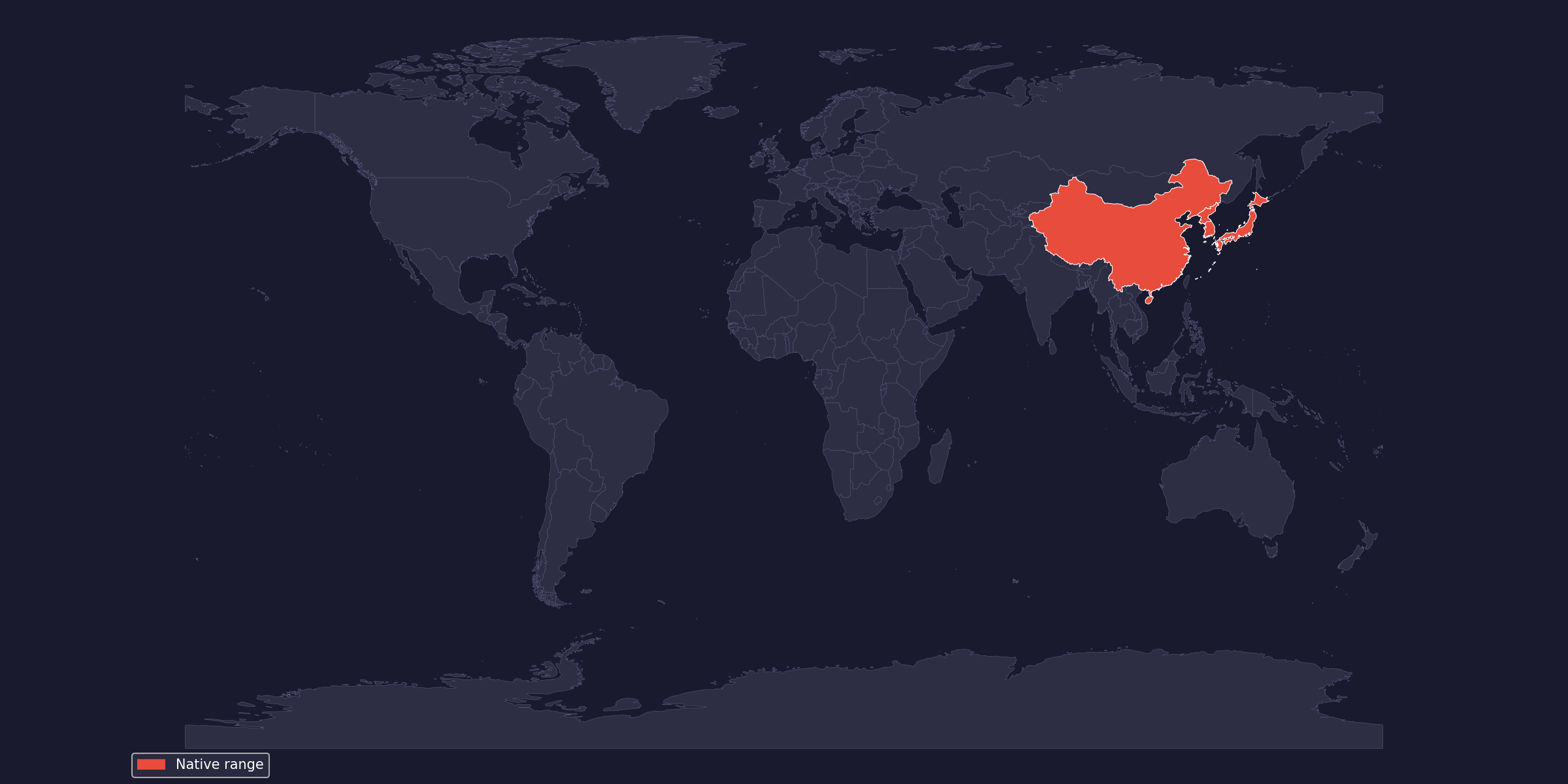
The native range is Far Eastern Asia. Verified sources report Japan, southern and western South Korea, and eastern China; Japanese official material describes records from Honshu and Kyushu and from the Korean Peninsula and China. It is associated with lowland and foothill woodland, tree hollows, decaying wood, and sap flows. The map shows the countries, not every occupied province.
⚖️ Legal status
Local and national rules may still apply.
Checked on 2026-08-22: A. kyotensis was not found in the current CITES Appendices or EU wildlife-trade Annexes A-D, and the Bern Convention is not relevant to this East Asian species. Absence from wildlife-trade lists does not remove plant-health, pest, import, landlord, or transport controls.
Ask the competent authority whether live cockroaches may be imported or cultured at the destination. Retain origin documents, work over a catch tub, freeze waste before disposal where lawful, and never release animals or oothecae.
🤌 Husbandry
Use a gasketed, positively latched enclosure of at least 25 × 20 × 25 cm for a small colony. Cover every vent with fine metal mesh and eliminate cable holes and lid tracks. Include vertical bark, because adults use wood surfaces, but leave inspection space around the perimeter.
| Parameter | Practical target |
|---|---|
| Adult size | 1.2-1.8 cm |
| Day air | 22-26 °C |
| Cool retreat | 18-22 °C |
| Night | 17-21 °C |
| Relative humidity | 60-80% with ventilation |
| Ootheca at 25 °C | about 41 days in published rearing data |
Quarantine for 90 days and never mix locality lines or woodland cockroach species. Because males are attracted to light, service at low room light inside a large clear catch box. Use aspirators or cups, not fingers, for tiny animals.
💡 Lighting
UVB is not required. Laboratory behavioural work used a 16:8 light-dark cycle; a 12-16-hour day can be adjusted seasonally for a temperate culture. Avoid bright lights during servicing and ensure the lid is secured before room lights come on.
🌡 Heating and temperature
Keep the main area at 22-26 °C with a small 26-28 °C warm edge and an 18-22 °C cool retreat. Nights may fall to 17-21 °C. Published laboratory colonies have been held at 25 ± 1 °C and 60 ± 10% RH.
Low humidity, rather than modest coolness alone, can greatly delay development. Do not push the whole colony hot to compensate: a dry habitat can extend nymphal development dramatically. Any seasonal cooling should be applied only to an established, well-fed culture and documented against a control group.
💧 Humidity and water
Maintain the lower substrate and one bark stack lightly moist while the opposite surface becomes almost dry. Target 60-80% relative humidity with steady airflow. Oothecal ridges appear to assist water relations; dry conditions reduce hatch and slow development, while waterlogging promotes mold and drowning.
Offer a very shallow textured water source and water-rich vegetables. Mist bark rather than adults. If every surface remains wet the ventilation is inadequate.
🌿 Enclosure and decoration
Use 5-8 cm of pesticide-free leaf mold, topsoil/coir, rotten hardwood, and crushed deciduous leaves. Add narrow cork tubes and upright bark. In nature the species has been observed in oak cavities and feeding at sap, so rough vertical wood and covered feeding points are more relevant than a bare feeder rack.
Do not use bark taken from pesticide-treated trees, sticky traps near the open culture, or bioactive vents large enough for hatchlings. Keep the room free of food debris that could support an escape.
🪳 Feeding
Provide leaf litter and rotten hardwood continuously. Keep a small dry staple of grain and legume meal available. Two or three times weekly offer tiny portions of apple, pear, squash, carrot, mushroom, or beetle jelly; these approximate sap and decaying plant resources without flooding the enclosure with sugar.
Add fish flakes sparingly. Remove leftovers within 24 hours. Place food on shallow dishes and inspect beneath them for oothecae before cleaning.
🥚 Breeding
Females deposit external, ridged oothecae containing about 32 eggs. Published summary data give approximately 41 days to hatch at 25 °C, supporting a conservative 24-26 °C and 35-55-day incubation range under moist, ventilated conditions. Nymphal development is roughly five months under good laboratory conditions but can extend toward two years in dry habitat.
Leave attached oothecae in place or move the entire bark fragment to a matching incubator. Do not peel them from wood. Adults reach sexual maturity roughly two weeks after the final molt in laboratory observations. Maintain several breeding females and duplicate cultures because tiny cohorts are vulnerable to drying and escape.
🩺 Common problems
- Ootheca failure: usually follows low humidity, overheating, or damage during cleaning.
- Extremely slow nymphs: verify moisture at depth, measured temperature, and access to decomposed leaves and staple food.
- Mold and gnats: reduce fresh food, increase cross-ventilation, and remove only the affected material.
- Escape: isolate the room, close lights, and search high surfaces and warm crevices; then correct the enclosure before reopening it.
- Allergy: minimize airborne frass with damp cleaning and appropriate gloves and respiratory protection.
📌 Conclusion
Asiablatta kyotensis is best for a keeper interested in temperate woodland-roach biology who can maintain nymph-proof containment. Fine mesh, a moist woodland substrate, and disciplined waste treatment are non-negotiable. Its main husbandry failure is an enclosure that is biologically suitable but not biosecure.
📚 Sources and further reading
- GBIF species record: Asiablatta kyotensis
- Kyoto Prefecture Red Data Book species account
- Distribution of Asiablatta kyotensis in Korea
- Aggressive behaviour under controlled rearing conditions
- CITES Appendices
- EU wildlife-trade Annexes, Regulation (EU) 2023/966
- Bern Convention documents and appendices