Share

Thorny Stick Insect
🔤 Taxonomy
Aretaon asperrimus is the accepted scientific name for the thorny stick insect. In hobby records it is often linked with PSG 118; labels and invoices should still use the Latin name because several brown, spiny phasmids are sold under similar common names.
Common names used in the hobby:
- Thorny stick insect
- Spiny Sabah stick insect
Names and groups that can be confused with it in trade:
- Other Aretaon or Tisamenus species sold as generic thorny stick insects
- Eurycantha nymphs in mixed phasmid cultures
📌 Description
This is a compact, wingless Bornean phasmid. Adult females are stockier and usually approach 7-8 cm; males are slimmer and often around 5-6 cm. The rough brown body and small spines make it a good display insect, but it is not a handling pet. Tiny hatchlings escape through surprisingly small gaps.
🌍 Distribution
Aretaon asperrimus is associated with Sabah in northern Borneo, including humid forest and forest-edge vegetation. In captivity, the useful lesson is not constant wetness; it is a warm, shaded, leafy enclosure with fresh food, high local humidity, and enough airflow that leaves dry between mistings.
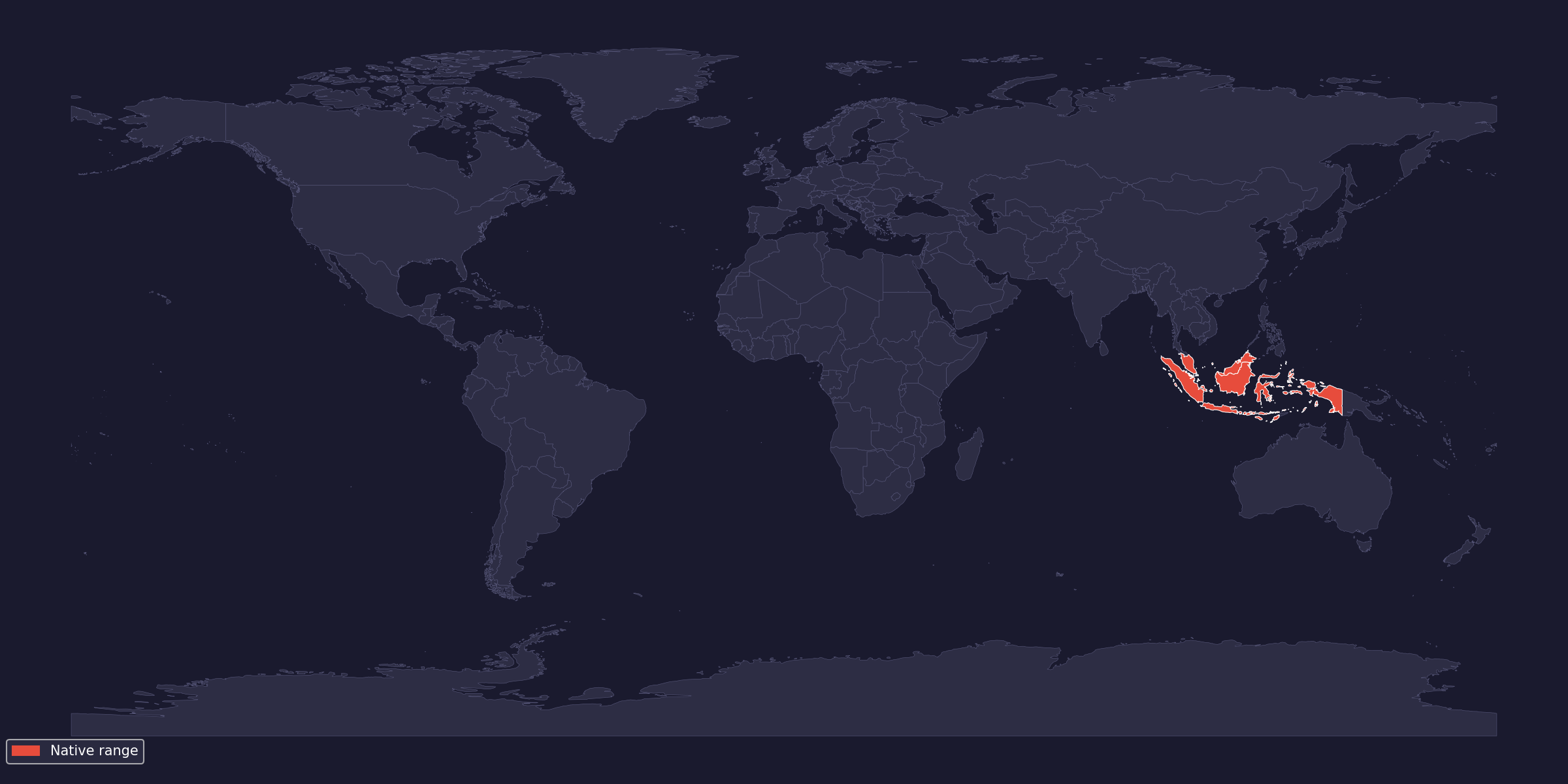
🌡 Climate across the native range
Monthly climate normals from reviewed GBIF occurrence locations:
Sabah — Malaysia
| Month | Min °C | Mean °C | Max °C | RH % |
|---|---|---|---|---|
| January | 13.5 | 17.2 | 21 | 87 |
| February | 13.4 | 17.3 | 21.1 | 88 |
| March | 13.8 | 17.8 | 21.9 | 87 |
| April | 14.4 | 18.4 | 22.4 | 91 |
| May | 14.4 | 18.4 | 22.4 | 95 |
| June | 14.2 | 18 | 21.8 | 90 |
| July | 14 | 17.8 | 21.7 | 96 |
| August | 14 | 17.9 | 21.7 | 99 |
| September | 13.9 | 17.8 | 21.7 | 94 |
| October | 14 | 17.7 | 21.5 | 93 |
| November | 14 | 17.7 | 21.4 | 94 |
| December | 13.8 | 17.5 | 21.3 | 90 |
Weather data by WorldClim v2.1 · Monthly normals queried by Herpeton Academy from raster values; relative humidity is derived from vapor pressure and mean temperature.
Location references use GBIF.org occurrence data where available; original occurrence records retain their source dataset licenses.
⚖️ Legal status
Checked on 2026-06-22: this species is not listed in the CITES Appendices, is not separately listed in the EU wildlife-trade annexes, and the Bern Convention is not relevant. That does not make live trade automatically unrestricted. Plant-feeding insects can fall under national or local rules for import, interstate movement, agricultural pest, school-display, public-display, or biosecurity.
Keep invoices, breeder details, species identification, and any permit or transfer paperwork. In the United States, USDA APHIS notes that most insects and mites feeding on plants or plant products require PPQ 526 permitting for importation, interstate movement, and environmental release. Never release surplus insects, eggs, food plants from the enclosure, or used substrate outdoors.
🤌 Husbandry
Keep a small colony in a tall, escape-proof ventilated terrarium. The practical adult minimum is 30 x 30 x 45 cm, but a larger enclosure is easier to service and keeps food plants stable. Use fine mesh on vents, tight doors, and no open cable gaps.
🌿 Enclosure and layout
Provide vertical and diagonal twigs, cork bark, leafy cover, and either paper towel or a lightly moist substrate on the floor. Keep cut host stems in a covered jar or florist tube so insects cannot drown. Avoid crowding; failed molts increase when insects cannot hang clear of leaves and each other.
💡 Lighting
UVB is not required. Use bright indirect room light and a steady day-night cycle. Avoid lamps that dry food plants, overheat the upper branches, or leave the lower enclosure stagnant.
🌡 Heating and temperature
Use stable room-scale heat rather than a narrow basking hotspot:
- ambient air: 22-27°C
- upper warm area: 28-29°C
- cool retreat: 20-22°C
- night: 20-23°C
Short cool periods are tolerated better than overheating. Measure near the food plant and molting space, not only on the room wall.
💧 Humidity, ventilation, and water
Aim for 65-85% humidity with a brief rise around 75-90% for molts. Mist lightly in the evening or according to local drying speed, then let mesh, leaves, and the front of the enclosure dry. A sour smell, persistent condensation, or fuzzy leaves means water and airflow are out of balance.
🥗 Feeding plants
Offer fresh pesticide-free bramble, raspberry, oak, ivy, or pyracantha continuously. Wash leaves, avoid roadside cuttings, and replace wilted stems before the colony is forced onto dry foliage. When changing plant species, overlap old and new food for several days because nymphs can refuse sudden switches.
🥚 Breeding and eggs
This is a sexual, egg-laying species. Females drop eggs over time; collect them from paper or sift them gently from substrate. Incubate on barely moist paper, sand, vermiculite, or soil with small air holes and regular mold checks. At 22-26°C, incubation commonly takes about 90-180 days.
🧍 Handling and safety
Treat the colony as display-only. Move insects by offering a twig or letting them walk onto your hand; do not pull legs from mesh or food plants. The spines are not medically dangerous but can scratch, and dropped limbs or damaged feet matter more to the insect than to the keeper.
🦗 Molting and hatchlings
Hatchlings need fine mesh, tender leaves, and a simple layout where they can find food quickly. Keep several body lengths of clear hanging space below perches. Separate crowded or mismatched size groups if larger nymphs disturb smaller ones during molts.
🩺 Common problems
Common problems include failed molts, dehydration, moldy eggs, mites, pesticide poisoning, stale leaves, unexplained nymph losses, and escapes through vents. Most chronic failures come from wet stagnant cages, dirty food plant containers, or not having a reliable year-round host plant supply.
📌 Conclusion
Aretaon asperrimus suits keepers who can provide secure ventilation, warm humid cycles, and fresh host plants every week. It is one of the more manageable phasmids, but it should stay a display colony with a clear plan for surplus eggs and local biosecurity rules.
📚 Sources and further reading
Key sources checked for this revision:
- GBIF Backbone Taxonomy: Aretaon asperrimus
- Phasmida Species File: Aretaon asperrimus
- Phasmid Study Group culture information
- CITES Appendices, valid from 5 March 2026
- European Commission wildlife trade overview
- USDA APHIS: Insects and Mites
- WorldClim v2.1