Share

Peppered Cockroach
🔤 Taxonomy
Archimandrita tessellata Rehn, 1903 is the spelling accepted by GBIF. The requested and still widespread trade spelling Archimandrita tesselata has one “l”; preserve it in search terms and old labels, but use tessellata for current records. “Peppered cockroach” and German “Riesenschabe” are useful trade names, though the latter is not species-specific.
📌 Description
This broad, heavy-bodied Central American blaberid reaches about 7-9.5 cm. Adults have long cream-to-tan wings mottled with dark flecks; nymphs are darker, thick, and inclined to bury. Males are usually slimmer with more visible terminal styli, while mature females have a wider abdomen.
Peppered cockroaches are gentle display animals, not handling insects. Their mass, long maturation, and need for warm, ventilated humidity make them less forgiving than common feeder roaches. They can flutter or glide when startled and should be transferred inside a catch tub.
🌍 Distribution
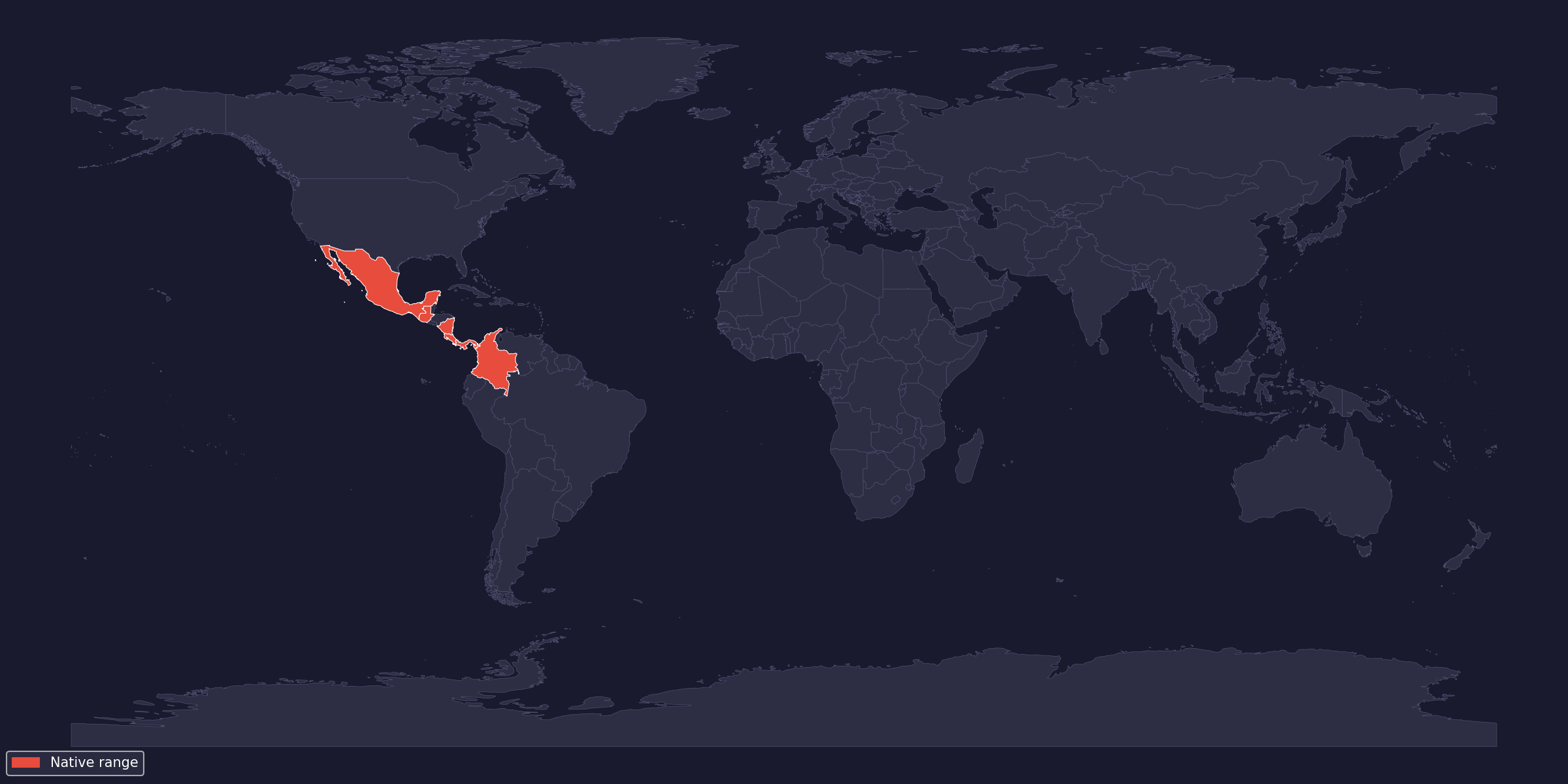
Published records place the species from southern Mexico and Guatemala through Nicaragua and Costa Rica to Panama and Colombia. Some older Caribbean or South American records may reflect confusion with Archimandrita marmorata or human transport. The map uses the conservative documented mainland range.
⚖️ Legal status
Checked on 2026-08-22: A. tessellata was not found in the current CITES Appendices or EU wildlife-trade Annexes A-D. The Bern Convention is not relevant to this non-European species. Local ownership, import, transport, and plant-pest rules can still apply.
Choose captive-bred stock and retain invoices and culture-line records. Do not release animals, nymphs, substrate, or live cleanup organisms; freeze discarded culture material before disposal where local rules allow.
🤌 Husbandry
A 45 × 30 × 30 cm enclosure is a practical minimum for a small breeding group. Add space as the colony grows. Use strong cross-ventilation, positive lid latches, fine mesh, and several horizontal and leaning bark slabs. Service inside a smooth-sided tub because adults may flutter and small nymphs hide in litter.
| Parameter | Practical target |
|---|---|
| Adult size | 7-9.5 cm |
| Day air | 24-29 °C; limited warm end 29-31 °C |
| Night | 20-24 °C |
| Relative humidity | 65-80%, never stagnant |
| Substrate | 8-12 cm leaf-rich forest mix |
| Feeding | dry staple plus fresh foods 2-3 times weekly |
Quarantine new animals for 60-90 days with simple hides and dedicated tools. Record deaths, births, molts, and appetite. Imported or mislabeled stock can carry mites, gut parasites, or other cockroach nymphs; do not merge colonies until the line is stable and identified.
💡 Lighting
UVB is unnecessary. Provide a low-intensity 10-12-hour day and abundant shade. If live plants are used, illuminate them from outside while ensuring bark retreats remain dark. Strong overhead heat dries exposed adults and can cause panic flights.
🌡 Heating and temperature
Maintain 24-29 °C by day, with a small 29-31 °C warm end and a 21-24 °C cool retreat. Nights of 20-24 °C are suitable. Sustained cool conditions slow nymph growth and reproduction; uniform high heat removes the animal’s escape gradient.
Use an externally mounted side heater and thermostat. Monitor both substrate surface and air under the warmest hide. Never place unregulated heat beneath deep substrate.
💧 Humidity and water
Keep the lower substrate lightly moist while allowing the upper leaf layer to dry between watering. Aim for 65-80% relative humidity with constant airflow. During molts, a humid lower retreat around 75-85% is valuable, but wet wings and condensation across the box indicate too little ventilation.
Offer a shallow textured water dish or safe hydration gel and clean it frequently. Large colonies generate considerable moisture from respiration and fresh food, so reduce misting before closing vents.
🌿 Enclosure and decoration
Provide 8-12 cm of pesticide-free topsoil/coir, crushed deciduous leaves, and rotten hardwood. This depth lets nymphs bury and buffers moisture. Place cork bark so it cannot shift onto soft, freshly molted insects. Retain open ground for feeding and observation.
Avoid cedar, pine shavings, fertilizer, perlite, sharp gravel, and perpetually saturated coir. Leaf litter is food as well as cover and should be replenished as it is consumed.
🪳 Feeding
Offer a dry, balanced roach diet or grain-legume mix continuously. Add squash, carrot, sweet potato, leafy greens, apple, pear, or banana two or three times weekly. Include rotten hardwood and deciduous leaf litter. Small occasional portions of fish food provide protein, especially during growth and reproduction.
Do not build the diet around fruit or high-protein pet food. Remove fresh food within 24-48 hours and place it on a dish so the humid substrate remains clean. Crowded hungry colonies may damage molting animals.
🥚 Breeding
Females incubate the ootheca internally and give birth to live nymphs; the structured metadata therefore uses “viviparous,” while cockroach literature commonly calls the mode ovoviviparous. Sexual maturity follows the final molt, but colony production is slow compared with feeder species. Stable warmth, abundant hides, and mature females matter more than maximum heat.
Sex subadults by the terminal abdominal plates and adults by abdomen shape and male styli. Keep several females per male. Published observations describe females remaining near newborns during their first hours; avoid disturbing a female that is giving birth and leave tight retreats nearby.
🩺 Common problems
- Mismolts and damaged wings: caused by low local humidity, unstable bark, crowding, or disturbance during ecdysis.
- Slow growth: first verify measured temperature and diet; nymphal development commonly takes many months.
- Aborted oothecae: repeated disturbance, drying, overheating, and poor nutrition are common husbandry triggers.
- Mites and phorid flies: reduce wet food, remove fouled material, and improve airflow.
- Allergy: frass and shed cuticle are potent inhaled allergens; wear gloves and respiratory protection for dusty cleaning.
📌 Conclusion
The peppered cockroach is rewarding for keepers who can give a large colony deep leaf-rich substrate and warm humidity without stagnant air. Set up the adult enclosure before buying nymphs and expect slow maturation. Most failures begin when a large tropical blaberid is kept in a small, wet feeder tub.
📚 Sources and further reading
- GBIF species record: Archimandrita tessellata
- Rehn (1903), original description in “Studies in American Blattidae”
- Central American distribution review and records (Revista Nicaragüense de Entomología, 2020)
- Maternal behaviour in Archimandrita tessellata (Iorio & Delfosse, 2004)
- CITES Appendices
- EU wildlife-trade Annexes, Regulation (EU) 2023/966
- Bern Convention documents and appendices