Share

Giant Day Gecko
🔤 Taxonomy
Phelsuma grandis is the currently accepted scientific name. Older literature and older hobby material often listed the species as Phelsuma madagascariensis grandis.
English common names used in the hobby:
- Giant day gecko
- Madagascar giant day gecko
German common names used in the hobby:
- Madagaskar-Taggecko
- Riesentaggecko
📌 Description
Phelsuma grandis is a large, bright green diurnal gecko known for red markings, adhesive toe pads, and constant daytime activity. Adults commonly reach around 25-30 cm total length.
This is a display species rather than a handling reptile. The skin is delicate, the animal is quick, and good care depends on strong light, UVB, climbing height, and regular hydration.
🌍 Distribution
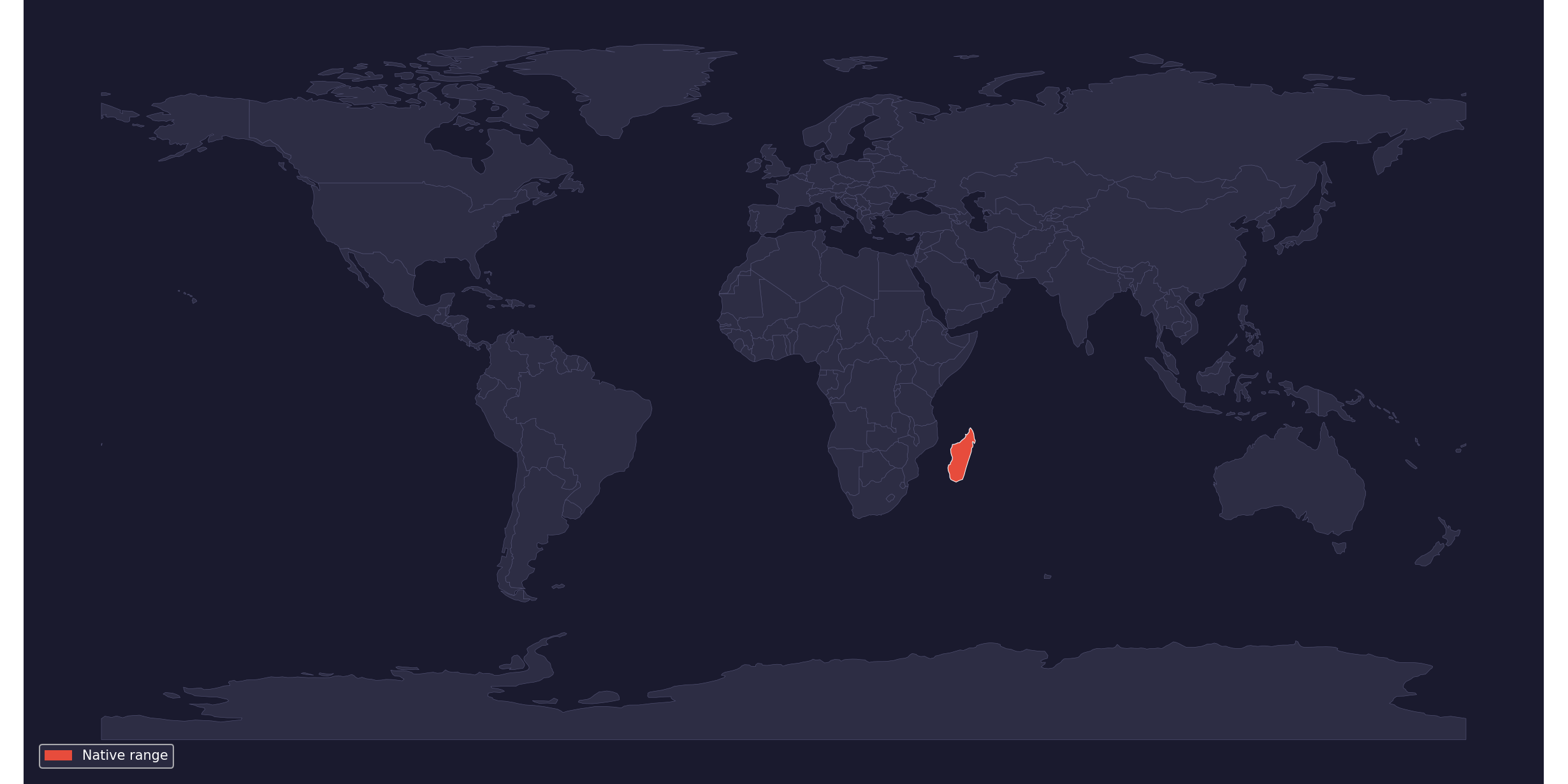
Phelsuma grandis is native to Madagascar and is associated with warm, humid habitats with trees, vertical structure, and regular sunlight.
In captivity, this usually means:
- A tall enclosure
- Strong visible light
- Access to UVB
- A warm basking area
- Humidity with daily drying cycles
🌡 Climate across the native range
Monthly climate normals from reviewed GBIF occurrence locations:
Antsiranana — Madagascar
| Month | Min °C | Mean °C | Max °C | RH % |
|---|---|---|---|---|
| January | 24.4 | 26.2 | 28.1 | 84 |
| February | 24.5 | 26.3 | 28.1 | 85 |
| March | 24.7 | 26.7 | 28.5 | 83 |
| April | 24.8 | 26.8 | 28.7 | 81 |
| May | 24.2 | 26.2 | 27.9 | 78 |
| June | 22.8 | 24.9 | 26.7 | 75 |
| July | 22.2 | 24.2 | 26 | 73 |
| August | 22 | 24.1 | 26.1 | 73 |
| September | 22.5 | 24.6 | 26.6 | 74 |
| October | 23.4 | 25.5 | 27.5 | 76 |
| November | 23.9 | 26.1 | 28.2 | 79 |
| December | 24.3 | 26.4 | 28.3 | 82 |
Toamasina — Madagascar
| Month | Min °C | Mean °C | Max °C | RH % |
|---|---|---|---|---|
| January | 23.8 | 25.8 | 28.1 | 86 |
| February | 23.8 | 25.8 | 28 | 86 |
| March | 23.5 | 25.3 | 27.4 | 86 |
| April | 22.7 | 24.5 | 26.5 | 85 |
| May | 21.3 | 23 | 25 | 85 |
| June | 19.6 | 21.4 | 23.3 | 84 |
| July | 18.5 | 20.4 | 22.4 | 84 |
| August | 18.4 | 20.6 | 22.7 | 83 |
| September | 19.1 | 21.4 | 23.6 | 82 |
| October | 20.5 | 22.9 | 25.2 | 81 |
| November | 21.9 | 24.2 | 26.6 | 81 |
| December | 23.2 | 25.4 | 27.6 | 84 |
Weather data by Open-Meteo.com · CC BY 4.0 · Monthly normals calculated by Herpeton Academy from daily archive values.
Location references use GBIF.org occurrence data where available; original occurrence records retain their source dataset licenses.
⚖️ Legal status
As checked against current official sources in April 2026, Phelsuma grandis falls under the CITES listing for Phelsuma species in Appendix II. Under the EU wildlife trade rules, that generally means Annex B unless a stricter listing applies.
The species is not relevant to the Bern Convention because it is not native to Europe. National rules on sale, transport, import, breeding, and proof of legal origin may still apply. Captive-bred animals with clear paperwork are strongly preferable.
🤌 Husbandry
This species should usually be housed alone. Babies and small juveniles are easier to monitor in smaller escape-proof vertical rearing setups, around 30 x 30 x 45 cm, with fine feeding ledges and dense cover. Move them up as feeding and body condition become easy to track.
A single established adult should have at least 60 x 60 x 120 cm of usable vertical space when possible. A 45 x 45 x 60 cm terrarium is better treated as temporary or for a young/subadult animal, because adult Phelsuma grandis are large, active, and strongly arboreal.
Good basics include:
- Vertical bamboo, cork, or branches
- Dense visual cover
- Strong ventilation
- Reliable drainage
- Limited direct handling
House this territorial gecko singly unless breeding is intentional and both animals can be monitored closely. Visual barriers do not guarantee compatibility: persistent chasing, bite marks, one animal staying near the floor, or unequal access to basking and food are reasons to separate them. Keep a transport tub and spare enclosure ready before any introduction.
Allow a new arrival a quiet settling period with simple routines and minimal door opening. Record weight, appetite, droppings, and shed quality. Day geckos should be moved with a container or cork tube whenever possible; grabbing can tear the delicate skin or cause tail loss.
💡 Lighting
This is a strongly light-dependent species. Bright visible light and useful UVB are both important.
Practical principles:
- Bright enclosure lighting for 10-12 hours daily
- Low to moderate UVB at a safe distance
- A clear basking branch under the light
- Shade and retreat options elsewhere
Weak lighting often leads to poor activity and poor long-term condition.
Place the UVB and basking lamp over the same usable upper branch so the gecko receives heat, visible light, and UVB together while basking. Check the branch surface with an infrared thermometer and measure UVI at the animal’s back height. Lamps must remain outside reach: Phelsuma often cling upside down to mesh and can be burned when a hot bulb sits directly on the lid.
For UV planning, treat this species as Ferguson Zone 3. Aim for about UVI 3-4 on the highest routinely used basking branch, with a gradient down to shaded areas near zero UVI. This usually points to a moderate 5-7% T5/Forest-style UVB tube at a measured safe distance; measure with a Solarmeter 6.5 when possible, because reflector, mesh, distance, and lamp age change the real exposure. UV-Tool, Baines et al. (2016). ReptiFiles.
🌡 Heating and temperature
Suitable approximate temperatures are:
- Basking area: around 30-33°C
- Daytime ambient range: about 24-28°C
- Night: around 20-24°C
The enclosure should offer warmth without becoming uniformly hot. Chronic overheating and dehydration are major risks.
💧 Humidity and water
Phelsuma grandis needs regular hydration and usually drinks droplets from leaves and decor.
Practical goals:
- Moderate humidity by day
- Higher humidity after misting
- Good drying between wetter periods
- Fresh water available as backup
Constant stagnant wetness is not desirable. Airflow matters.
🌿 Enclosure and decoration
The enclosure should emphasize height, secure climbing routes, and foliage.
Useful elements include:
- Bamboo tubes
- Cork backgrounds
- Live plants
- Broad leaves for drinking
- Secure elevated resting spots
Bare enclosures often produce stress and poor activity.
🪳 Feeding
This species is insectivorous with regular use of fruit-based prepared diets.
Suitable foods include:
- Crickets
- Roaches
- Small locusts where available
- Prepared day-gecko or fruit-gecko diets
Insects should be gut-loaded, and calcium plus vitamin support should match the lighting system.
Use a nutritionally complete gecko diet rather than plain fruit or honey, and offer only a small portion that can be removed before fermentation or mold. Adults usually stay in better condition when insects and prepared diet are portioned rather than left continuously available. Dust insects lightly with plain calcium when effective UVB is provided; use vitamin D3 and multivitamins only according to the chosen product and the rest of the diet, avoiding overlapping fortified products.
🩺 Common problems
Common problems include dehydration, poor shedding, weak UVB, calcium imbalance, nose rubbing, and injuries from rough handling.
Warning signs include:
- Sunken eyes
- Stuck shed
- Weak grip
- Jaw or limb problems
- Reduced appetite
- Persistent dark stress coloration
If problems appear, first check UVB strength, lighting intensity, temperatures, hydration routine, and supplement use. Serious weakness or signs of metabolic bone disease need a reptile veterinarian.
📌 Conclusion
Phelsuma grandis is one of the best display geckos for keepers who can provide bright light, UVB, climbing height, and steady husbandry. It is active and striking, but not forgiving of weak lighting or careless handling.
📚 Sources and further reading
- ReptiFiles: Giant Day Gecko Care Sheet
- CITES Appendices, checked 2026-05-04
- EU wildlife trade regulations and annex references, checked April 2026
- GBIF species backbone and occurrence data for taxonomy and distribution context
- IUCN Red List and specialist husbandry references where applicable
💬 Feedback
For questions, corrections, or practical notes, leave us a message in the forum thread.