Share

Smooth Knob-tailed Gecko
🔤 Taxonomy
Nephrurus levis is the accepted scientific name. Three subspecies are commonly recognized: N. l. levis, N. l. occidentalis, and N. l. pilbarensis. Older literature may use the misspelling Nephrurus laevis or treat the western forms as full species.
English names include smooth knob-tailed gecko, common knob-tailed gecko, and three-lined knob-tail. Locality or subspecies should be recorded rather than inferred from colour alone.
📌 Description
This nocturnal Australian gecko has a large head, long limbs, padless toes, and a short tail ending in a rounded knob. Adults average about 10 cm snout-to-vent and usually reach 12-15 cm overall. With stable care they can live at least 10 years and often longer.
During the day, N. levis constructs or occupies a sand burrow and can seal the entrance. At night it emerges to ambush insects. It is hardy once established, but its delicate skin, defensive posture, specialized substrate, and dislike of routine handling make it better for an observant intermediate keeper than for children.
🌍 Distribution
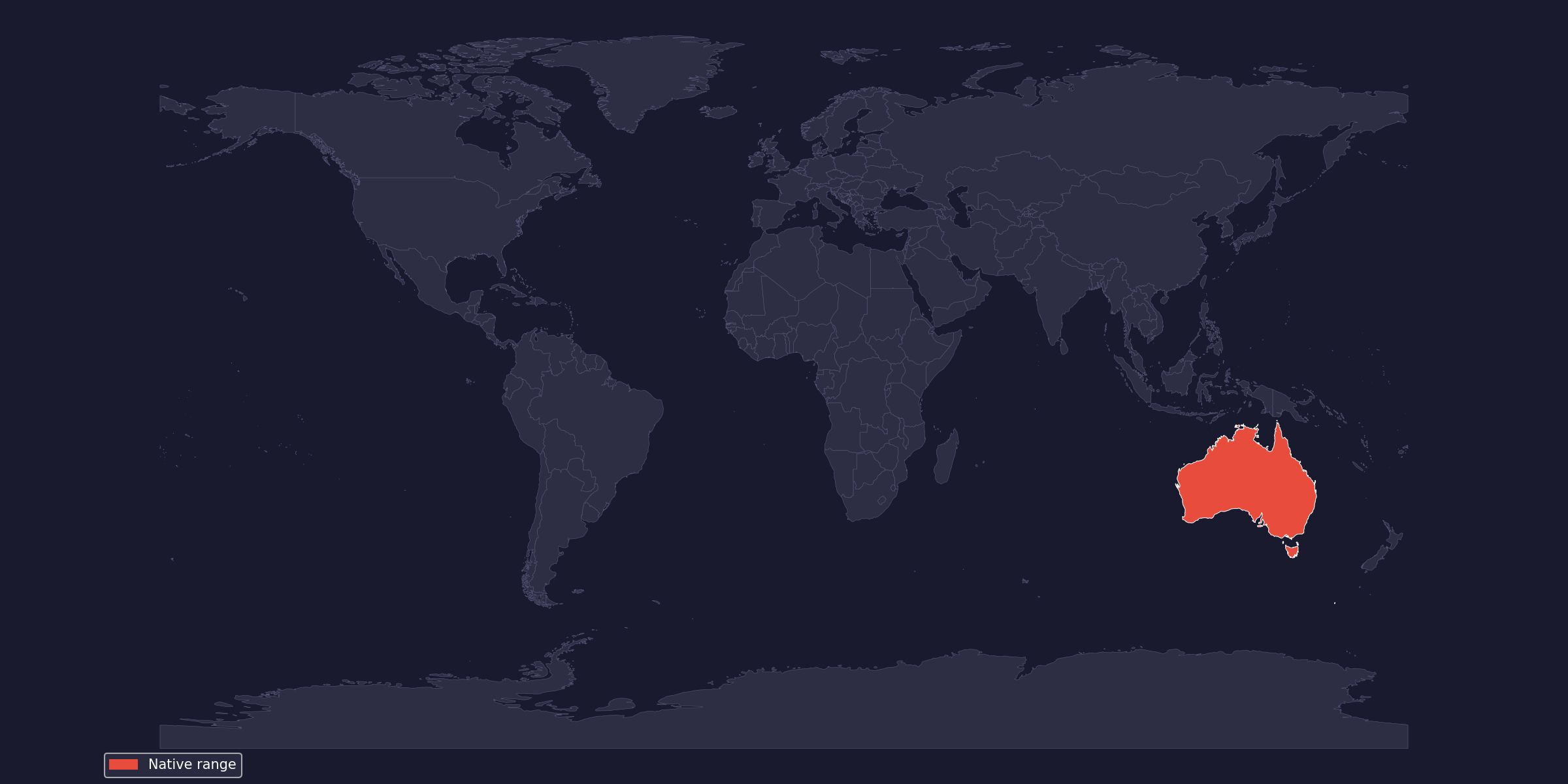
The species occupies much of arid and semi-arid inland Australia west of the Great Dividing Range, including parts of Queensland, New South Wales, the Northern Territory, South Australia, and Western Australia. The western subspecies have more restricted coastal and Pilbara distributions.
Habitats include dunes, sandy plains, spinifex, scrub, and dry woodland. The surface can be very dry while occupied burrows retain more stable temperature and moisture; the enclosure must reproduce both layers.
⚖️ Legal status
Checked on 2026-08-20: Nephrurus levis was not found in the current CITES Appendices or EU wildlife-trade Annexes. The Bern Convention is not relevant because it is not a European native species.
Australia prohibits commercial export of live native reptiles, and state or territory keeper licences may apply within Australia. Overseas animals should come from established legal captive lines. Retain the invoice, breeder details, subspecies or locality information, hatch records where available, and photographs; absence from CITES does not validate an unexplained origin.
🤌 Husbandry
Provide one adult with at least 90 x 45 x 45 cm. The floor area is used for burrowing, hunting, and a real warm-to-cool gradient; a rack tub that fits only a hide and water dish cannot provide the same behavioral choices. House singly because adults can injure or chronically stress one another.
Quarantine a newcomer for 60-90 days on paper with tight dry and humid hides. Use separate tools and log weight, tail condition, feeding, sheds, and feces. Move to sand only after appetite and health are stable. Arrange reptile-veterinary and fecal assessment for weight loss, diarrhea, mites, or uncertain origin.
| Parameter | Practical target |
|---|---|
| Adult enclosure | at least 90 x 45 x 45 cm |
| Warm surface | 31-33°C |
| Cool zone | 21-25°C |
| Night | 18-22°C |
| Humidity | dry surface; moist cool burrow or hide |
| UVB | optional but recommended, UVI about 1-2 at the warm area |
| Substrate | 8-12 cm of fine natural sand |
| Adult feeding | two to four insects, about three evenings weekly |
💡 Lighting
Use an 11-hour winter and 13-hour summer day, with gradual changes. Although this nocturnal gecko can survive through dietary D3 alone, low-level UVB allows self-regulation and is recommended. Target UVI 1-2 at the warm exposed area and provide complete shade inside burrows.
A short linear lamp over the warm side is preferable to a compact bulb with a narrow beam. Add moderate visible daylight, but do not flood every hide with light. Replace or measure lamps on schedule and adjust supplements to actual UVB provision.
🌡 Heating and temperature
Provide a warm surface or hide roof at 31-33°C, daytime air around 24-28°C, a cool zone of 21-25°C, and nights of 18-22°C. Use a low-wattage overhead halogen on a thermostat; deep heating from below can dry or overheat the very burrow the gecko uses for safety.
Check the warm surface with an infrared thermometer and the air and cool substrate with digital probes. The animal must be able to leave the heated area without emerging into the open.
Seasonal cooling to 16-18°C for one or two months is a breeding tool, not mandatory pet care. It should be gradual and restricted to healthy, well-conditioned adults after food has cleared the gut. Never cool a sick, thin, juvenile, or newly acquired gecko.
💧 Humidity and water
Keep the exposed surface mostly dry, generally 30-50% relative humidity, while maintaining a moist—not wet—hide or lower substrate at the cool end. Lightly wet that zone two or three times weekly and let the upper layer dry. A permanently damp enclosure predisposes skin and respiratory problems; a uniformly dry one causes dehydration and bad sheds.
Always provide a shallow water dish and clean it daily. Spray a small section rather than the gecko itself. Monitor toes, eyes, and the tail tip after every shed.
🌿 Enclosure and decoration
Use 8-12 cm of smooth, fine natural desert sand. Avoid coarse play sand, crushed stone, calcium sand, sharp gravel, wood chips, and dusty mineral mixes. N. levis rearranges substrate inside its shelters, so at least one hide should be several times its body size and allow construction of a chamber.
Add two or more hides, low cork, light branches, and anchored flat stones. Set heavy décor on the enclosure base and add substrate around it so excavation cannot cause collapse. Feed from an escape-resistant bowl or tongs when practical; correct hydration, prey size, and temperature reduce the risk from incidental sand ingestion.
🪳 Feeding
Feed adults at dusk about three times weekly, usually two to four appropriately sized insects per meal. Juveniles eat daily or every other day. Prey should be slightly smaller than the gecko’s head and may include crickets, small roaches, locusts where legal, silkworms, black soldier fly larvae, and occasional mealworm beetles.
Gut-load feeders for 24-48 hours. Lightly coat prey with plain calcium at most meals, and provide a multivitamin plus D3 according to product strength and UVB access. If an all-in-one supplement is used, follow its label instead of adding overlapping powders. Remove uneaten insects before they bite or disturb the resting gecko.
🥚 Breeding notes
Females normally lay one or two eggs and may produce several clutches after a single pairing. Provide a moist laying chamber even for females kept without males. Published keeper protocols commonly incubate at 26-30°C, with hatching after about 60-80 days; temperature can influence sex and development.
Do not rotate newly found eggs. Repeated laying can deplete calcium and body reserves, so monitor female weight and stop pair introductions if condition declines. Pairs should meet only under supervision, with separate permanent enclosures available.
🩺 Common problems
Common preventable problems include dehydration, retained shed, skin infection from dirty wet sand, burns or overheating, metabolic bone disease, obesity from fatty larvae, impaction associated with coarse substrate or poor husbandry, and bite wounds from cohabitation or escaped feeders.
Seek a reptile veterinarian for weight or tail loss, weak movement, tremors, swollen limbs, persistent refusal to eat, abnormal feces, eye problems, incomplete sheds, skin sores, labored breathing, or prolonged digging and straining. Never pull shed or a retained egg without professional direction.
📌 Conclusion
The smooth knob-tail is a burrow-building display gecko, not a miniature leopard gecko. Deep fine sand, a warm but not overheated gradient, a moist underground refuge, low UVB, varied insects, and minimal handling are the details that make its compact enclosure work.
📚 Sources and further reading
- ReptiFiles: Knob-tailed gecko care
- The Reptile Database: Nephrurus levis
- GBIF Backbone Taxonomy: Nephrurus levis
- Italian Gekko Association: Nephrurus levis husbandry and breeding
- Muryn, Baines & Dishman 2025: Reptile Lighting Guide
- CITES Appendices, checked 2026-08-20
- Commission Regulation (EU) 2026/1383, checked 2026-08-20
- Australian Government: commercial trade of wildlife, checked 2026-08-20