Share

Electric Blue Day Gecko
🔤 Taxonomy
Lygodactylus williamsi is the currently accepted scientific name.
English common names used in the hobby:
- Electric blue day gecko
- Turquoise dwarf gecko
- William’s dwarf gecko
German common names used in the hobby:
- Himmelblauer Zwergtaggecko
- Williams-Zwerggecko
📌 Description
Lygodactylus williamsi is a small gecko reaching about 6-8 cm. It is valued as a display species, not a handling pet: the body is delicate, the animal is fast, and stress is reduced when the enclosure is designed around natural movement.
Most keepers should plan for a stable routine rather than frequent interaction. Good results come from correct heat, hydration, secure cover and appropriately small live food.
🌍 Distribution
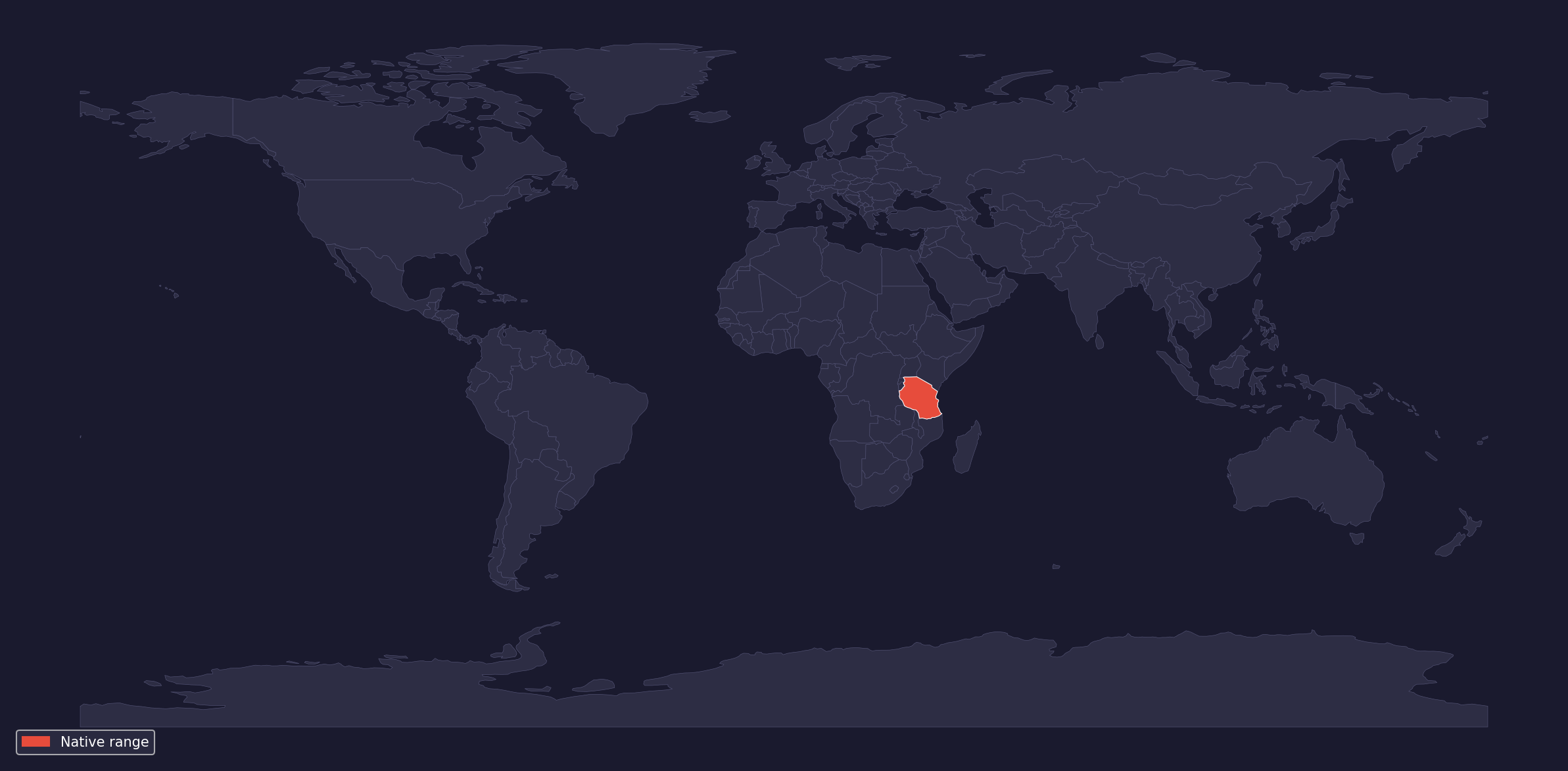
Lygodactylus williamsi is associated with a very small area of Tanzania, strongly associated with screw-pine vegetation. In nature it uses Pandanus and other sunlit vegetation in coastal forest.
The enclosure should center on bright, planted vertical space with fine branches or Pandanus-like leaves, tiny feeding sites, UVB, warm basking choices and enough cover that this small gecko can hide instantly.
🌡 Climate across the native range
Monthly climate normals from reviewed GBIF occurrence locations:
Morogoro — Tanzania, United Republic of
| Month | Min °C | Mean °C | Max °C | RH % |
|---|---|---|---|---|
| January | 10.9 | 14 | 18.4 | 81 |
| February | 10.9 | 14 | 18.4 | 81 |
| March | 10.8 | 13.4 | 17.3 | 85 |
| April | 10.1 | 12.3 | 15.5 | 88 |
| May | 8.6 | 11.2 | 14.5 | 83 |
| June | 6.4 | 9.6 | 13.4 | 76 |
| July | 5.5 | 9.1 | 13.1 | 72 |
| August | 5.9 | 9.8 | 14.2 | 72 |
| September | 6.8 | 11.2 | 16.1 | 69 |
| October | 8.3 | 12.5 | 17.5 | 70 |
| November | 9.8 | 13.4 | 18 | 75 |
| December | 10.5 | 13.7 | 18.1 | 80 |
Weather data by Open-Meteo.com · CC BY 4.0 · Monthly normals calculated by Herpeton Academy from daily archive values.
Location references use GBIF.org occurrence data where available; original occurrence records retain their source dataset licenses.
⚖️ Legal status
As checked against current official sources in April 2026, Lygodactylus williamsi is listed in CITES Appendix I. In EU wildlife-trade rules this normally corresponds to Annex A. Trade, sale, breeding transfers and transport may require strict documentation, permits or certificates; buyers should choose only legally captive-bred animals with complete paperwork.
The Bern Convention is not usually relevant unless a species is native to Europe or covered by local conservation rules; check current national guidance for the country where the animal is kept. Local and national rules on ownership, sale, transport, breeding, import, and proof of legal origin may still apply.
🤌 Husbandry
This species is best kept in a small but very bright planted vertical terrarium with fine branches, live plants and secure ventilation. Individuals or compatible pairs can work, but groups must be watched for bullying, food competition and breeding stress.
Hatchlings and small juveniles can start around 20 x 20 x 30 cm. A single adult should have at least 30 x 30 x 45 cm, while a compatible pair should have 45 x 45 x 60 cm or larger because usable vertical structure and light gradients matter.
Good husbandry depends on:
- Secure ventilation and escape-proof doors
- Several hiding and resting places
- A clear warm area and cooler retreat
- Clean water and regular observation
Never house two males together. Even in a planted enclosure, the subordinate animal may be kept away from the best basking surface and feeding ledge before obvious injuries appear. A pair also needs multiple feeding points and daily checks; separate them if there is chasing, weight loss, tail damage, or a female cannot retreat from courtship.
Because this Appendix-I species has been heavily affected by illegal collection, acquisition is part of husbandry. Match the animal and seller to the permit or certificate details, retain invoices and transfer records, and quarantine the gecko with dedicated tools. Record its tiny body weight on an appropriate scale and photograph identifying markings without repeatedly catching it.
💡 Lighting
Provide a normal 10-12 hour day length. Bright visible light improves activity and plant growth; low to moderate UVB is recommended when the animal can also choose shade.
UVB and heat lamps should never make the whole enclosure exposed. Retreats must let the gecko regulate its own exposure.
For UV planning, treat this species as Ferguson Zone 2. Aim for about UVI 1-2 in the upper exposed area, while leaving retreats and a gradient down to shaded areas near zero UVI. This usually points to a moderate 5-7% T5/Forest-style UVB tube at a measured safe distance; measure with a Solarmeter 6.5 when possible, because reflector, mesh, distance, and lamp age change the real exposure.
🌡 Heating and temperature
Suitable targets are 24-28°C by day, a 30-32°C basking area, and 20-23°C at night. Measure both the warm zone and the cooler retreats with reliable thermometers.
Avoid constant high heat. Small geckos dehydrate quickly when warm enclosures lack humid refuges or airflow.
💧 Humidity and water
Aim for 60-80% with regular misting and drying. Most individuals drink droplets from leaves, glass or decor after misting, though a small clean water dish can be offered as backup.
The enclosure should become humid after misting and then dry partly again. Permanently wet, stale air encourages skin and respiratory problems.
🌿 Enclosure and decoration
Use an enclosure that gives usable space, not just empty volume. Cork, bark, branches, bamboo, live or artificial plants and leaf cover all help the animal feel secure.
Avoid sharp decor, unstable rocks and gaps where the gecko can be trapped. Tiny juveniles need especially careful escape-proofing.
Use narrow branches, cork, and sturdy live foliage at several heights, not one exposed basking stick. Cover cable ports and door gaps smaller geckos could exploit, but keep enough cross-ventilation for leaves to dry after misting. Position at least one food cup beside cover so the animal can eat without crossing open glass.
🪳 Feeding
This species should be fed mainly with tiny insects such as fruit flies, small crickets and springtails plus occasional fine gecko diet. Prey must be smaller than the width of the head.
Feed juveniles more often than adults. Gut-load insects, dust with calcium regularly, and use a reptile multivitamin more sparingly according to the product instructions and UVB provision.
Fruit flies, bean beetles, tiny roach nymphs, and suitably small crickets allow useful rotation. Do not rely on springtails as the main diet or leave large crickets in the enclosure. Offer small portions frequently enough that juveniles grow steadily, remove spoiled gecko diet promptly, and dust insects lightly so powder does not make very small prey unpalatable.
🩺 Common problems
Common problems include dehydration, retained shed, poor appetite, injuries from falls or handling, calcium imbalance, and stress from unsuitable groups. Warning signs include weight loss, weak grip, sunken eyes, repeated hiding without feeding, and visible wounds.
First check temperatures, humidity, ventilation, food size, supplement use and whether tankmates are causing stress. Persistent weakness or swelling needs a reptile veterinarian.
📌 Conclusion
Lygodactylus williamsi is rewarding when treated as a delicate display gecko with specific environmental needs. A secure enclosure, stable temperatures, correct humidity, UVB access and small varied prey are the foundations of long-term success.
📚 Sources and further reading
- CITES Appendices, checked 2026-05-04
- EU wildlife trade regulations and annex references, checked April 2026
- GBIF species backbone and occurrence data for taxonomy and distribution context
- IUCN Red List and specialist husbandry references where applicable
💬 Feedback
For questions, corrections, or practical notes, leave us a message in the forum thread.