Share

Hainan Cave Gecko
🔤 Taxonomy
Goniurosaurus hainanensis is the currently accepted scientific name. In the hobby and in trade, the species is usually sold under the same name or under its common-name equivalents.
English common names used in the hobby:
- Hainan cave gecko
- Hainan eyelid gecko
German common names used in the hobby:
- Hainan-Höhlengecko
📌 Description
The Hainan cave gecko (Goniurosaurus hainanensis) is a nocturnal eyelid gecko from Hainan Island, China. It is also sold as a Chinese cave gecko, although that name is used for several related Goniurosaurus species.
Adults usually reach about 18-24 cm. They have red to orange eyes, movable eyelids, a banded dark body, a pale belly, bumpy skin, and no sticky toe pads. They can climb cork, bark, rocks, and textured backgrounds, but they do not climb smooth glass like many tropical geckos.
This is a quiet, secretive display species. It can become accustomed to gentle maintenance and tong feeding, but regular handling is stressful. Its main needs are cool temperatures, high humidity, deep cover, and stable routine.
🌍 Distribution
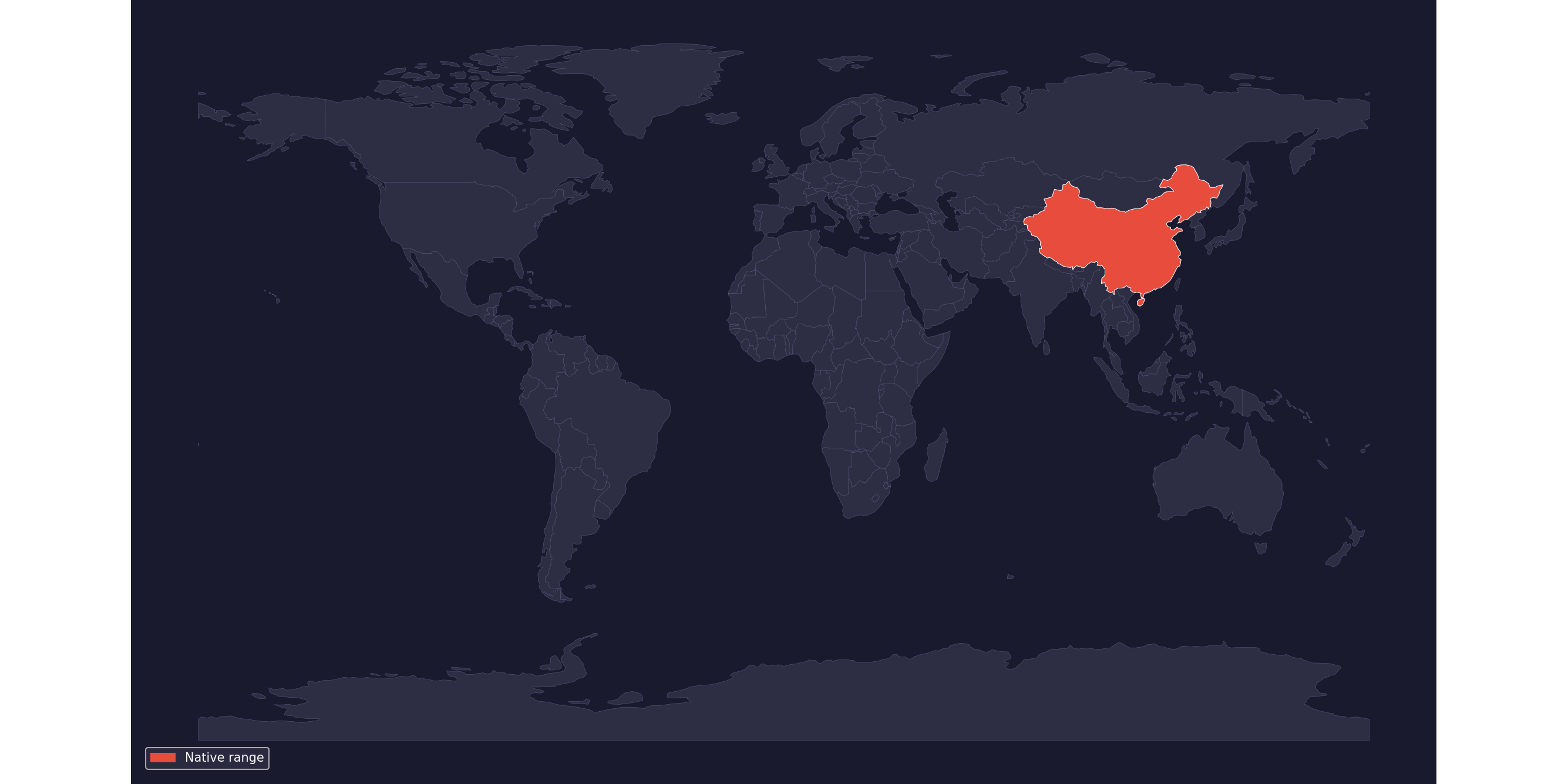
Goniurosaurus hainanensis is endemic to Hainan Island in southern China. It is associated with humid subtropical forest, rocky slopes, caves, crevices, leaf litter, and shaded areas near streams or other moist microhabitats.
Important habitat features include:
- Cool, humid retreats
- Rock cracks, cave edges, roots, and leaf litter
- Low light and strong cover
- Seasonal humidity changes
- Night activity and daytime hiding
In captivity, the enclosure should feel like a shaded forest floor with rocks, bark, plants, and humid shelters. It should never be treated like a hot desert gecko.
🌡 Climate across the native range
Monthly climate normals from reviewed GBIF occurrence locations:
Hainan — China
| Month | Min °C | Mean °C | Max °C | RH % |
|---|---|---|---|---|
| January | 18.2 | 20.6 | 23.4 | 78 |
| February | 19.2 | 21.6 | 24.4 | 82 |
| March | 21.7 | 23.7 | 26.4 | 84 |
| April | 24.2 | 26.1 | 28.6 | 85 |
| May | 25.9 | 27.7 | 29.9 | 85 |
| June | 26.7 | 28.3 | 30.2 | 85 |
| July | 26.3 | 28 | 29.9 | 85 |
| August | 26.1 | 27.8 | 29.8 | 86 |
| September | 25.3 | 27.1 | 29.2 | 85 |
| October | 23.9 | 25.7 | 27.9 | 81 |
| November | 21.9 | 23.9 | 26.3 | 79 |
| December | 19.1 | 21.3 | 24 | 76 |
Weather data by Open-Meteo.com · CC BY 4.0 · Monthly normals calculated by Herpeton Academy from daily archive values.
Location references use GBIF.org occurrence data where available; original occurrence records retain their source dataset licenses.
⚖️ Legal status
Goniurosaurus hainanensis is covered by the CITES Appendix II listing for Goniurosaurus species from China and Viet Nam. International movement normally requires correct CITES paperwork, and sellers should be able to show legal origin.
In the European Union, CITES Appendix II reptiles are generally managed through the EU wildlife trade regulations, commonly under Annex B unless a stricter listing applies. Keep invoices, breeder details, transfer documents, and any CITES paperwork, especially for import, export, sale, or breeding.
This species is endemic to a limited island range and has been affected by collection pressure in the wider cave gecko trade. Choose captive-bred animals only. Avoid wild-caught or unclear-origin animals, even if they are cheaper.
The Bern Convention is not usually relevant unless a species is native to Europe or covered by local conservation rules; check current national guidance for the country where the animal is kept.
🤌 Husbandry
An adult should have a terrarium with a minimum footprint of about 60 × 45 cm and a height of 45 cm. More space, such as 90 × 45 × 45 cm, is better because it allows more cover, better humidity gradients, and low climbing structure.
The enclosure should have:
- Several tight hides
- A humid hide available at all times
- Cork bark, rock caves, roots, and leaf litter
- Low branches and textured climbing surfaces
- A shallow water bowl
- Good ventilation with stable humidity
Solitary housing is the safest default. Males should not be kept together. Females may sometimes be housed together by experienced keepers, but competition and stress are still possible, so a spare enclosure should always be ready.
💡 Lighting
Hainan cave geckos are nocturnal and prefer dim, sheltered conditions, but they still benefit from a regular day-night cycle. Provide about 12 hours of low to moderate daylight.
Low-output UVB can be useful if installed carefully, especially over part of the enclosure with many shaded retreats. A low UVI around the upper exposed area is enough; the gecko must be able to avoid the light completely.
If UVB is not used, vitamin D3 must be supplied through supplements. If UVB is used, adjust supplements to avoid excessive D3.
For UV planning, treat this species as Ferguson Zone 1. Aim for about UVI 0.5-1.0 in the upper exposed area, while leaving retreats and a gradient down to shaded areas near zero UVI. This usually points to a low-output UVB tube such as a ShadeDweller-style or 2-7% T5, chosen for the enclosure height; measure with a Solarmeter 6.5 when possible, because reflector, mesh, distance, and lamp age change the real exposure.
🌡 Heating and temperature
This species is sensitive to overheating. Most homes may need only mild, controlled heat rather than strong basking lamps.
Useful ranges:
- Warm hide or gentle basking area: 27-28°C
- Cool zone: 22-25°C
- Night: 20-22°C
- Avoid sustained ambient temperatures above 28°C
Use a thermostat for any heat source. A low-wattage overhead lamp, deep heat projector, or side-mounted heat source can work if it creates a gentle gradient. Do not use heat rocks.
Measure temperatures at the warm hide, cool side, and near the floor. In summer, overheating can be more dangerous than mild coolness, so plan ventilation and room cooling before hot weather arrives.
💧 Humidity and water
Humidity should usually stay moderate to high, with lower levels during the day and higher levels at night. A practical range is about 50-90%, with good airflow and surfaces that are not wet all the time.
Mist in the evening and, if needed, lightly in the morning. The enclosure should dry slightly between mistings while the deeper substrate and humid hide stay moist.
A humid hide with damp sphagnum moss, leaf litter, or moist substrate should always be available. Fresh water should be kept in a shallow dish, even if the gecko mostly drinks droplets after misting.
🌿 Enclosure and decoration
The enclosure should be dense and shaded. A cave gecko crossing open ground feels exposed, so provide routes through cover.
Suitable substrate options include:
- Organic topsoil mixed with coconut fiber
- Tropical forest reptile substrate
- Sphagnum moss in humid areas
- Leaf litter over part of the enclosure
- Paper towel for quarantine or medical monitoring
A bioactive setup can work well if drainage, ventilation, and clean-up crew are established. Plants that tolerate shade and humidity can help create cover, but they should not replace hides.
Use stable rocks, cork tubes, cork flats, bark backgrounds, low branches, roots, and artificial or live plants. Secure heavy objects so they cannot collapse if the gecko digs underneath them.
🪳 Feeding
Hainan cave geckos are insectivores. Offer a varied diet of appropriately sized live insects.
Suitable feeders include:
- Crickets
- Dubia or discoid roach nymphs
- Small locusts
- Black soldier fly larvae
- Silkworms
- Mealworms as part of variety
- Occasional hornworms
Juveniles usually eat daily or every other day. Adults often do well with feeding every other day or two to three times per week, adjusted to body condition and season.
Feeders should be gut-loaded and lightly dusted with calcium and multivitamins according to the UVB setup. Avoid overfeeding fatty larvae. A healthy cave gecko should be well-fleshed but not round or swollen.
🥚 Breeding
Breeding should be planned carefully because the species is regulated, locality-sensitive, and not as forgiving of husbandry mistakes as common beginner geckos.
Mature males usually have visible hemipenal bulges at the base of the tail and more pronounced preanal pores. Females lack strong bulges and have much less obvious pores. Juvenile sexing is unreliable.
Sexual maturity is often reached around 12-18 months, but females should be bred only when fully grown, well-fed, and in excellent condition. They need calcium, a suitable laying site, and recovery time between clutches.
Before breeding, prepare incubation, hatchling enclosures, tiny feeder insects, records, CITES or transfer documentation where relevant, and responsible homes for offspring.
🩺 Common problems
Most problems come from overheating, low humidity, stagnant wetness, stress, poor supplementation, or parasites in animals of unclear origin.
Watch for:
- Stuck shed on toes, tail, eyes, or head
- Dehydration or wrinkled skin
- Refusing food outside normal seasonal changes
- Weight loss or a shrinking tail
- Lethargy during normal night activity hours
- Moldy enclosure, sour humid hide, or skin irritation
- Soft jaw, tremors, or weak limbs
- Abnormal droppings
Check temperatures first, especially for overheating. Then review humidity, airflow, hides, diet, and supplements. Persistent appetite loss, weight loss, bad sheds, wounds, or abnormal droppings require a reptile veterinarian.
📌 Conclusion
The Hainan cave gecko is beautiful, quiet, and rewarding when kept cool, humid, and well hidden. It is best for keepers who enjoy watching secretive natural behavior rather than handling.
Give it a shaded forest-style enclosure, gentle temperatures, high humidity with airflow, many hides, clean water, and varied insects. Success depends on resisting the urge to keep it too warm, too exposed, or too dry; careful sourcing and stable routine matter more than display value.
📚 Sources and further reading
- CITES Appendices, checked 2026-05-04
- EU wildlife trade regulations and annex references, checked April 2026
- GBIF species backbone and occurrence data for taxonomy and distribution context
- IUCN Red List and specialist husbandry references where applicable
💬 Feedback
For questions, corrections, or practical notes, leave us a message in the forum thread.