Share

Two-Spotted Crickets
🔤 Taxonomy
Gryllus bimaculatus is the currently accepted scientific name in GBIF for this feeder cricket.
Common names used in the feeder trade:
- Two-spotted cricket
- Black cricket
- Mediterranean field cricket
📌 Description
Two-Spotted Crickets (Gryllus bimaculatus) are live feeder crickets used for insect-eating reptiles, amphibians, tarantulas, mantids, and other captive insectivores. They are active prey, easy to buy in bulk, and useful for gut-loading, but they spoil quickly when kept damp, crowded, or dirty.
Adults are small to medium-large crickets depending on line and age. They jump, hide well, chew soft materials, and adult males call. Use crickets as part of a varied feeder rotation; no cricket species is a complete diet by itself.
Adults are robust and active; select feeder size carefully and do not leave large adults with small or delicate animals overnight.
🌍 Distribution
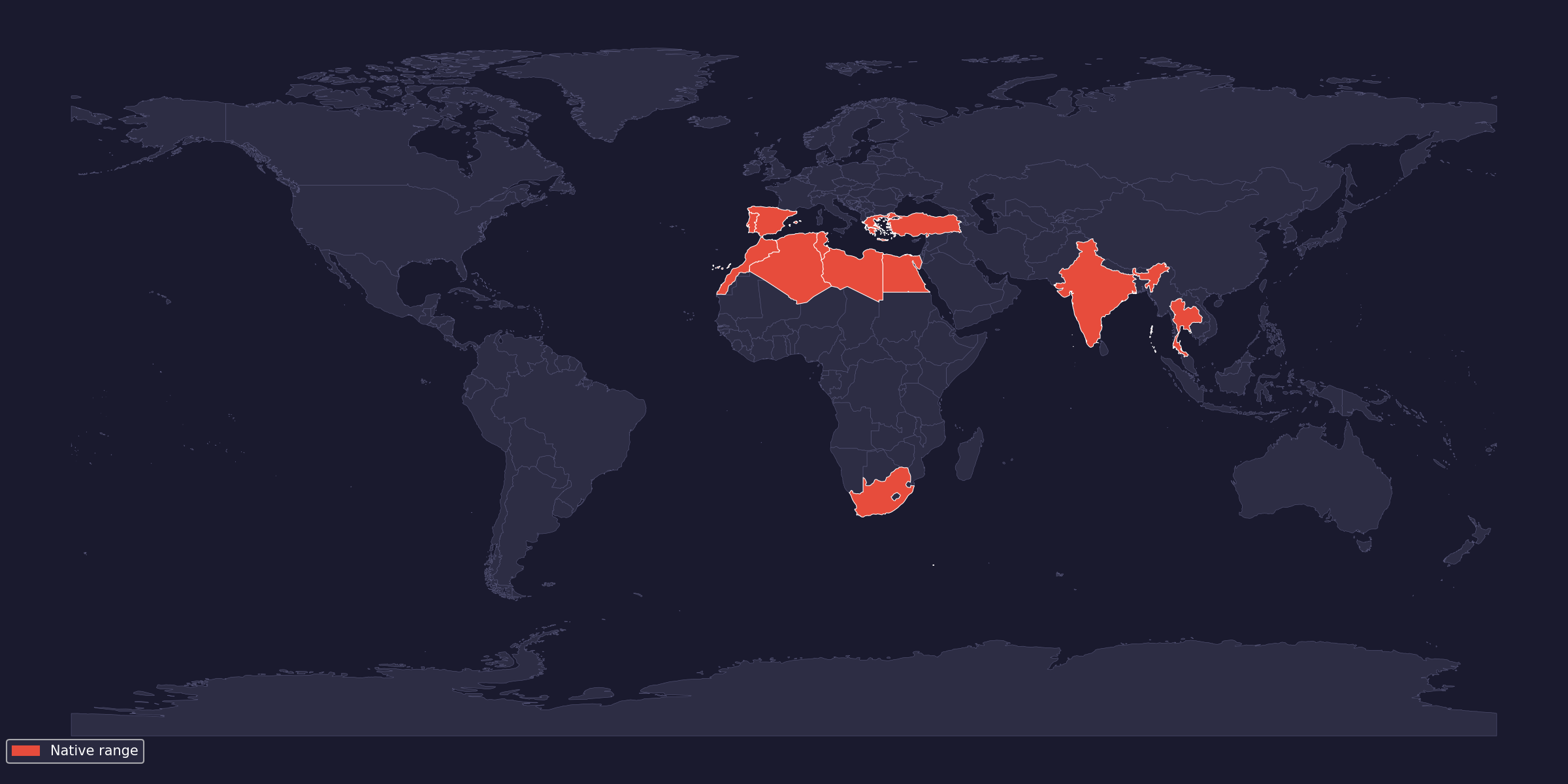
This warm-climate species is recorded across parts of Africa, southern Europe, and Asia, and is also moved in culture and feeder trade.
In care, the exact map matters less than biosecurity: commercial feeder crickets move through trade far beyond their native ranges, so escaped animals should never be treated as harmless.
⚖️ Regulations and safety
Gryllus bimaculatus is not listed in the CITES Appendices in the official CITES checklist reviewed for this guide. No specific EU wildlife trade Annex listing was found for the species.
The EU Invasive Alien Species Regulation restricts species on the Union list; this guide does not treat Gryllus bimaculatus as a Union-list species. Local and national rules can still restrict live insect imports, transport, breeding, sale, use in schools or workplaces, and disposal.
The Bern Convention is not normally relevant because this is not a European native protected-species care issue. Keep colonies secure, never release live feeder crickets, and freeze surplus or unwanted insects before disposal where local rules allow.
🤌 Husbandry
A practical cricket colony needs warmth, airflow, dry hiding space, moisture from safe sources, and frequent cleaning. A smooth plastic tub with a secure ventilated lid is usually easier to manage than a glass aquarium.
Good setup:
- Smooth-sided plastic tub or escape-resistant insect box
- Large mesh-covered ventilation panels
- Vertical egg crates or cardboard drink trays
- Dry floor with removable food dishes
- Separate moist food or water-gel area
- Secondary sorting tub for feeding and cleaning
Keep crickets away from pesticides, aerosols, cleaning fumes, and wild-caught insects. Do not mix old shop tubs into a breeding colony without quarantine.
Treat every delivery as a separate health unit. Hold it in a labelled tub, record supplier and arrival date, use dedicated dishes and cups, and work with established colonies before new arrivals. Do not combine leftover adults or survivors of a declining batch with breeding stock. Viral surveys of farmed crickets have found several agents in both A. domesticus and G. bimaculatus, so unexplained lethargy or mortality deserves isolation even when enclosure conditions appear correct.
This is a large, muscular cricket, and adults compete more forcefully than smaller feeder species. Provide generous vertical surface area, several feeding points, and separate pinheads from big nymphs and adults before crowding leads to missing legs or cannibalism. Check food, moisture, temperature, deaths, and escapes daily; record approximate numbers and life stages weekly. Cup or brush crickets during transfers instead of gripping abdomens. Preventing hunger, dehydration, crowding, and injury is part of responsible insect welfare as well as reliable production.
💡 Lighting
Feeder crickets do not need UVB. A normal room day-night rhythm is enough. Keep colonies out of direct sun because plastic tubs overheat rapidly.
🌡 Heating and temperature
Crickets survive at room temperature, but feeding response, growth, and breeding improve in a controlled warm range.
Recommended ranges:
- Productive warm zone: 26-30°C
- Short-term holding: 22-26°C
- Cool slowdown: below about 20°C
- Avoid: sustained heat above 35°C
Use a thermostat with heat mats, heat cable, or heated racks. Heat one side or the back of the tub so the insects can move away from the warmest area.
💧 Humidity and water
The container should stay dry and ventilated, but the insects need regular moisture. Wet frass and mold are the fastest way to lose a cricket tub.
Safe moisture sources:
- Carrot, squash, sweet potato, or apple
- Dark leafy greens in small portions
- Commercial water gel for short-term holding
- A shallow dish with cotton or sponge only if cleaned often
Remove wet food before it molds. Do not mist a cricket tub as a routine shortcut; stagnant damp air encourages die-offs.
🌿 Enclosure and decoration
Use vertical egg crates to increase surface area and reduce crowding. Crickets kept in a flat pile injure each other, foul the container, and die faster.
Cleaning routine:
- Remove dead insects and old food daily when possible
- Replace wet cardboard immediately
- Keep frass dry and remove excess buildup
- Clean small holding tubs between batches
- Keep breeding tubs stable, but clean them in sections
Escape prevention matters. Sort crickets over a second bin and do not leave adults loose in reptile enclosures overnight.
Large adults jump strongly and can exploit a loose lid or chew weakened screening. Use metal mesh, clips on the lid, and an unobstructed smooth band beneath the rim. Check every ventilation seam, cable entry, and corner after cleaning. Measure the ration into a cup inside a larger catch bin instead of shaking the colony into a vivarium. Remove uneaten adults quickly; their size and jaws make them a poor unattended companion for small reptiles, amphibians, freshly molted invertebrates, or any debilitated animal.
🪳 Feeding
Feed crickets a dry base plus fresh plant foods. The food given to the cricket becomes part of the nutrition offered to the reptile or amphibian.
Good dry foods:
- Quality insect gut-load
- Roach or cricket chow from a reputable source
- Ground whole-grain foods in moderation
- Bee pollen or alfalfa-based insect diets in moderation
Good fresh foods:
- Carrot, squash, sweet potato
- Dark leafy greens
- Apple or orange in small amounts
- Clean vegetable scraps without pesticides
Avoid moldy food, salty leftovers, oily scraps, dog or cat food as the main diet, and food from pesticide-treated plants. Gut-load for 24-48 hours before feeding and dust according to the predator species supplement schedule.
Keep the long-term colony diet separate from the final gut-loading step. A complete maintenance diet supports growth and reproduction; a concentrated high-calcium gut-load is normally used only for the feeder ration shortly before it is offered. Crickets are naturally calcium-poor relative to phosphorus, and gut-loading does not make all dusting unnecessary. Apply powder only to the ration being fed, offer it immediately, and base calcium, D3, and multivitamin use on the receiving animal’s species, age, UVB provision, and reproductive state.
Use nymphs for modest-sized predators and reserve heavy adults for animals able to take them safely. A large G. bimaculatus should not be selected merely because the predator can swallow it. Rotate with other suitable feeder taxa and reject dead, sluggish, mold-exposed, or pesticide-exposed crickets.
🥚 Breeding
Breeding requires adults, warmth, food, and a removable egg-laying container. Use a shallow cup of moist coconut fiber, peat-free soil, or vermiculite covered with fine mesh so adults can lay eggs without digging up and eating them.
Basic cycle:
- Keep adults warm and well fed
- Offer a moist laying cup for 2-4 days
- Remove the cup to an incubation tub
- Keep the egg medium damp, not wet
- Raise pinheads separately with very fine food and moisture
Cricket colonies smell and crash when overcrowded. For most keepers, buying small batches and gut-loading them is easier than continuous breeding.
🩺 Common problems
Common problems:
- Mass die-off: overheating, dehydration, pesticide exposure, poor ventilation, or disease
- Bad smell: dead crickets, wet frass, rotten food, or overcrowding
- Mold: too much wet food or poor airflow
- Mites: damp waste and old food
- Escapes: loose lids, damaged mesh, or sorting without a second bin
- Predator injuries: large crickets left overnight can bite reptiles, amphibians, and invertebrates
If a batch smells sour, contains many dead insects, or came from a suspect source, do not use it for sensitive animals.
📌 Conclusion
Two-Spotted Crickets are useful feeders when they are bought or cultured cleanly, kept dry and ventilated, gut-loaded well, and offered in the correct size. Their main weaknesses are smell, escapes, disease risk, and rapid die-offs when husbandry is sloppy.
Treat feeder crickets as live nutrition. The cleaner the cricket culture, the safer and more useful it is for the animals eating it.
📚 Sources and further reading
- GBIF taxonomy: Gryllus bimaculatus
- CITES Appendices
- European Commission: invasive alien species
- Weissman et al. 2012: feeder crickets and densovirus
- de Miranda et al. 2021: viruses in crickets reared for feed
- Kim et al. 2019: mass-rearing conditions for Gryllus bimaculatus
- Rowe et al. 2024: farmed-cricket welfare considerations
- Merck Veterinary Manual: nutrition in lizards and cricket gut-loading
💬 Feedback
For questions, corrections, or practical notes, leave us a message in the forum thread.