Share

Discoid Roaches
🔤 Taxonomy
Blaberus discoidalis Serville, 1838 is the accepted scientific name. Older combinations still found in collections include Blabera cubensis, Blabera rufescens, and Blabera subspurcata.
Common names include discoid cockroach, West Indian leaf cockroach, Haitian cockroach, and false death’s-head cockroach. The last name creates frequent confusion with Blaberus craniifer. Buy cultures from a source that keeps lines separate; pronotal pattern alone is not a secure identification for similar Blaberus stock.
📌 Description
Discoid roaches are broad, fast tropical cockroaches. Adults are commonly about 3.5-4.5 cm long, with fully developed tan wings and a dark pronotal patch; nymphs are flattened, mottled, and keen burrowers. They cannot normally climb clean smooth glass or plastic, but rough scratches, silicone seams, bark, and ventilation mesh give them footholds. Adults can flutter, so the lid remains essential.
Medium nymphs make substantial feeders for lizards, amphibians, large spiders, and other insectivores. The species forms productive colonies and is sometimes available where other tropical roaches are restricted. That availability is jurisdiction-specific, not proof that the species is universally permitted.
Discoid roaches should be one item in a varied feeder rotation. Their nutrient composition changes with life stage and diet, and published analyses show an unfavourable calcium-to-phosphorus balance without predator-appropriate supplementation.
🌍 Distribution
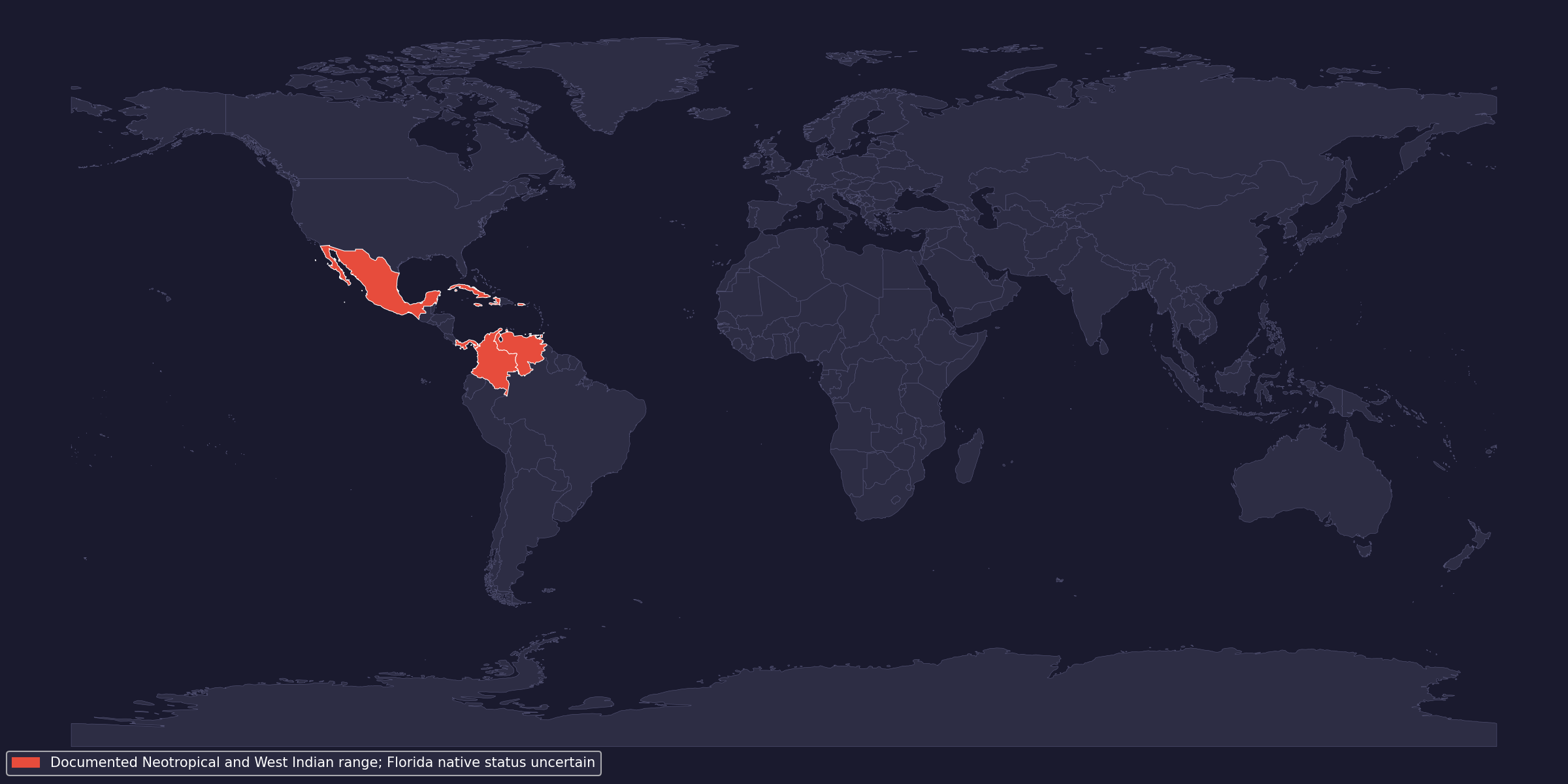
The Blattodea Species File reports B. discoidalis from Mexico, Cuba, Haiti, Jamaica, Puerto Rico, Panama, Colombia, Venezuela, Trinidad, and Florida in the United States. Its core range is Neotropical and West Indian, but the origin of some peripheral populations is uncertain because large cockroaches have travelled with commerce and captive colonies.
The map uses Mexico, the documented Caribbean countries, Panama, Colombia, Venezuela, and Trinidad and Tobago. Florida is excluded from the native highlight because its native-versus-introduced status is not sufficiently clear for this purpose.
⚖️ Regulations and safety
Checked on 2026-09-04: B. discoidalis was not found in the current CITES Appendices or EU wildlife-trade Annexes A-D, and it is not treated here as a species on the EU list of invasive alien species. The Bern Convention is not relevant to a protected European native-species question for this American cockroach.
National and regional rules may still control live cockroach possession, import, movement, breeding, sale, animal-feed use, and disposal. In Florida, for example, the agriculture authority regulates movement and possession of arthropods according to species, source, and activity; personal possession and commercial shipment are not the same legal question. Check with the receiving authority before ordering or sending live roaches.
Record the scientific name, supplier, and date. Never release surplus animals. Seal unwanted roaches and culture waste, freeze at normal domestic-freezer temperature for at least 72 hours, confirm that all stages are dead, and then follow local waste rules. Do not put live roaches or internally brooded females into compost.
🤌 Husbandry
A small colony can start in a smooth 40-60 l plastic tub with a positively latched lid and broad, fine-mesh cross-ventilation. Provide far more hiding surface than the visible number of roaches suggests, and keep the upper 8-10 cm of the walls completely smooth and clear.
| Parameter | Practical target |
|---|---|
| Adult size | about 3.5-4.5 cm |
| Day air | 24-29°C; productive warm area 28-30°C |
| Cool retreat / night | 21-24°C |
| Relative humidity | about 50-70%, with a moist refuge and dry airflow |
| Substrate | 5-8 cm for a long-term colony; simple paper for quarantine |
| Feeding | dry staple available; small fresh portions 2-3 times weekly |
Quarantine new stock for 60-90 days in simple housing with separate tools. Confirm adult identity and watch for mites, phorid flies, abnormal deaths, and nematodes or other contaminants. Research has documented parasitic nematodes in B. discoidalis, which reinforces the case for not mixing new and established colonies.
💡 Lighting
UVB is unnecessary. A diffuse 10-12-hour room-light period is enough, with deep shade among hides. Protect tubs from direct sun and do not use coloured night lamps. Darkness should come from shelter, not from an unventilated closed cupboard.
🌡 Heating and temperature
Maintain most of the tub at 24-29°C and provide a limited 28-30°C warm area for strong growth and reproduction. Experimental colonies are commonly maintained at 27-30°C. Cooler colonies survive but mature and reproduce more slowly.
Heat one side or the back externally with a thermostatically controlled mat, cable, or heated rack. Measure air temperature among the hides, not only the heater surface. Keep a 21-24°C retreat and never heat the entire floor beneath a burrowing layer. Sustained temperatures above about 32-33°C, direct contact with heaters, and an unventilated hot cabinet create unnecessary die-off risk.
💧 Humidity and water
Aim for moderate humidity, roughly 50-70%, while keeping visible airflow and a partly dry surface. A moist lower corner or substrate layer helps small nymphs molt; a constantly wet tub promotes mites, mold, bacteria, and sour odor.
Provide moisture through washed vegetables plus either a shallow textured water dish or fresh water gel. Protect very small nymphs from open water and clean the dish frequently. Condensation on most walls means ventilation or wet-food portions need correction.
🌿 Enclosure and decoration
For a long-term colony, use 5-8 cm of fertilizer-free topsoil/coir with crushed deciduous leaf litter, keeping one end lightly moist. Add vertical cork flats or egg-crate panels above the drier area. Secure heavy bark and leave clear vertical surfaces for final molts.
A bare or paper-lined tub with vertical egg flats is acceptable for short quarantine or high-turnover feeder holding, but it requires disciplined moisture provision and cleaning. Do not allow cardboard to stay wet. Avoid aromatic wood, pesticide-treated egg crates, perlite, fertiliser, and decor collected from sprayed areas.
Escape controls:
- lock the lid and secure every ventilation panel
- keep hides below the smooth perimeter
- replace heavily scratched tubs
- sort roaches inside a second catch bin
- count adults after service and inspect the floor immediately
🪳 Feeding
Keep a balanced commercial insect gut-load or a dry cereal-and-legume roach diet available in a removable dish. Offer carrot, squash, sweet potato, leafy greens, apple, or pear two or three times weekly. Wash produce, avoid pesticide residues, and remove wet food within 24-48 hours.
Do not use dog or cat food as an unlimited main diet for feeders. Excess animal protein and fat encourage odor, mites, and poor control over the food passed to the predator. Keep fruit modest and never use salty, seasoned, moldy, or spoiled scraps.
For feeder use, separate healthy nymphs and gut-load them for 24-48 hours with food appropriate to the predator. Choose roaches no wider than the predator can safely swallow and dust them according to that animal’s calcium and vitamin schedule. Remove uneaten roaches before they hide, molt, or disturb a resting predator.
🥚 Breeding
Females form an ootheca, briefly extend it, and then retract it into a brood pouch until live nymphs are born. Literature calls this ovoviviparity; the site’s stable metadata uses “viviparous.” At 27°C, a laboratory study measured embryonic development at about 61 days and averaged roughly 33 hatchlings per brood. Real colony output varies with temperature, food, age, and line.
Begin with mixed sizes and more mature females than males. Adult males are slimmer and have a smaller terminal abdominal plate; females have a broader abdomen and terminal plate. Do not harvest heavily until several broods and age groups are present.
Slow breeding usually reflects cool temperatures, immature stock, too few females, chronic disturbance, crowding, poor nutrition, or a dry molting environment. Solve those causes before increasing heat. Do not combine Blaberus species or unnamed trade lines: hybridisation and misidentification make both care records and legal declarations unreliable.
🩺 Common problems
- Failed molts: provide a lightly moist refuge, adequate space, and stable textured surfaces.
- Mites, mold, or sour odor: remove old food and dead insects, improve airflow, and replace badly fouled substrate.
- Chewed wings or missing limbs: reduce density and increase hides and feeding stations; review diet quality.
- No reproduction: verify mature sexes, measured warmth, moisture, food, and sufficient time.
- Escapes: inspect lids, mesh, silicone, scratched plastic, and hides that bridge the smooth wall.
- Predator problems: stop using a suspect colony if animals repeatedly become ill or pass abnormal feces; review pesticides, diet, and veterinary advice for the predator.
- Allergy: cockroach droppings, shed skins, and body debris can trigger allergy and asthma. Damp-clean rather than sweeping dry frass, wear gloves, use suitable respiratory protection for dusty work, ventilate the room, and keep the colony out of bedrooms.
📌 Conclusion
Discoid roaches are worthwhile for keepers who need a large, steadily reproducing feeder and can manage secure warm housing. The colony should be established before it is harvested: measured heat, a moist retreat, balanced gut-load, clean hides, and strict dust control matter more than simply owning a large tub of roaches.
📚 Sources and further reading
- GBIF species record: Blaberus discoidalis
- Cockroach Species File archive: B. discoidalis nomenclature and distribution
- UMass: laboratory culture notes for B. discoidalis
- Li (2007): embryonic development and reproductive mode
- Kulma et al. (2016): nutritional value of three feeder-cockroach species
- CDC/NIOSH: work-related allergies in insect-raising facilities
- Florida agriculture authority: arthropod permit guidance
- CITES Appendices
- EU wildlife-trade Annexes: Regulation (EU) 2026/1383
- European Commission: invasive alien species