Share

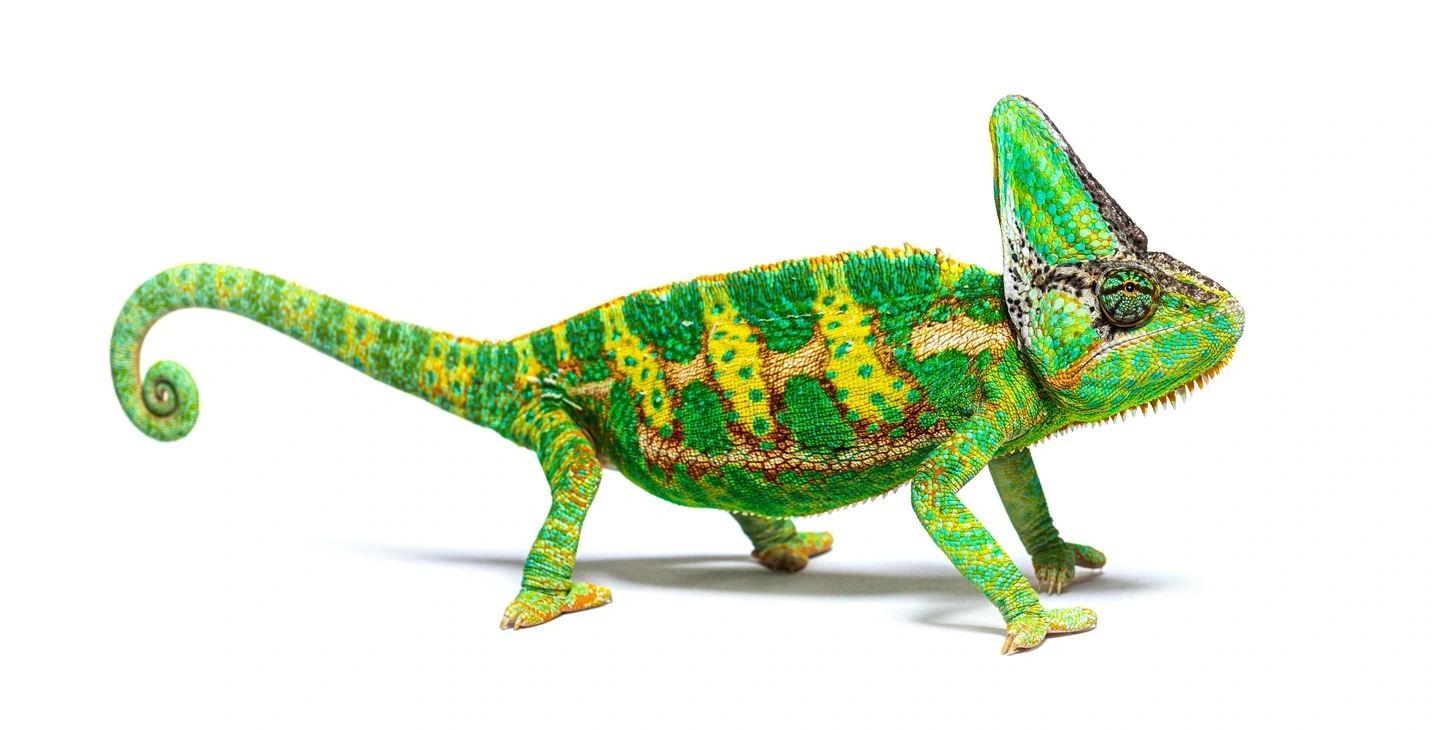
Yemen Chameleon
🔤 Taxonomy
Chamaeleo calyptratus is the currently accepted scientific name. In the hobby and in trade, the species is usually sold under the same name or under its common-name equivalents.
English common names used in the hobby:
- Veiled chameleon
- Yemen chameleon
German common names used in the hobby:
- Jemenchamäleon
📌 Description
The Yemen chameleon (Chamaeleo calyptratus), also known as the “Veiled chameleon” in English, is the most common chameleon species in the pet trade. It is characterized by a high bony growth on its head, called a casque, which is particularly developed in males. Its eyes move independently of each other, allowing it to observe its surroundings in almost 360 degrees. The tail is prehensile and serves as a fifth limb for climbing.
Males reach a length of 45–60 cm including the tail and are larger and more brightly colored, while females are usually between 30 and 40 cm. The color varies from bright green to yellow-green with turquoise and golden accents, and its change is primarily related to temperature, mood, and physiological condition, rather than “camouflage” in the popular sense.
🌍 Distribution
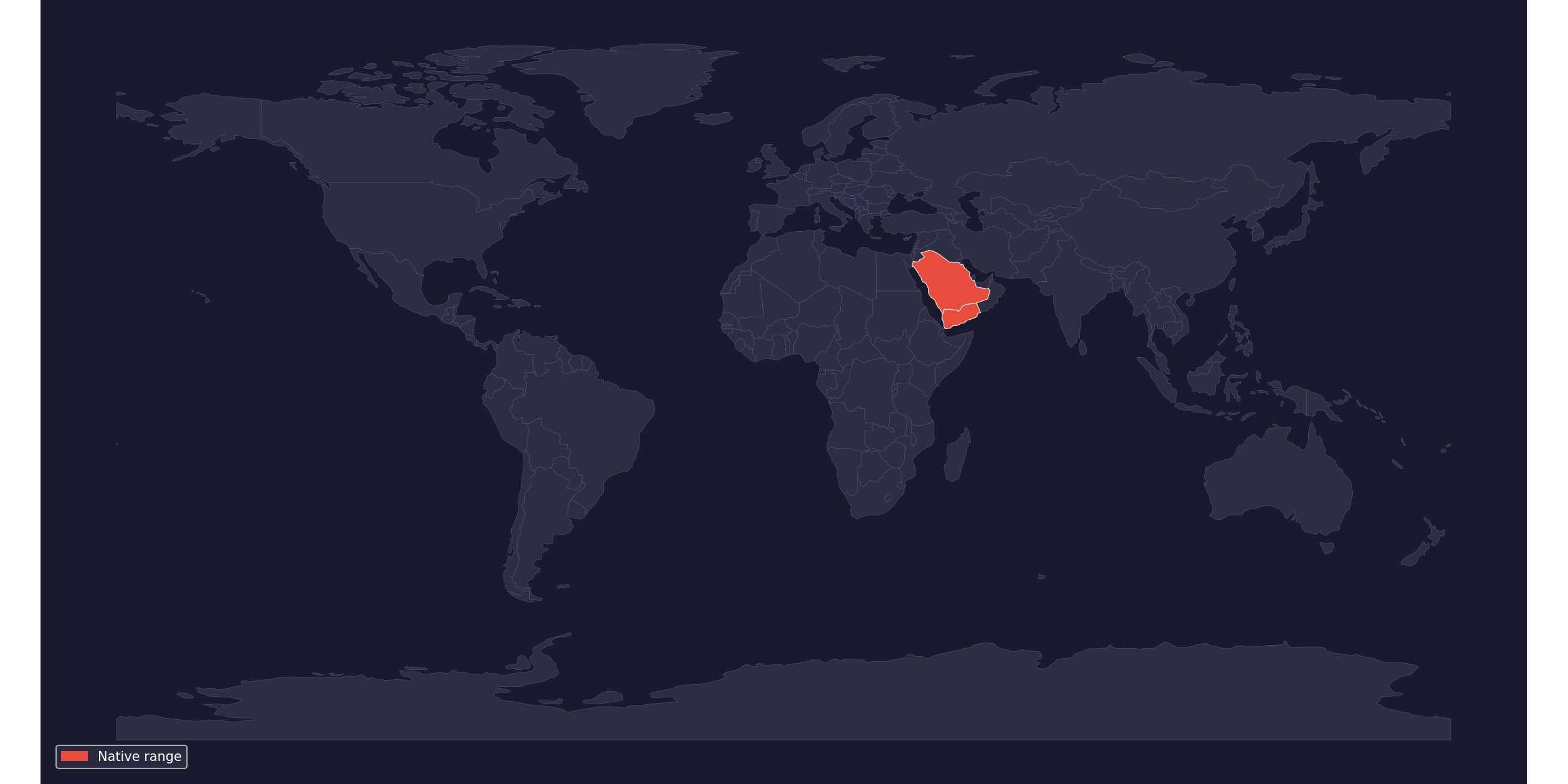
Chamaeleo calyptratus is native to Yemen and southwestern Saudi Arabia on the Arabian Peninsula. In the wild it is associated with mountain slopes, vegetated wadis, agricultural terraces, shrubland and trees where days are warm and nights can cool strongly.
For captive care, the useful lesson from this distribution is:
- a tall, well-ventilated enclosure with usable branches and foliage
- strong light and UVB with shaded retreat options
- daily access to drinking droplets, mist, rain, or moving water
- a warm basking zone combined with cooler night and retreat areas
- visual barriers, because chameleons are solitary and easily stressed by constant exposure
🌡 Climate across the native range
Monthly climate normals from reviewed GBIF occurrence locations:
Jizan — Saudi Arabia
| Month | Min °C | Mean °C | Max °C | RH % |
|---|---|---|---|---|
| January | 16.7 | 20.7 | 25 | 69 |
| February | 17.7 | 22 | 26.7 | 65 |
| March | 19.5 | 23.9 | 28.7 | 60 |
| April | 21.6 | 26 | 31 | 57 |
| May | 23.3 | 27.9 | 33 | 56 |
| June | 24.7 | 29.5 | 34.5 | 50 |
| July | 25.3 | 29.2 | 33.6 | 53 |
| August | 24.3 | 27.8 | 31.9 | 66 |
| September | 22.6 | 27.1 | 32.4 | 63 |
| October | 20.5 | 25 | 30.4 | 60 |
| November | 18.8 | 23 | 27.8 | 63 |
| December | 17 | 21.3 | 25.8 | 66 |
Makkah — Saudi Arabia
| Month | Min °C | Mean °C | Max °C | RH % |
|---|---|---|---|---|
| January | 17.8 | 22.2 | 26.3 | 63 |
| February | 18.9 | 23.7 | 28.3 | 57 |
| March | 21.5 | 26.3 | 31.2 | 48 |
| April | 24.7 | 29.6 | 34.4 | 42 |
| May | 27.5 | 32.5 | 37.5 | 37 |
| June | 29.3 | 34.4 | 39.4 | 32 |
| July | 29 | 33.4 | 38.4 | 39 |
| August | 28.2 | 32.4 | 37.1 | 49 |
| September | 27.6 | 32.2 | 37.1 | 47 |
| October | 24.2 | 29.6 | 35 | 45 |
| November | 21.3 | 26.2 | 30.9 | 54 |
| December | 19 | 23.6 | 28 | 59 |
Ta`izz — Yemen
| Month | Min °C | Mean °C | Max °C | RH % |
|---|---|---|---|---|
| January | 15.4 | 20.1 | 25.5 | 65 |
| February | 16.3 | 21.4 | 27.2 | 60 |
| March | 17.9 | 23.1 | 28.7 | 55 |
| April | 19.3 | 24.6 | 30 | 54 |
| May | 20.5 | 25.4 | 30.5 | 61 |
| June | 21.5 | 26.3 | 31.4 | 59 |
| July | 21.9 | 26 | 30.6 | 61 |
| August | 21.3 | 24.8 | 28.9 | 72 |
| September | 20.3 | 24.3 | 28.9 | 69 |
| October | 18.2 | 23.3 | 28.8 | 57 |
| November | 16.7 | 21.8 | 27.4 | 58 |
| December | 15.7 | 20.4 | 25.9 | 64 |
Weather data by Open-Meteo.com · CC BY 4.0 · Monthly normals calculated by Herpeton Academy from daily archive values.
Location references use GBIF.org occurrence data where available; original occurrence records retain their source dataset licenses.
⚖️ Legal status
As checked against current official sources on May 4, 2026, Chamaeleo calyptratus is listed in CITES Appendix II. Under the EU wildlife trade rules, that normally places the species in Annex B unless a stricter listing applies.
The species is not relevant to the Bern Convention because it is not native to Europe. National and local rules on import, sale, breeding, transport, and proof of legal origin may still apply. Buy only captive-bred animals from clear, documented sources.
🤌 Husbandry
Keeping a Yemen chameleon requires careful recreation of natural conditions. Although the species is considered relatively hardy, a poorly equipped terrarium often leads to serious health problems.
The Yemen chameleon needs a tall, well-ventilated terrarium. The minimum size for an adult specimen is about 60 × 60 × 120 cm, with height being crucial. The species is arboreal and spends most of its time at height.
Mesh terrariums or those with large ventilation openings are most suitable. Fully enclosed glass terrariums retain excessive moisture and stagnant air, which increases the risk of respiratory infections.
The interior setup should include multiple stable branches of varying thickness, placed at different levels. Live plants such as pothos, ficus, or schefflera not only provide cover but also help maintain humidity. Substrate is usually not necessary; the bottom should allow for easy cleaning.
💡 Lighting
The Yemeni chameleon is a diurnal species and requires UVB lighting. Recommended:
T5 HO UVB lamp 5–6%
Lighting duration 10–12 hours daily UVB is essential for vitamin D3 synthesis and proper calcium metabolism. The lamp should be replaced every 6–12 months. Compact UVB bulbs can be used temporarily but do not provide adequate coverage in tall enclosures.
For UV planning, treat this species as Ferguson Zone 3, but use the lower practical end in a planted enclosure. Aim for about UVI 2-3 on the highest routinely used basking branch, with a gradient down to shaded areas near zero UVI. This usually points to a correctly distanced 5-6% T5 system in many tall chameleon setups rather than a stronger lamp placed too close; measure with a Solarmeter 6.5 when possible, because reflector, mesh, distance, and lamp age change the real exposure.
🌡 Heating and temperature
Chameleons are cold-blooded and regulate their body temperature through movement.
The terrarium should have a clearly defined temperature gradient:
- Basking area: around 29–32°C
- Middle zone: 22–25°C
- Night temperature: 13–18°C
Lower night temperatures are natural for the species and even beneficial.
A halogen or heat lamp with a power of 50–75 W is usually used, with the exact choice depending on the size of the terrarium and room temperature.
💧 Humidity and water
During the day, humidity should be around 40–50%, and at night it should rise to 80%, mimicking natural nighttime condensation.
In Bulgarian conditions, the winter air is often too dry. An automatic misting system or a nighttime ultrasonic humidifier can significantly improve hydration.
Chameleons do not drink from bowls. They take in water through droplets from leaves. A good practice is:
- Morning and evening heavy misting, in the dark
- Using distilled or filtered water to avoid limescale deposits
Important: during shedding, do not excessively increase misting – this can hinder the process.
🌿 Enclosure and decoration
The terrarium should have many branches and plants. Live plants are preferable because:
- They increase humidity
- They provide natural cover
- They improve the microclimate
Suitable plants include pothos, ficus, schefflera, and hibiscus.
🪳 Feeding
The Yemen chameleon (Chamaeleo calyptratus) is primarily an insectivorous species. In captivity, its diet should be varied and balanced to avoid nutritional deficiencies and metabolic diseases.
The main diet consists of live insects such as crickets, cockroaches (dubia), grasshoppers, and other appropriately sized species. Larvae like mealworms can be given, but only as a supplement, as they are lower in nutrients and higher in fat. Young chameleons are fed daily, while adults usually eat every other day or in controlled amounts to avoid obesity.
It is essential that feeder insects are properly gut-loaded 24–48 hours before feeding. This involves feeding them nutrient-rich foods such as carrots, pumpkin, sweet potato, dark leafy greens, or specialized gut-load formulas. This ensures nutritional value is transferred to the chameleon.
Supplements are also an essential part of the diet. Calcium without vitamin D3 is used in most feedings, while calcium with D3 is given more sparingly – usually once or twice a week. Multivitamin supplements are applied moderately, most often once a week or twice a month, depending on their composition.
Particular attention should be paid to vitamin A. Yemen chameleons can suffer from vitamin A deficiency if their diet is low in carotenoids or if supplements without active vitamin A (retinol) are used. Some individuals do not effectively convert beta-carotene into its active form, which can lead to deficiency.
Symptoms of deficiency include swollen or closed eyes, frequent eye rubbing, reduced appetite, shedding problems, and increased susceptibility to infections. On the other hand, excessive administration of vitamin A is also dangerous and can cause hypervitaminosis, so balance is extremely important.
Proper dietary variety, quality gut-loading, and careful dosing of supplements are key to a healthy and long-lived chameleon.
🩺 Common problems
Most captive problems in veiled chameleons come from dehydration, poor ventilation, weak UVB, excess supplementation, falls, and chronic visual stress. Warning signs include sunken eyes, persistent dark coloration, weak grip, swelling, repeated tongue-miss, wheezing, and declining appetite.
If problems appear, first check hydration, enclosure airflow, temperatures, UVB distance, supplement schedule, and climbing safety. Chameleons decline quickly when care is wrong, so breathing problems, severe weakness, falls, or prolonged refusal to eat should be treated as urgent veterinary cases.
📌 Conclusion
The Yemen chameleon is an impressive and charismatic animal that can be successfully kept in captivity if the right parameters are provided. The main factors for success are a spacious vertical terrarium, quality UVB lighting, a proper temperature gradient, and good ventilation. If these requirements are met, the species can live 5–7 years and enjoy good health and activity.