Share

Salamandra salamandra
🔤 Taxonomy
Salamandra salamandra is a species complex with many regional forms and subspecies names in older material. Locality matters for responsible keeping and breeding, and different locality lines should not be mixed casually.
English common names used in the hobby:
- Fire salamander
📌 Description
Salamandra salamandra is an amphibian kept for observation rather than handling. Adult size is usually around 15-25 cm, and a realistic lifespan in stable care is about 15-25+ years. It needs clean water, secure hides, correct temperature, and calm maintenance more than decorative complexity.
Like other amphibians, it has permeable skin and should not be handled casually. Use wet, clean hands or a soft container only when movement is necessary for health checks or enclosure work.
Fire salamanders are not venomous, but the parotoid and skin glands can release a defensive secretion. Avoid contact with the eyes and mouth, keep the animal away from children and other pets, and wash hands after enclosure maintenance. This is another reason to move it with a container rather than restraining it.
🌍 Distribution
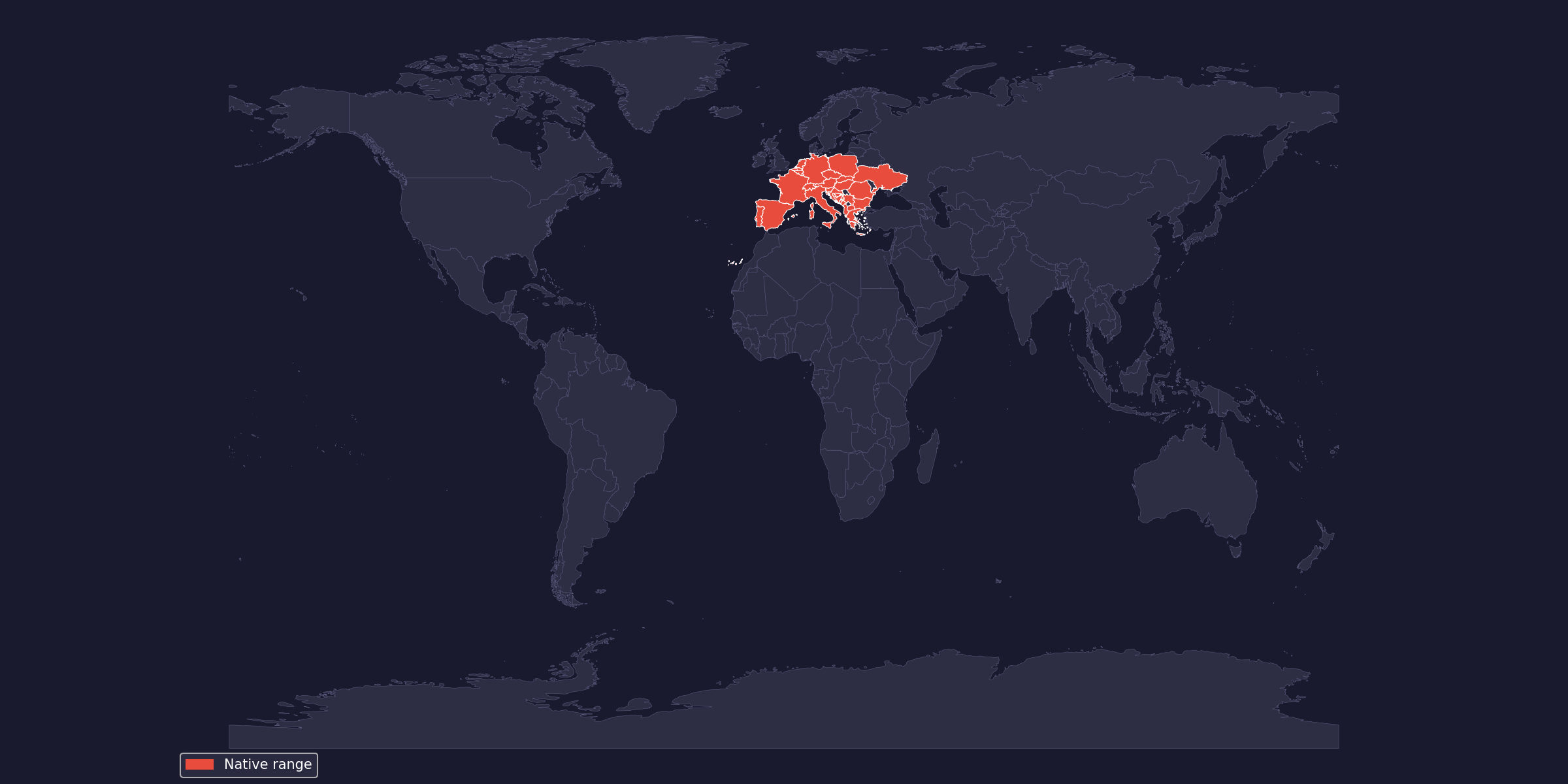
Central and southern Europe, with regional forms tied to cool forests, springs, streams, and damp refuges.
For captive care, the useful lesson from this distribution is:
- match the broad habitat type rather than copying one weather station
- provide clean water and secure retreats at all times
- keep temperatures moderate and avoid chronic overheating
- create microclimates so the animal can choose wetter, drier, warmer, and cooler areas
- buy captive-bred animals and avoid pressure on wild populations
🌡 Climate across the native range
Monthly climate normals from reviewed GBIF occurrence locations:
Cataluña — Spain
| Month | Min °C | Mean °C | Max °C | RH % |
|---|---|---|---|---|
| January | 1.9 | 6.2 | 10.4 | 73 |
| February | 2.9 | 7.5 | 12 | 70 |
| March | 4.5 | 9.4 | 14.3 | 68 |
| April | 6.2 | 11.2 | 16.1 | 67 |
| May | 9.8 | 14.8 | 19.8 | 68 |
| June | 13.5 | 18.7 | 23.8 | 64 |
| July | 16.5 | 22.1 | 27.7 | 60 |
| August | 17 | 22.4 | 27.7 | 60 |
| September | 14.1 | 19.2 | 24.2 | 66 |
| October | 10.1 | 14.7 | 19.3 | 70 |
| November | 5.5 | 9.9 | 14.3 | 72 |
| December | 3.1 | 7.3 | 11.4 | 73 |
Galicia — Spain
| Month | Min °C | Mean °C | Max °C | RH % |
|---|---|---|---|---|
| January | 5.6 | 9.1 | 12.5 | 81 |
| February | 6 | 9.7 | 13.4 | 79 |
| March | 6.5 | 10.8 | 15.1 | 76 |
| April | 7.6 | 11.8 | 15.9 | 77 |
| May | 9.7 | 13.9 | 18.1 | 79 |
| June | 12.1 | 16.4 | 20.8 | 78 |
| July | 14.1 | 18.5 | 22.9 | 80 |
| August | 14.1 | 18.8 | 23.4 | 78 |
| September | 13.1 | 17.7 | 22.3 | 77 |
| October | 10.7 | 14.7 | 18.7 | 80 |
| November | 8.4 | 11.9 | 15.4 | 80 |
| December | 6.8 | 10.1 | 13.4 | 83 |
Linsengericht, Hesse — Germany
| Month | Min °C | Mean °C | Max °C | RH % |
|---|---|---|---|---|
| January | -2.1 | 0.3 | 2.7 | 85 |
| February | -2.2 | 0.9 | 4.1 | 81 |
| March | 0.8 | 4.6 | 8.3 | 77 |
| April | 3.2 | 7.9 | 12.6 | 71 |
| May | 7.7 | 12.8 | 18 | 70 |
| June | 10.8 | 15.7 | 20.6 | 71 |
| July | 12.6 | 17.6 | 22.6 | 71 |
| August | 12.2 | 17.3 | 22.4 | 73 |
| September | 8.9 | 13.5 | 18 | 78 |
| October | 5.2 | 8.7 | 12.3 | 83 |
| November | 1.5 | 4 | 6.4 | 87 |
| December | -0.7 | 1.5 | 3.7 | 86 |
Weather data by WorldClim v2.1 · Monthly normals queried by Herpeton Academy from raster values; relative humidity is derived from vapor pressure and mean temperature.
Location references use GBIF.org occurrence data where available; original occurrence records retain their source dataset licenses.
⚖️ Legal status
As checked against current official sources in April 2026, no current CITES listing was found for Salamandra salamandra. No specific EU Wildlife Trade Annex A-D listing was found in the same check. Bern Convention Appendix III / regulated protected fauna context in Europe.
European populations are covered by the Bern Convention framework, and national rules can be strict for native fire salamanders. EU animal-health measures for salamanders and Bsal may also affect movement and trade. Local ownership, import, transport, sale, breeding, collection, release, and animal-welfare rules may still apply. Captive-bred animals with clear origin records are strongly preferable.
🧭 Life stage differences
For adults: Adults are cool-loving terrestrial salamanders with strong locality differences. They should not be kept like tropical wet animals; cool conditions, clean damp substrate, and secure hides matter more.
For babies and juveniles: Larvae develop in water, but after metamorphosis the juveniles become terrestrial and dehydrate easily. A smaller tub with damp moss, leaf litter, a shallow water cap, and tiny foods is usually safer than a large display enclosure.
Young salamanders should not be kept in a large empty space where food disappears and monitoring becomes difficult. A smaller setup makes appetite, droppings, skin condition, and weight easier to track.
Watch closely: Adults need deeper substrate, thermal choice, and stable hides. Permanently wet substrate with poor air exchange leads to skin problems, while dry substrate causes dehydration.
🤌 Husbandry
The substrate should hold moisture without turning into mud. Coconut fiber, leaf litter, moss in separate damp zones, and bark hides work well when kept clean. Ventilation must be sufficient so the enclosure never smells stagnant.
Keep this species cool and mostly terrestrial, with damp retreats, leaf litter, cork bark, and a shallow water area. It should not be kept hot or dry. Group housing requires space, compatible sizes, and careful feeding observation.
Quarantine every newcomer away from other amphibians, with dedicated bowls, tools, and gloves. A simple enclosure lined with damp unbleached paper or a thin replaceable substrate makes appetite, feces, weight, and skin lesions easier to monitor. Because fire salamanders are highly vulnerable to Batrachochytrium salamandrivorans (Bsal), discuss Bd/Bsal testing with an amphibian-experienced veterinarian before the animal joins an established collection. Never move wastewater, substrate, plants, or decor from the enclosure outdoors.
Record body weight monthly and note feeding, shedding, and time spent in the water. A healthy animal may remain hidden for long periods, so absence from view is less informative than stable weight, clean skin, and a prompt feeding response after dark.
🧪 Filtration and water
A shallow water bowl or small easy-exit water area is enough for most non-breeding adults. Use dechlorinated water and keep it very clean. During larval rearing, separate aquatic setups require strict water-quality control.
💡 Lighting
Use a subdued day-night rhythm. Strong lighting and heat lamps are usually harmful. Gentle plant lighting is acceptable when shaded hides remain cool.
🌡 Heating and temperature
Practical target range: 12-20 °C; avoid heat above 22-24 °C. Use digital thermometers and place the enclosure where seasonal room temperatures are predictable. Amphibians often tolerate cool conditions better than heat, and overheating can become dangerous quickly.
💧 Humidity and water
For terrestrial salamanders, water matters without turning the enclosure into a swamp. Provide a shallow dish or damp zone, change water often, and remove leftover food. If substrate smells sour or clumps heavily, it is no longer safe.
Maintain damp refuges and a slightly drier surface, with good airflow. The goal is cool forest-floor moisture, not stagnant swamp conditions.
🌿 Enclosure and decoration
Minimum practical adult housing: 80 x 40 cm or larger cool terrestrial setup for a pair. Bigger is useful when it creates more stable water, more hiding choices, or a better temperature gradient. Baby and juvenile setups should be smaller, secure, and easy to monitor; upgrade before the animal becomes cramped or water quality becomes unstable.
A wide cool terrarium with soil, leaf litter, moss patches, cork, and hides works best. Juveniles need small secure rearing boxes with reliable moisture and tiny foods; adults need more space and seasonal stability.
Build 8-12 cm of substrate from unfertilized organic topsoil mixed with leaf mould or coconut fibre, then cover it with pesticide-free leaf litter. It should accept a burrow without collapsing and feel cool and damp below the surface, not release water when squeezed. Provide at least two tight hides and a removable moss-filled humid retreat. Avoid gravel, calcium sand, aromatic wood chips, fertilized compost, and freshly collected woodland material that could introduce pesticides, parasites, or pathogens.
🪱 Feeding
For most terrestrial salamanders, earthworms are the best staple. Juveniles need smaller meals more often, while adults can be fed less frequently. Offer food in the evening or under dim light, when the animal is more active.
Offer earthworms, slugs from safe captive sources, roaches, crickets, isopods, and other soft invertebrates. Feed after dark or under low light. Supplement insect-heavy diets carefully.
For most adults, one measured meal every 3-4 days is a better starting point than unrestricted feeding; growing juveniles need smaller food every 2-3 days. Prey should be no broader than the salamander’s head. Earthworms need no dusting when they form most of a varied diet, but cricket- or roach-heavy diets require appropriately light calcium and vitamin use according to the product label. Remove hard or biting prey if it is not eaten overnight.
🥚 Breeding
Breeding these salamanders requires mature animals in strong condition and often a cool seasonal period. Eggs, larvae, or newborns are reared separately according to the species, with very clean water or a damp terrestrial setup after metamorphosis. Plan space, food, and future homes before breeding; unwanted amphibians must never be released outdoors.
🩺 Common problems
In terrestrial salamanders, warning signs include constant surface sitting, dry skin, shiny wet sores, weight loss, and poor response when touched. Check temperature, humidity, substrate cleanliness, and uneaten food first.
Common problems include overheating, dehydration, skin abrasions, bacterial skin disease in stale wet setups, refusal to feed, and stress from handling. Warning signs include dull skin, visible weight loss, swelling, abnormal shedding, weakness, or staying exposed in unsuitable conditions.
Persistent refusal to feed, swelling, wounds, breathing difficulty, abnormal floating, severe weakness, or spreading skin changes should be assessed by a veterinarian experienced with amphibians.
Small circular erosions, ulcers, excessive skin shedding, loss of the righting response, or several animals becoming ill together are urgent disease signals, not reasons to increase heat or apply home remedies. Isolate the animal, stop sharing equipment between enclosures, and contact an amphibian veterinarian about diagnostic swabs. Do not raise a fire salamander to tropical temperatures in an attempt to treat infection; treatment protocols belong under veterinary control.
📌 Conclusion
Use this care sheet as a practical framework, not as an excuse for minimalism: stable conditions, observation, and origin records are the foundation of good amphibian keeping.
Success depends on cool temperatures, clean damp refuges, careful legal sourcing, and a hands-off routine.
📚 Sources and further reading
- GBIF species backbone entry for Salamandra salamandra
- CITES Appendices, checked April 2026
- Bern Convention appendices and European wildlife-trade references where relevant
- EAZA Best Practice Guidelines for fire salamanders
- Amphibian Species of the World: Salamandra
- EFSA assessment of Bsal risk and biosecurity in the EU
💬 Feedback
For questions, corrections, or practical notes, leave us a message in the forum thread.