Share

Axolotl
🔤 Taxonomy
Ambystoma mexicanum is the currently accepted scientific name. In the hobby and in trade, the species is usually sold under the same name or under its common-name equivalents.
English common names used in the hobby:
- Axolotl
- Mexican walking fish
German common names used in the hobby:
- Axolotl
📌 Description
The axolotl (Ambystoma mexicanum) is an aquatic salamander known for its external gills and its ability to retain larval features throughout life. Unlike most amphibians, it does not normally undergo metamorphosis and remains fully aquatic.
The body is soft and sensitive, with a broad head, delicate limbs, and characteristic feathery gills on both sides of the head. Adults usually reach 20-30 cm, and with good care they can live 10-15 years, sometimes longer.
Several color forms are kept in captivity, including wild type, leucistic, albino, golden albino, melanoid, and others. Regardless of color, their needs are the same: cool, clean water, stable parameters, and a calm environment.
🌍 Distribution
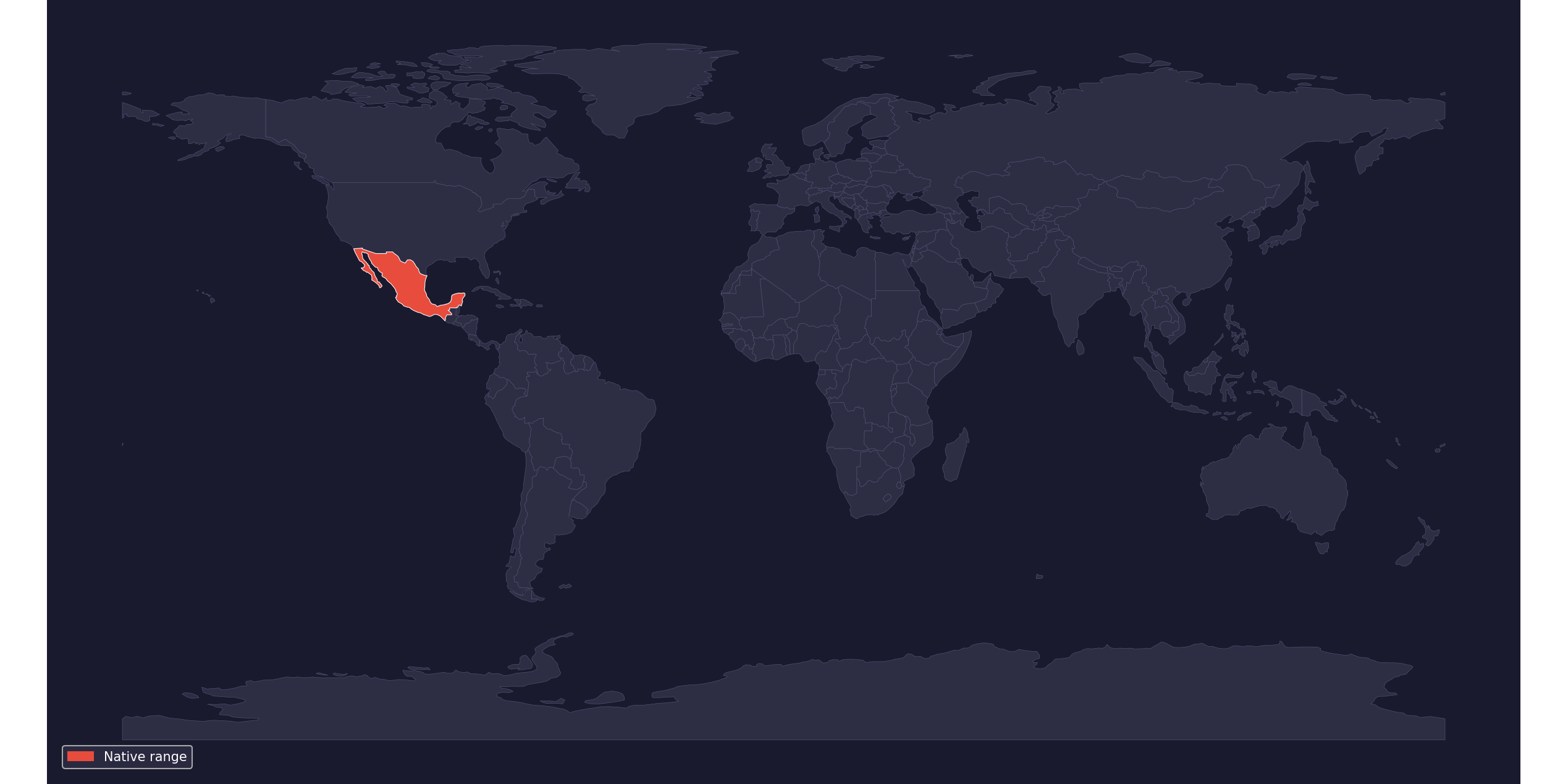
Ambystoma mexicanum is native to the Xochimilco lake and canal system around Mexico City, with the wild range now extremely restricted. In the wild it is associated with cool, slow-moving water with aquatic vegetation, shelters and stable water chemistry.
For captive care, the useful lesson from this distribution is:
- cool, clean water is the core requirement, not warm tropical conditions
- gentle flow and strong filtration without forcing the animal to fight current
- hides, plants and visual cover at the bottom of the aquarium
- stable water chemistry and careful waste control
- no land area or basking zone, because healthy axolotls remain fully aquatic
🌡 Climate across the native range
Monthly climate normals from the Xochimilco lake district in the species’ remaining wild range:
Xochimilco, Mexico City — Mexico (remaining wild range)
| Month | Min °C | Mean °C | Max °C | RH % |
|---|---|---|---|---|
| January | 7 | 13 | 20.1 | 59 |
| February | 8.2 | 14.7 | 22.2 | 54 |
| March | 9.6 | 16.4 | 24.1 | 49 |
| April | 11.2 | 17.9 | 25.2 | 50 |
| May | 12 | 18.1 | 24.8 | 59 |
| June | 12.5 | 17.2 | 22.8 | 73 |
| July | 11.7 | 15.9 | 21.1 | 80 |
| August | 11.9 | 15.9 | 21 | 81 |
| September | 11.9 | 15.5 | 20.3 | 83 |
| October | 10.3 | 14.7 | 20.2 | 78 |
| November | 8.6 | 13.8 | 20.1 | 70 |
| December | 7.5 | 13.3 | 20.2 | 63 |
Weather data by Open-Meteo.com · CC BY 4.0 · Monthly normals calculated by Herpeton Academy from daily archive values.
Location references use GBIF.org occurrence data where available; original occurrence records retain their source dataset licenses.
⚖️ Legal status
As checked against current official sources in April 2026, Ambystoma mexicanum is listed in CITES Appendix II. Under the EU wildlife trade rules, that normally places the species in Annex B unless a stricter listing applies.
The species is not relevant to the Bern Convention because it is not native to Europe. National and local rules on import, sale, transport, breeding, animal welfare, and proof of legal origin may still apply. Because wild axolotls are severely threatened in Mexico, only clearly documented captive-bred animals should be purchased.
🤌 Husbandry
Axolotls are not kept in a terrarium, but in a fully aquatic aquarium. The minimum size for one adult is around 60-70 liters, though 80-100 liters is a better choice because a larger volume keeps water parameters more stable.
For two axolotls, at least 120 liters and enough floor space should be provided. The species spends most of its time on the bottom, so length and width are more important than height.
Keeping axolotls with fish, shrimp, or other animals is not recommended. Small fish may be eaten, while more active species often nip at the axolotl’s gills. Even seemingly peaceful tankmates can introduce stress, parasites, or competition for food.
The aquarium must be fully cycled before the animal is introduced. This means the biological filtration must already be able to process ammonia and nitrite. Axolotls are sensitive to poor water quality and should not be placed in a new, unstable aquarium.
🧪 Filtration and water
Filtration should be biologically strong but gentle in terms of flow. Sponge filters, external filters with a spray bar, or filters with reduced flow are good options. Strong current stresses axolotls and often leads to curled gills, refusal to feed, and restless behavior.
Basic parameters should be monitored with aquarium test kits:
- Ammonia: 0 mg/l
- Nitrite: 0 mg/l
- Nitrate: ideally below 20-40 mg/l
- pH: approximately 6.8-8.0
Tap water must always be treated with a conditioner that removes chlorine and chloramine. Partial water changes are a normal part of maintenance, usually 20-30% weekly, depending on aquarium size, filtration, and waste load.
Filter media should not be washed under tap water, because chlorine can kill beneficial bacteria. It is best to rinse it gently in removed aquarium water during a water change.
💡 Lighting
Axolotls do not need strong lighting and usually do better under dim light. Their eyes are sensitive, and bright lamps without shelter can cause chronic stress.
If the aquarium contains live plants, weak to moderate LED lighting can be used for 6-8 hours per day. In that case, shaded areas, caves, and plants must be available so the animal can retreat from the light.
Night lighting is not necessary. Constant light disrupts the natural rhythm and provides no benefit to the animal.
🌡 Temperature
Temperature is one of the most important factors in axolotl care. The species prefers cold water.
Suitable ranges are:
- Optimal: 16-18°C
- Short-term tolerated: up to around 20°C
- Risky: above 22°C
- Dangerous with prolonged exposure: 24°C and higher
High temperature speeds up metabolism, reduces oxygen in the water, and increases the risk of bacterial infections. During summer, an aquarium chiller, fans over the water surface, or a cooler room may be necessary.
A heater should not be used unless the room drops to unusually low temperatures. In most homes, overheating is the problem for axolotls, not cold.
💧 Cleanliness and maintenance
With axolotls, the key issue is not air humidity but water quality. Clean water is directly connected to healthy skin, gills, and appetite.
Good practice includes:
- Removing uneaten food after feeding
- Siphoning the bottom regularly
- Performing partial water changes
- Monitoring ammonia, nitrite, and nitrate
- Avoiding sudden changes in temperature and pH
The axolotl’s skin is permeable and sensitive. Soaps, cleaning chemicals, fragrances, and metal objects that may contaminate the water should never be used.
🌿 Enclosure and decoration
The setup should be safe, calm, and easy to clean. Axolotls have delicate skin and can be injured by sharp rocks, rough decorations, or unstable objects.
The best options include:
- Smooth caves and hides
- Wood and stones without sharp edges
- Live or artificial plants with soft leaves
- Plenty of open floor space
- Fine sand or a bare bottom
Gravel is dangerous because it can be swallowed and cause impaction. If substrate is used, very fine aquarium sand is the safest option. For young axolotls, a bare bottom is often better until the animal grows.
Hides are essential. A single axolotl should have at least two calm places where it can fully retreat from light.
🪱 Feeding
The axolotl is carnivorous and feeds mainly on animal-based food. The best staple food is appropriately sized earthworms, because they are nutritious, easy to digest, and usually readily accepted.
Suitable foods include:
- Earthworms
- Specialized axolotl or carnivorous amphibian pellets
- Frozen bloodworms for juveniles
- Pieces of suitable fish as a supplement, not as a staple
Young axolotls are fed more often, usually daily or every other day depending on size and appetite. Adults are most often fed 2-3 times per week. The amount should maintain good body condition without obesity.
Mammal or bird meat should not be used as a staple. It does not match their natural diet and can burden digestion. Live fish are also not recommended, as they may introduce parasites and damage the gills.
Uneaten food should be removed after feeding. Decomposing leftovers quickly reduce water quality.
🥚 Breeding
Axolotls can breed readily in captivity, so keepers should prevent accidental reproduction unless they are prepared for many larvae. Breeding should use healthy, unrelated animals with known origin and no obvious deformities or chronic health problems.
Courtship is usually triggered by seasonal change, cooler water, and strong adult condition. The male deposits spermatophores and the female may lay eggs on plants, mops, or other surfaces. Adults may eat eggs or larvae, so eggs are normally removed to a separate rearing container if they are to be raised.
Larvae require clean cool water, frequent water changes, very small live foods at first, and careful sorting by size to reduce cannibalism. Raising a clutch is labor-intensive and can produce far more juveniles than expected, so homes, space, and food supply must be planned before breeding.
Because Ambystoma mexicanum is CITES Appendix II and normally EU Annex B, keep proof of legal origin and records for offspring and transfers. Local rules may restrict sale, transport, release, or ownership; unwanted axolotls must never be released outdoors.
🩺 Common problems
The most common problems in axolotls are related to temperature and water quality. Curled or strongly forward-facing gills, constant surface gulping, refusal to eat, reddened skin, white fuzzy patches, and limp behavior are signs that something in the environment is wrong.
If a problem is suspected, check first:
- Temperature
- Ammonia
- Nitrite
- Nitrate
- Strength of water flow
- Sharp decorations or stressful tankmates
If there are wounds, fungal growth, swelling, or prolonged refusal to eat, a veterinarian experienced with amphibians should be consulted. Treating at home without identifying the cause often makes the problem worse.
📌 Conclusion
The axolotl is an unusual and fascinating animal, but it is not suitable for an unprepared aquarium. Successful care depends mainly on cold water, a fully cycled tank, good filtration, safe decoration, and a calm environment.
With stable parameters and proper feeding, the axolotl can be a long-lived and interesting aquarium inhabitant. It does not require complicated equipment in every case, but it does require consistency and attention to detail.
📚 Sources and further reading
- CITES Appendices and Species+ trade database, checked April 2026
- EU wildlife trade regulations and annex references, checked April 2026
- GBIF species backbone and occurrence data for taxonomy and distribution context
- IUCN Red List and specialist husbandry references where applicable