Share

Ambystoma maculatum
🔤 Taxonomy
Ambystoma maculatum is the accepted scientific name and is stable in current use. In trade it may appear as the spotted salamander, but that common name does not change the taxonomy used here.
English common names used in the hobby:
- Spotted salamander
📌 Description
Ambystoma maculatum is an amphibian kept for observation rather than handling. Adult size is usually around 15-25 cm, and a realistic lifespan in stable care is about 10-20 years. It needs clean water, secure hides, correct temperature, and calm maintenance more than decorative complexity.
Like other amphibians, it has permeable skin and should not be handled casually. Use wet, clean hands or a soft container only when movement is necessary for health checks or enclosure work.
🌍 Distribution
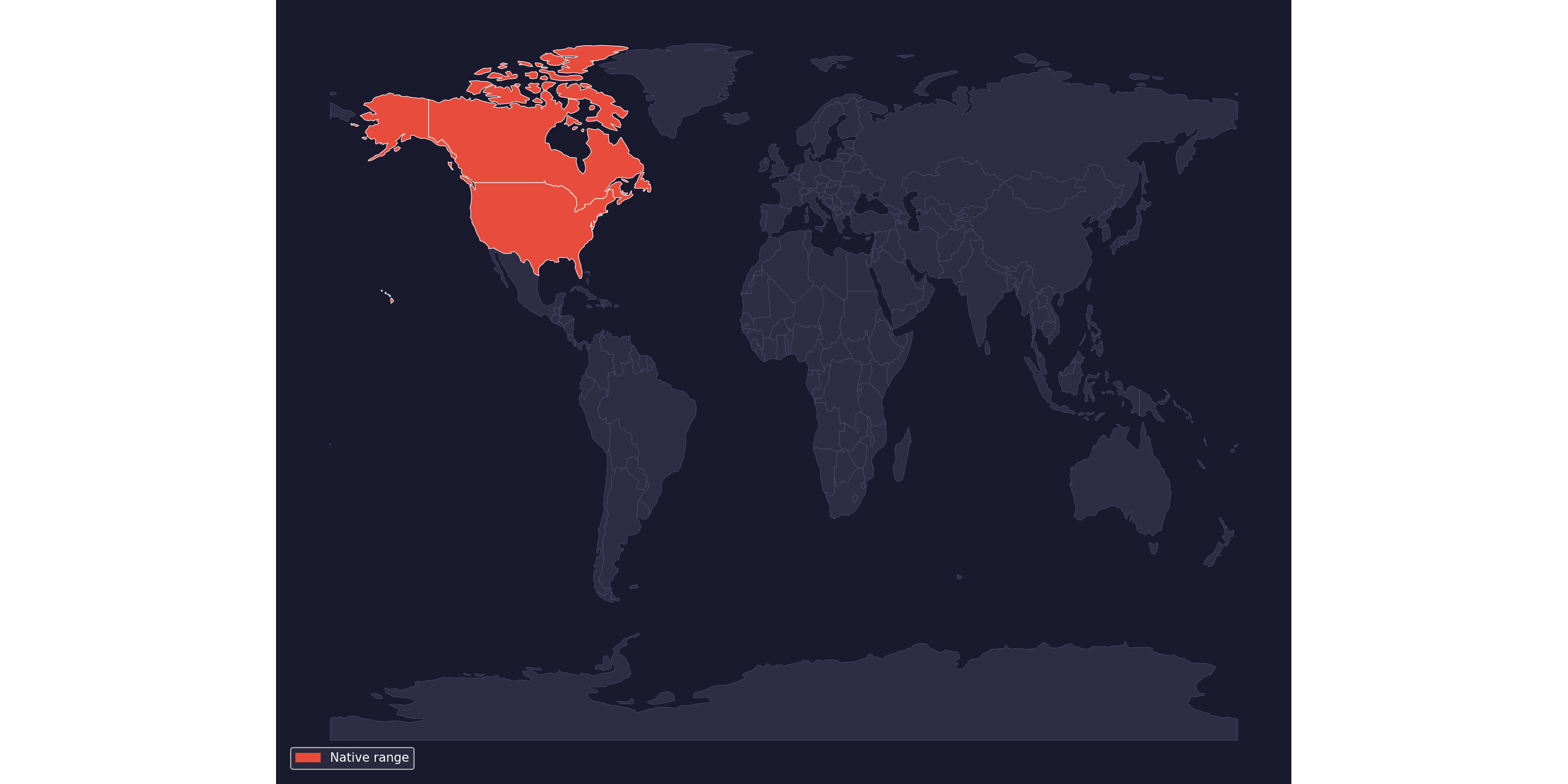
Eastern North American deciduous and mixed forests with vernal pools used for breeding.
For captive care, the useful lesson from this distribution is:
- match the broad habitat type rather than copying one weather station
- provide clean water and secure retreats at all times
- keep temperatures moderate and avoid chronic overheating
- create microclimates so the animal can choose wetter, drier, warmer, and cooler areas
- buy captive-bred animals and avoid pressure on wild populations
🌡 Climate across the native range
Monthly climate normals from reviewed GBIF occurrence locations:
Mississippi — United States of America
| Month | Min °C | Mean °C | Max °C | RH % |
|---|---|---|---|---|
| January | 0.7 | 6.9 | 13.1 | 74 |
| February | 2.3 | 9.2 | 16 | 70 |
| March | 6.4 | 13.4 | 20.4 | 67 |
| April | 9.9 | 17.2 | 24.4 | 68 |
| May | 14.7 | 21.4 | 28 | 73 |
| June | 18.6 | 25.1 | 31.6 | 73 |
| July | 20.5 | 26.8 | 33 | 75 |
| August | 20.1 | 26.4 | 32.7 | 74 |
| September | 17.1 | 23.6 | 30.2 | 72 |
| October | 9.9 | 17.5 | 25.1 | 71 |
| November | 5.3 | 12.5 | 19.6 | 73 |
| December | 2.1 | 8.6 | 15.2 | 72 |
Alabama — United States of America
| Month | Min °C | Mean °C | Max °C | RH % |
|---|---|---|---|---|
| January | 0.1 | 5.9 | 11.6 | 70 |
| February | 1.5 | 8.1 | 14.6 | 65 |
| March | 5.5 | 12.5 | 19.5 | 63 |
| April | 9 | 16.5 | 23.9 | 63 |
| May | 14 | 20.8 | 27.7 | 69 |
| June | 18.2 | 24.7 | 31.2 | 70 |
| July | 20.4 | 26.6 | 32.7 | 72 |
| August | 19.9 | 26.1 | 32.3 | 72 |
| September | 16.7 | 23.1 | 29.5 | 70 |
| October | 10 | 17.1 | 24.2 | 67 |
| November | 4.9 | 11.7 | 18.5 | 70 |
| December | 1.4 | 7.6 | 13.8 | 68 |
Tennessee — United States of America
| Month | Min °C | Mean °C | Max °C | RH % |
|---|---|---|---|---|
| January | -3.9 | 1.3 | 6.5 | 75 |
| February | -2.5 | 3.3 | 9 | 69 |
| March | 1.8 | 8.1 | 14.3 | 65 |
| April | 5.8 | 12.7 | 19.6 | 63 |
| May | 10.4 | 17 | 23.5 | 73 |
| June | 15.1 | 21.2 | 27.3 | 77 |
| July | 17.5 | 23.4 | 29.3 | 77 |
| August | 16.8 | 22.8 | 28.8 | 76 |
| September | 13.3 | 19.5 | 25.8 | 74 |
| October | 6.6 | 13.3 | 20.1 | 71 |
| November | 2 | 8.1 | 14.1 | 71 |
| December | -1.9 | 3.4 | 8.8 | 71 |
Weather data by WorldClim v2.1 · Monthly normals queried by Herpeton Academy from raster values; relative humidity is derived from vapor pressure and mean temperature.
Location references use GBIF.org occurrence data where available; original occurrence records retain their source dataset licenses.
⚖️ Legal status
As checked against current official sources in April 2026, no current CITES listing was found for Ambystoma maculatum. No specific EU Wildlife Trade Annex A-D listing was found in the same check. The species is not relevant to the Bern Convention unless local native-population rules apply.
It is not native to Europe and is not relevant to the Bern Convention. Local ownership, import, transport, sale, breeding, collection, release, and animal-welfare rules may still apply. Captive-bred animals with clear origin records are strongly preferable.
🧭 Life stage differences
For adults: Adults are secretive woodland salamanders often seen only during feeding or night activity. A good enclosure must work for the animal even when the keeper rarely sees it.
For babies and juveniles: Larvae develop in water, but after metamorphosis the juveniles become terrestrial and dehydrate easily. A smaller tub with damp moss, leaf litter, a shallow water cap, and tiny foods is usually safer than a large display enclosure.
Young salamanders should not be kept in a large empty space where food disappears and monitoring becomes difficult. A smaller setup makes appetite, droppings, skin condition, and weight easier to track.
Watch closely: Adults need deeper substrate, thermal choice, and stable hides. Permanently wet substrate with poor air exchange leads to skin problems, while dry substrate causes dehydration.
🤌 Husbandry
The substrate should hold moisture without turning into mud. Coconut fiber, leaf litter, moss in separate damp zones, and bark hides work well when kept clean. Ventilation must be sufficient so the enclosure never smells stagnant.
Keep this species in a cool terrestrial enclosure with deep safe substrate, leaf litter, and several dark hides. Adults are best kept singly unless breeding is deliberately planned. A hidden salamander is normal when body condition and enclosure conditions are good.
Quarantine a new salamander separately from every other amphibian, using dedicated tongs, bowl, gloves, and cleaning equipment. A plain, easily replaced substrate is appropriate at first because it exposes abnormal feces, regurgitated prey, mites, and skin lesions. Record weight and appetite for at least six weeks, and ask an amphibian-experienced veterinarian whether fecal examination and Bd/Bsal or ranavirus testing are appropriate for the animal’s origin.
Do not interpret seasonal hiding as permission to stop monitoring. Check the cool and damp zones without destroying the main burrow, and weigh the animal monthly in a ventilated container. A stable, well-conditioned adult can remain underground for days while still emerging reliably for food after lights-out.
🧪 Filtration and water
Adults do not need an aquarium section, but they need a shallow clean water dish. Use dechlorinated water and replace it often. Large pools usually create hygiene problems and take space away from burrowing.
💡 Lighting
Dim ambient lighting and a normal day-night cycle are enough. Low-level UVB is optional only if the salamander can fully avoid it. Avoid bright heat lamps and any lighting that dries the enclosure.
🌡 Heating and temperature
Practical target range: 14-20 °C; avoid heat. Use digital thermometers and place the enclosure where seasonal room temperatures are predictable. Amphibians often tolerate cool conditions better than heat, and overheating can become dangerous quickly.
💧 Humidity and water
For terrestrial salamanders, water matters without turning the enclosure into a swamp. Provide a shallow dish or damp zone, change water often, and remove leftover food. If substrate smells sour or clumps heavily, it is no longer safe.
The lower substrate should stay slightly moist while the surface can be less wet. Constant mud causes skin problems, but dry substrate causes dehydration. Provide a moist hide and monitor the burrow layer.
🌿 Enclosure and decoration
Minimum practical adult housing: 75-90 cm long terrestrial enclosure for one adult. Bigger is useful when it creates more stable water, more hiding choices, or a better temperature gradient. Baby and juvenile setups should be smaller, secure, and easy to monitor; upgrade before the animal becomes cramped or water quality becomes unstable.
Use a wide terrestrial setup with deep diggable substrate, cork bark, leaf litter, a shallow water dish, and stable hides. Juveniles can start smaller for feeding control; adults need more floor space and deeper substrate.
Provide 12-15 cm of compactable, fertilizer-free topsoil mixed with leaf mould or coconut fibre, capped with pesticide-free hardwood leaves. The lower layer should stay slightly damp while the surface has drier patches. Place cork flats partly below the leaf litter so the salamander can enlarge a retreat without being crushed. Avoid gravel, calcium sand, cedar or pine chips, fertilizer, perlite, and wild-collected material from places exposed to pesticides or amphibians.
🪱 Feeding
For most terrestrial salamanders, earthworms are the best staple. Juveniles need smaller meals more often, while adults can be fed less frequently. Offer food in the evening or under dim light, when the animal is more active.
Earthworms are the best staple. Roaches, crickets, and other safe invertebrates add variety. Juveniles eat more often; adults should be kept muscular, not round. Avoid oversized prey and feeder fish.
Offer adults one appropriately sized meal every 3-4 days and juveniles a smaller meal every 2-3 days, adjusting by body condition and temperature rather than the calendar alone. Prey should be narrower than the head. Whole earthworms provide a useful nutritional base; if insects dominate, gut-load them and rotate calcium and amphibian-safe multivitamin according to the label. Remove uneaten crickets before they can injure a resting salamander, and never use bait worms or wild prey exposed to chemicals.
🥚 Breeding
Breeding these salamanders requires mature animals in strong condition and often a cool seasonal period. Eggs, larvae, or newborns are reared separately according to the species, with very clean water or a damp terrestrial setup after metamorphosis. Plan space, food, and future homes before breeding; unwanted amphibians must never be released outdoors.
🩺 Common problems
In terrestrial salamanders, warning signs include constant surface sitting, dry skin, shiny wet sores, weight loss, and poor response when touched. Check temperature, humidity, substrate cleanliness, and uneaten food first.
Common problems include overheating, dehydration, skin irritation from dirty substrate, obesity, injuries from hard prey, and refusal to feed after stress. Warning signs include staying in the water constantly, weight loss, swelling, skin lesions, poor coordination, or prolonged anorexia.
Persistent refusal to feed, swelling, wounds, breathing difficulty, abnormal floating, severe weakness, or spreading skin changes should be assessed by a veterinarian experienced with amphibians.
Failure to burrow can be an early setup clue: first verify substrate depth and texture, then compare surface and burrow temperatures and moisture. Rapid weight loss, repeated regurgitation, cloacal swelling, persistent open-mouth breathing, loss of balance, or red and eroded skin warrants isolation and prompt veterinary assessment. Keep notes and photographs so gradual changes are not missed in an animal that is normally out of sight.
📌 Conclusion
Use this care sheet as a practical framework, not as an excuse for minimalism: stable conditions, observation, and origin records are the foundation of good amphibian keeping.
The key is cool, quiet, terrestrial stability: deep substrate, clean water, moderate moisture, and no chronic heat stress.
📚 Sources and further reading
- GBIF species backbone entry for Ambystoma maculatum
- CITES Appendices, checked April 2026
- Bern Convention appendices and European wildlife-trade references where relevant
- Amphibian Species of the World: Ambystoma maculatum
- University of Michigan Animal Diversity Web species account
- Amphibian Ark infectious-disease control manual
💬 Feedback
For questions, corrections, or practical notes, leave us a message in the forum thread.