Keeping a bearded dragon
📌 Description
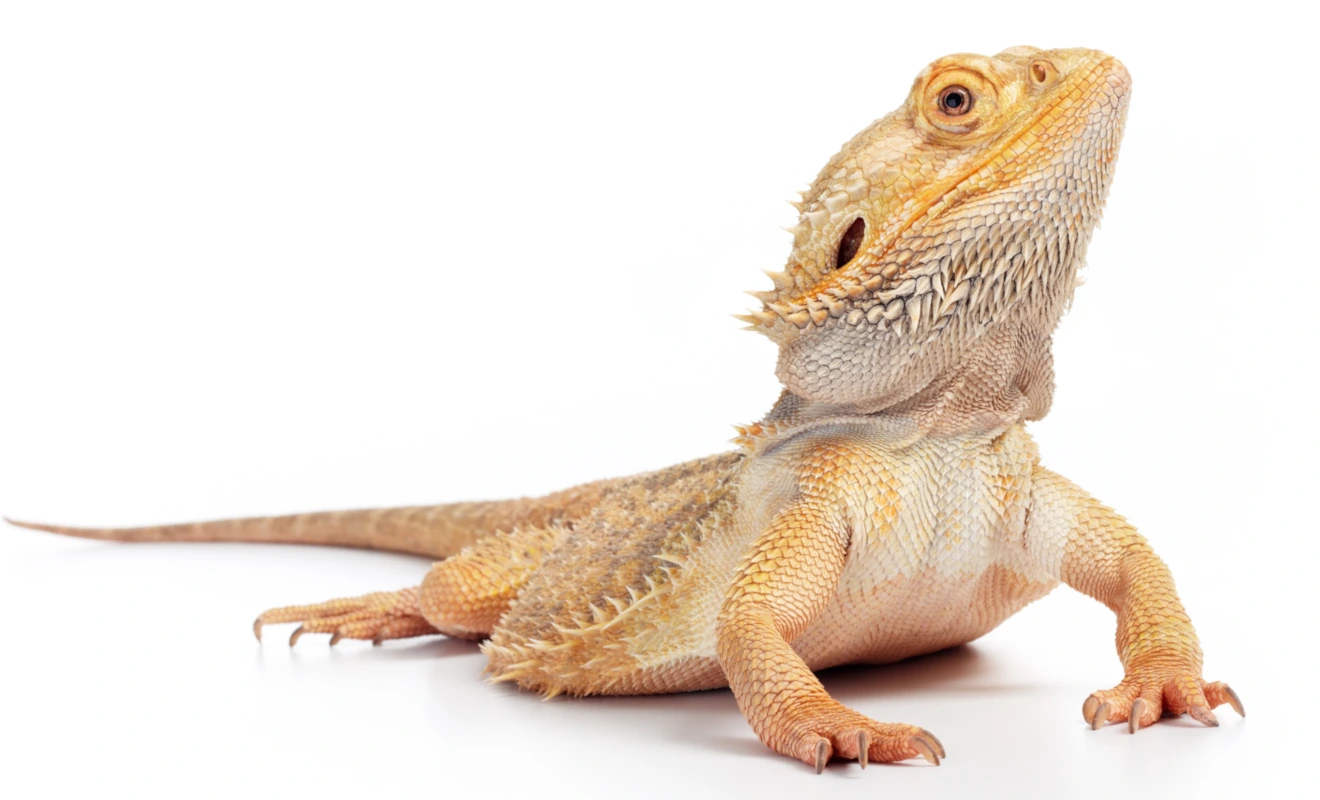
The Bearded Dragon ( Pogona vitticeps ) is one of the most popular lizards in the terrarium trade. Its name comes from the characteristic expandable throat pouch with spikes, which darkens under stress or dominant behavior and resembles a beard.
Adult specimens reach 45–60 cm in length. The coloration varies from gray-beige to orange and reddish, with many morphs existing in breeding practices. The body is flat, with well-developed limbs and spiny scales on the sides of the head and body.
Bearded Dragons are primarily ground-dwelling lizards, but they are good climbers and love to bask on elevated surfaces. In captivity, with proper care, they live on average 10–15 years, and sometimes even longer.
🌍 Distribution
The species originates from eastern and central Australia. It inhabits:
- Semi-arid areas
- Dry scrublands
- Sparse forests
- Sandy and rocky terrains
The climate in its natural range is characterized by:
- Very hot days
- Strong sunlight
- Low to moderate humidity
- Cool nights
The Bearded Dragon is a territorial species and lives alone in the wild. Keeping them together in one terrarium often leads to aggression and is not recommended.
🤌 Care
The Bearded Dragon is considered a relatively hardy species, but it requires a spacious and well-equipped terrarium.
Current recommendations indicate a minimum size 180 × 60 × 60 cm for an adult specimen. Smaller sizes limit movement and thermoregulation.
The terrarium should be:
- Front-opening
- Well-ventilated
- With a clearly defined warm and cool end
A suitable substrate is fine sand or sandy soil with a depth of at least 10 cm to allow for natural digging. Sick or injured animals should not be kept on loose substrate.
💡 Lighting
Bearded dragons are diurnal and require intense lighting.
It is necessary:
- Strong daylight (~6500K)
- High-quality UVB lighting
A T5 HO UVB lamp 10–12% is recommended, placed on the warm side of the terrarium. The UV index in the basking area should reach around 4–4.5. The lighting should operate for 12 hours a day. The UVB lamp should be replaced every 6–12 months.
Important: The UVB lamp and daylight are two separate sources.
🌡 Heating
Bearded dragons need high temperatures in the basking area.
- Basking surface temperature: 40–46°C
- Cool zone: 21–29°C
- Heating is turned off at night
Halogen lamps with sufficient power are most suitable. The temperature should be measured with an infrared thermometer.
💧 Humidity
Bearded dragons prefer a relatively dry environment. Recommended humidity: 30–60%. Constant humidity above 60% can lead to health problems. Light misting 1–2 times a week is sufficient. The animal should have constant access to a shallow dish of fresh water; regular bathing is not necessary.
🌿 Decoration
The decoration should include:
- A flat stone surface for basking
- Stable branches and roots
- Hiding spots
- Rocks and textured elements
🪳 Feeding
The bearded dragon is an omnivorous species.
Ratio according to age
- Hatchlings (0–6 months): 60–80% insects
- Juveniles: 50–60% insects
- Adults: 20–30% insects, the rest plant food
Suitable insects:
Crickets, dubia roaches, black soldier fly larvae, silkworms, grasshoppers. Insects should be well-fed (gut-loaded) before feeding.
Suitable vegetables:
Dandelion, arugula, kale, carrot tops, bok choy, alfalfa, zucchini.
Fruits should be avoided or given rarely due to high sugar content.
🧂 Supplements
Necessary:
- Calcium without D3
- Multivitamins with D3
Supplements are used according to the manufacturer’s instructions; calcium and UVB deficiency leads to metabolic bone disease.
📌 Conclusion
The bearded dragon is a calm and socially tolerant lizard towards humans, making it an excellent choice for experienced terrarium keepers. Successful care requires:
- A spacious terrarium
- Strong UVB lighting
- High temperature in the basking area
- Suitable dry microclimate
- Balanced omnivorous diet
With proper care, this species can live over a decade and be an active and healthy pet.